
What is strenx 700MC steel used for
Discover the extensive uses of Strenx 700MC steel. This guide explores its mechanical properties, welding benefits, and how it optimizes transport, lifting, and agriculture industries.
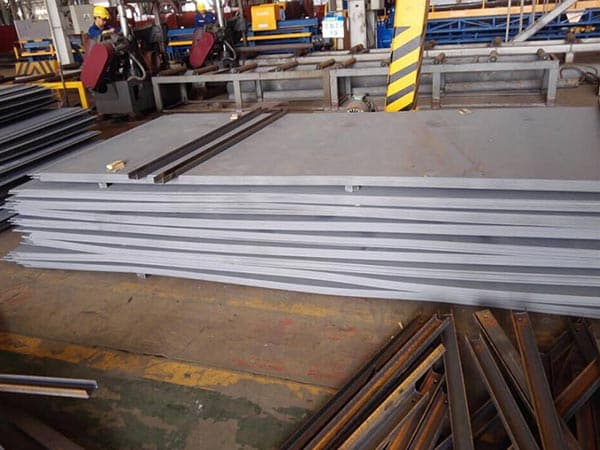
Understanding the Essence of Strenx 700MC
Strenx 700MC is a high-strength structural steel designed for those who need to build lighter, stronger, and more sustainable products. Produced by SSAB, this thermomechanically rolled steel offers a minimum yield strength of 700 MPa. The 'MC' designation indicates its suitability for cold forming, making it a favorite in industries where complex shapes and high load-bearing capacities are required simultaneously. Unlike traditional structural steels, Strenx 700MC provides a unique combination of toughness, weldability, and formability, allowing engineers to reduce the thickness of components without sacrificing structural integrity.
The Chemical Profile and Microstructure
The performance of Strenx 700MC is rooted in its precise chemical composition and the thermomechanical rolling process. By carefully controlling the cooling rate and the rolling temperature, the steel achieves a fine-grained microstructure. This micro-alloying technique involves small amounts of Niobium (Nb), Titanium (Ti), and Vanadium (V), which enhance strength and grain refinement. The low carbon equivalent (CEV) ensures that the steel remains highly weldable, even in demanding workshop environments. Below is a typical breakdown of the chemical composition and mechanical properties that define this material.
| Element/Property | Typical Value / Specification |
|---|---|
| Carbon (C) max % | 0.12 |
| Manganese (Mn) max % | 2.10 |
| Silicon (Si) max % | 0.10 - 0.25 |
| Yield Strength (MPa) | 700 Min |
| Tensile Strength (MPa) | 750 - 950 |
| Elongation (%) | 10 - 13 Min (depending on thickness) |
Revolutionizing the Transportation Industry
Weight reduction is the primary driver for using Strenx 700MC in the transportation sector. For manufacturers of trailers, truck chassis, and heavy-duty vehicles, every kilogram saved in the structure translates directly into increased payload capacity. By switching from standard S355 steel to Strenx 700MC, designers can often reduce the weight of a chassis by 30% or more. This reduction not only improves fuel efficiency for the end-user but also lowers the carbon footprint over the vehicle's lifecycle. The high fatigue resistance of the steel ensures that these lighter structures can withstand the constant vibrations and dynamic loads encountered on the road.
Advancements in Lifting and Crane Technology
Modern cranes, whether truck-mounted, telescopic, or crawler-type, require materials that can handle immense stress while reaching greater heights. Strenx 700MC is frequently utilized in the production of crane booms and outriggers. Its high yield strength allows for thinner wall sections in telescopic booms, which reduces the deadweight of the crane. This weight saving is critical because it lowers the center of gravity and increases the lifting radius and capacity. Furthermore, the excellent impact toughness of Strenx 700MC at low temperatures (down to -40°C or even -60°C for specific grades) makes it suitable for equipment operating in arctic or offshore environments.
Superior Workshop Performance: Bending and Cutting
One of the most significant advantages of Strenx 700MC is its predictability in the workshop. For fabricators, the steel offers consistent springback and tight bending radii. This is achieved through strict tolerances on thickness and surface quality. When using laser or plasma cutting, the steel remains flat and stable, which is essential for automated production lines. The cold-forming properties allow for the creation of complex profiles that would be impossible with lower-grade steels, enabling more streamlined and aerodynamic designs in various machinery components.
Welding Characteristics and Integrity
Welding high-strength steel often raises concerns about the heat-affected zone (HAZ) softening. However, Strenx 700MC is engineered with a low carbon equivalent, which simplifies the welding process. It can be welded using all conventional methods, such as MAG, MIG, TIG, and submerged arc welding. To maintain the high strength of the base material, it is recommended to use low heat input and appropriate filler metals. The result is a joint that maintains excellent structural integrity and fatigue life, ensuring that the final assembly is as reliable as the raw material itself.
Agricultural Machinery and Durability
The agricultural sector demands equipment that can operate in harsh, abrasive environments while maintaining high productivity. Tillage tools, spreaders, and harvesting equipment benefit from the high strength-to-weight ratio of Strenx 700MC. Using this steel allows for wider implements that can cover more ground in a single pass without exceeding the weight limits of the tractor. Additionally, the refined grain structure provides better resistance to wear and impact compared to standard structural steels, extending the service life of the machinery in rocky or difficult soil conditions.
Environmental Impact and Sustainability
Choosing Strenx 700MC is a strategic move toward sustainability. By using less steel to achieve the same or better structural performance, manufacturers reduce the total amount of raw material required. This leads to lower energy consumption during production and transportation. Furthermore, the increased efficiency of the final product—such as a lighter truck burning less fuel—contributes significantly to reducing global CO2 emissions. The steel is also 100% recyclable, fitting perfectly into a circular economy model where materials are reused and repurposed at the end of their functional life.
Expanding Horizons in Construction and Infrastructure
Beyond mobile equipment, Strenx 700MC is finding its way into stationary structures and construction components. High-rise building frameworks, bridge sections, and industrial racking systems utilize the steel to minimize the footprint of structural members. Thinner columns and beams mean more usable space within a building and lower foundation costs due to the reduced overall weight of the structure. The steel's adaptability to various coatings and galvanizing processes ensures long-term corrosion protection, even in coastal or industrial atmospheres.
Key Design Considerations for Engineers
When transitioning to Strenx 700MC, engineers must rethink their design approach. It is not simply a matter of replacing one material with another; it is about optimizing the geometry to take full advantage of the 700 MPa yield strength. This often involves using thinner sections, implementing stiffeners, and paying close attention to weld placement to avoid stress concentrations. Utilizing modern FEA (Finite Element Analysis) tools allows designers to simulate how Strenx 700MC will behave under load, ensuring that the final product is both safe and efficient. The consistency of the material's properties across different batches is a critical factor that gives engineers the confidence to push the boundaries of what is possible in steel construction.
- High Yield Strength: Minimum 700 MPa for extreme load-bearing.
- Weight Optimization: Potential for 30-40% weight reduction in structures.
- Excellent Formability: Tight bending radii for complex designs.
- Weldability: Low carbon equivalent for easy fabrication.
- Toughness: Reliable performance in low-temperature environments.
Leave a message