
What is the difference between strenx steel for auto frame sheet & plate steel?
A comprehensive comparison between Strenx high-strength steel and conventional plate steel for automotive frames, covering mechanical properties, processing, and lightweighting benefits.
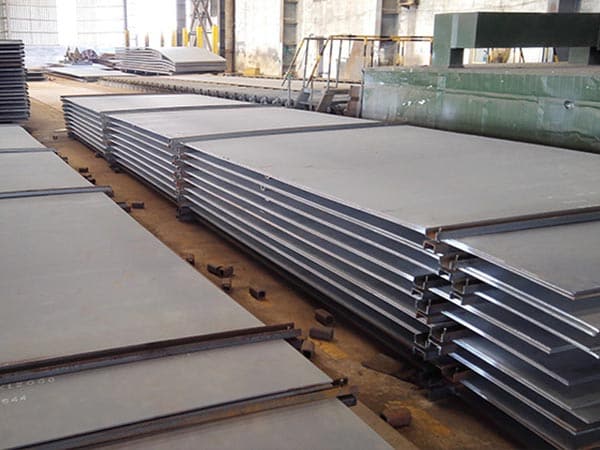
Understanding the Fundamental Shift in Automotive Steel Engineering
The automotive industry is undergoing a radical transformation where the demand for higher payloads, reduced fuel consumption, and lower carbon emissions has pushed traditional materials to their limits. When discussing the backbone of heavy-duty vehicles—the frame—the choice between Strenx high-strength steel and conventional plate steel (such as standard structural grades like S355 or Q355) is no longer just about cost; it is about engineering capability. Strenx, a brand synonymous with high-performance structural steel from SSAB, represents a leap in metallurgical science compared to standard commodity plate steel.
Conventional plate steel has long been the reliable workhorse of the manufacturing world. However, as vehicle designs become more complex and safety regulations more stringent, the limitations of standard plates—specifically their weight-to-strength ratio—become a bottleneck. Strenx steel is specifically engineered to be thinner and lighter while maintaining or even exceeding the load-bearing capacity of much thicker standard plates. This article explores the nuanced differences across chemical composition, mechanical behavior, and processing advantages.
Chemical Composition and Microstructural Precision
The first major differentiator lies in the recipe. Standard plate steel often relies on a relatively simple carbon-manganese chemistry. While effective for general construction, this composition results in a microstructure that is less refined. In contrast, Strenx steel utilizes a sophisticated thermomechanically controlled process (TMCP) combined with micro-alloying elements such as niobium, vanadium, and titanium.
- Grain Refinement: Strenx features an extremely fine-grained microstructure. This refinement is achieved through precise cooling rates and rolling temperatures, which ensures that the steel possesses high strength without becoming brittle.
- Purity: Strenx undergoes rigorous cleaning processes to minimize non-metallic inclusions like sulfur and phosphorus. This high level of purity translates directly into better fatigue resistance and improved performance in extreme environments.
- Carbon Equivalent: Despite its high strength, Strenx maintains a low carbon equivalent (CEV). This is a critical factor for weldability, allowing manufacturers to join components without the extensive pre-heating often required for high-carbon plate steels.
Mechanical Properties: Strength vs. Ductility
The most visible difference between Strenx and standard plate steel is the yield strength. While standard structural plates typically offer yield strengths in the range of 235 to 355 MPa, Strenx grades for automotive frames commonly start at 600 MPa and can exceed 1100 MPa (e.g., Strenx 700MC, Strenx 960). This massive leap in strength allows for a significant reduction in material thickness.
However, strength alone is not the goal. In automotive frames, impact toughness and fatigue life are paramount. Strenx is designed to absorb energy during a collision, protecting the integrity of the vehicle. Standard plate steel, when pushed to higher strength levels through simple alloying, often loses its ductility, making it prone to cracking under cyclic loading. Strenx maintains excellent elongation properties, ensuring that the frame can flex and recover without permanent deformation or catastrophic failure.
Processing Performance: Bending and Welding
One of the most common misconceptions is that harder, stronger steel is more difficult to work with. While this is true for many high-carbon plates, Strenx is specifically optimized for workshop productivity. Because Strenx is produced with tight tolerances on thickness and flatness, it behaves predictably during automated fabrication.
Bending: Strenx steel allows for tighter bending radii compared to standard plates of the same strength level. This is due to its consistent grain structure and surface quality. For an auto frame manufacturer, this means more compact designs and fewer structural reinforcements. Springback is also more predictable in Strenx, reducing the need for trial-and-error adjustments in the press brake.
Welding: Welding high-strength steel often raises concerns about the Heat Affected Zone (HAZ). Strenx is engineered to minimize the softening effect in the HAZ. Because of its low carbon content, it offers excellent weldability using standard methods (MIG/MAG, TIG). Standard plate steel, if used in high-strength applications, often requires specialized filler metals and strict temperature controls to avoid cold cracking—steps that are significantly simplified when using Strenx.
Weight Reduction and Environmental Impact
The primary driver for choosing Strenx over standard plate steel in auto frames is lightweighting. By switching from a standard S355 plate to Strenx 700MC, a designer can often reduce the thickness of a frame component by 30% to 50% while maintaining the same structural stiffness. This weight saving has a compounding effect:
- Increased Payload: For commercial trucks and trailers, every kilogram saved in the frame is an extra kilogram of cargo that can be legally transported.
- Fuel Efficiency: Lighter vehicles require less energy to accelerate and maintain speed, directly lowering fuel consumption and CO2 emissions.
- Tire and Brake Wear: Reduced dead weight leads to less wear and tear on the vehicle's consumables, lowering the total cost of ownership (TCO).
Technical Comparison Table
The following table illustrates the typical differences between a standard structural plate and a common Strenx grade used in automotive frames.
| Property | Standard Plate (s355jr) | Strenx 700MC (Automotive) |
|---|---|---|
| Yield Strength (MPa) | Min 355 | Min 700 |
| Tensile Strength (MPa) | 470 - 630 | 750 - 950 |
| Elongation (%) | ~20% | ~12% - 15% (depending on thickness) |
| Min. Bending Radius | 1.5t - 2.0t | 0.5t - 1.0t (at 90 degrees) |
| Typical Thickness for Frame | 8mm - 12mm | 4mm - 6mm |
| Weldability | Good | Excellent (Low CEV) |
| Surface Finish | Mill scale, variable | Clean, consistent, optimized for painting |
Surface Quality and Coating Adhesion
Automotive frames are exposed to harsh environments, including road salt, moisture, and debris. The surface quality of the steel plays a vital role in corrosion resistance. Standard plate steel often has a heavy mill scale that must be removed via shot blasting before painting or galvanizing. Strenx is produced with a much cleaner surface and tighter thickness tolerances. This not only improves the aesthetic of the finished frame but also ensures better adhesion for protective coatings. The consistency of the surface means that robotic welding and laser cutting systems encounter fewer disruptions, leading to higher throughput in the factory.
Extending the Lifecycle of the Vehicle
Durability is where the difference between Strenx and standard plate steel becomes most apparent over time. Fatigue is the primary cause of frame failure in heavy-duty vehicles. Because Strenx has a higher fatigue limit, frames made from this material can endure more load cycles before cracks begin to form. This makes Strenx the preferred choice for specialized industries such as timber transport, mining, and heavy haulage, where the equipment is subjected to extreme stress daily. While the initial material cost of Strenx is higher than standard plate steel, the reduction in maintenance, repair, and the extension of the vehicle's service life provide a much higher return on investment (ROI).
The Strategic Choice for Modern Manufacturing
Choosing between Strenx and standard plate steel is a strategic decision that affects the entire lifecycle of a vehicle. Standard plate steel remains a viable option for simple, static structures where weight is not a concern. However, for the automotive sector—where performance, safety, and efficiency are the benchmarks of success—Strenx offers a suite of properties that standard plates cannot match. By leveraging the high strength, superior formability, and excellent weldability of Strenx, manufacturers can create frames that are not only lighter and stronger but also more sustainable and cost-effective in the long run.
Leave a message