
What asdvantages does S460MC special steel for automobiles have
Explore the superior mechanical properties, processing benefits, and automotive applications of S460MC high-yield-strength steel for modern vehicle manufacturing.
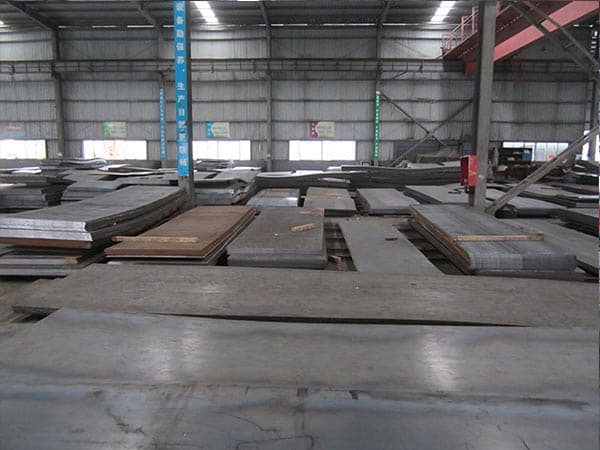
The Evolution of High-Strength Steels in Automotive Design
The automotive industry is currently navigating a transformative era where the demand for fuel efficiency, emission reduction, and enhanced safety is at an all-time high. Central to this transformation is the selection of materials that can provide high structural integrity while minimizing weight. S460MC, a high-yield-strength cold-forming steel governed by the EN 10149-2 standard, has emerged as a critical solution for engineers. This thermomechanically rolled steel offers a unique balance of strength and ductility, making it indispensable for modern vehicle architecture. Unlike traditional carbon steels, S460MC is engineered to withstand the rigorous dynamic loads of the road while allowing for significant material savings through down-gauging.
Exceptional Mechanical Integrity and Yield Strength
The primary advantage of S460MC lies in its impressive mechanical profile. With a minimum yield strength of 460 MPa, it provides a substantial upgrade over standard structural steels like S355MC. This high yield point ensures that components can resist permanent deformation under heavy loads, which is vital for the safety-critical framework of a vehicle. The tensile strength typically ranges between 520 and 670 MPa, providing a robust buffer against structural failure. Furthermore, the elongation properties—usually exceeding 14% for thinner gauges—ensure that the material can absorb energy during a collision, enhancing the crashworthiness of the vehicle. This combination of high strength and energy absorption is the cornerstone of its application in longitudinal beams and cross members.
Chemical Composition and Microstructural Refinement
The superior performance of S460MC is not accidental; it is the result of precise metallurgical engineering. The steel utilizes a low-carbon chemistry combined with micro-alloying elements such as Niobium (Nb), Vanadium (V), and Titanium (Ti). These elements facilitate grain refinement during the thermomechanical rolling process. A finer grain structure translates directly to higher toughness and strength according to the Hall-Petch relationship. By keeping the carbon equivalent (CEV) low, the steel maintains excellent weldability and reduces the risk of cold cracking in the heat-affected zone (HAZ). The following table outlines the typical chemical requirements according to EN 10149-2:
| Element | Max % (by mass) |
|---|---|
| Carbon (C) | 0.12 |
| Manganese (Mn) | 1.60 |
| Silicon (Si) | 0.50 |
| Phosphorus (P) | 0.025 |
| Sulfur (S) | 0.015 |
| Aluminium (Al) total | 0.015 |
| Nb + V + Ti | 0.22 |
Cold Forming and Bending Performance
One of the standout features of S460MC is its exceptional cold-forming capability. Despite its high strength, the material exhibits excellent ductility, allowing it to be bent and shaped into complex geometries without cracking. This is particularly beneficial for automotive parts that require intricate stamping or deep drawing. Manufacturers can achieve tight bending radii, which is essential for optimizing the space within the chassis and engine compartments. The consistency of the mechanical properties across the coil ensures predictable springback during the forming process, allowing for high-precision manufacturing and reducing the need for expensive tool adjustments. This process efficiency directly translates to lower production costs and faster cycle times.
Superior Weldability for Structural Integrity
In automotive assembly, welding is the predominant joining method. S460MC is designed to be compatible with all standard welding techniques, including Metal Active Gas (MAG) welding, laser welding, and resistance spot welding. Due to its low carbon content and optimized alloy design, the steel does not require pre-heating or post-weld heat treatment in most applications. The heat-affected zone retains a high degree of its original strength and toughness, ensuring that the welded joint does not become a point of weakness in the vehicle's frame. This weldability is crucial for maintaining the structural continuity of the chassis, which must endure constant vibration and stress throughout the vehicle's lifespan.
Fatigue Resistance and Durability in Dynamic Loads
Automotive components are subjected to millions of stress cycles over their operational life. S460MC demonstrates remarkable fatigue resistance, which is a critical factor for parts like truck frames, suspension components, and trailer chassis. The fine-grained microstructure prevents the rapid propagation of micro-cracks, extending the fatigue life of the assembly. This durability allows engineers to design parts that are not only lighter but also more reliable, reducing the likelihood of warranty claims and enhancing the brand reputation for vehicle longevity. When subjected to cyclic loading, S460MC maintains its structural stability better than many traditional high-strength steels, providing a safer and more durable end product.
Economic and Environmental Benefits of Material Down-gauging
The shift toward S460MC is often driven by the goal of "down-gauging." Because the material is significantly stronger than conventional steels, manufacturers can use thinner sheets to achieve the same load-bearing capacity. This reduction in thickness leads to a direct reduction in the weight of the component. For example, replacing S355MC with S460MC can result in weight savings of up to 20-30% for certain structural parts. Lighter vehicles require less fuel to operate, which directly reduces CO2 emissions and helps manufacturers meet increasingly stringent environmental regulations. From an economic perspective, while the price per ton of S460MC might be higher than lower-grade steels, the reduction in the total amount of steel required often results in a lower overall cost per part.
Comparative Analysis with Conventional Steel Grades
When comparing S460MC to other grades, its advantages become even more apparent. While S355MC is widely used, it often requires thicker sections to meet safety standards, adding unnecessary weight. On the other end of the spectrum, ultra-high-strength steels (UHSS) like S700MC offer even more strength but come with increased challenges in terms of formability and welding sensitivity. S460MC sits at the "sweet spot" of the performance-to-processability ratio. It offers enough strength to make a significant impact on weight reduction while remaining easy to process with existing manufacturing infrastructure. This makes it a versatile choice for a wide range of applications, from light passenger cars to heavy-duty commercial vehicles.
Industrial Applications and Future Trends
The versatility of S460MC has led to its adoption across various segments of the automotive and transport industry. In the heavy truck sector, it is used for longitudinal chassis beams where high stiffness and strength are paramount. In passenger vehicles, it is frequently found in seat frames, bumper reinforcements, and chassis cross members. Beyond the automotive sector, S460MC is also gaining traction in the construction of cranes, trailers, and agricultural machinery, where weight-saving is equally critical. As the industry moves toward electrification, the need for high-strength materials like S460MC will only increase, as manufacturers look for ways to offset the heavy weight of battery packs without compromising structural safety.
Surface Quality and Coating Adhesion
The surface finish of S460MC is typically optimized for subsequent processing. It is available in both dry and oiled conditions, or pickled and oiled (P&O) to ensure the removal of mill scale. A clean, uniform surface is essential for high-quality welding and for the adhesion of anti-corrosion coatings such as cathodic dip painting (KTL) or galvanizing. The consistent surface topography of S460MC ensures that protective layers adhere firmly, providing excellent long-term corrosion resistance. This is particularly important for underbody components that are exposed to road salt, moisture, and debris. By ensuring the integrity of the protective coating, S460MC contributes to the overall rust-resistance and aesthetic longevity of the vehicle.
Leave a message