
Which steel is better S420MC alloy steel sheet or A36?
A deep dive into the technical differences between S420MC high-strength low-alloy steel and ASTM A36 carbon steel, analyzing mechanical properties, weldability, and industrial applications.
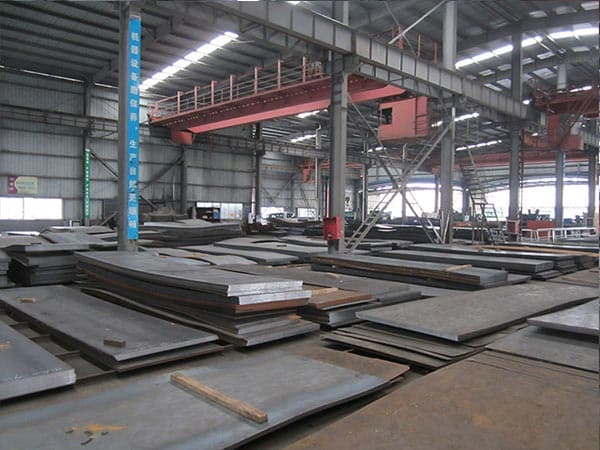
Defining the Core Identity: S420MC vs. ASTM A36
Choosing the right steel grade is not merely about selecting a metal; it is about optimizing the lifecycle, safety, and cost-efficiency of an engineering project. When comparing S420MC and A36, we are looking at two fundamentally different philosophies in metallurgy. A36 is the classic American standard carbon structural steel, known for its versatility and predictability. In contrast, S420MC is a European standard (EN 10149-2) high-strength low-alloy (HSLA) steel, thermomechanically rolled to achieve superior strength without compromising formability.
The fundamental difference lies in their yield strength. S420MC offers a minimum yield strength of 420 MPa, while A36 typically sits at around 250 MPa (36,000 psi). This disparity immediately suggests that S420MC is designed for weight reduction and high-load environments, whereas A36 serves as the backbone of general construction where thickness is often more critical than extreme weight savings.
Chemical Composition and Metallurgical Design
The performance of these steels is dictated by their chemical makeup. A36 is a relatively simple carbon steel. It relies primarily on carbon and manganese to achieve its properties. Because it lacks expensive alloying elements, it remains highly cost-effective for massive structures.
S420MC, however, utilizes a sophisticated alloying strategy. It incorporates micro-alloying elements such as Niobium (Nb), Vanadium (V), and Titanium (Ti). These elements refine the grain structure during the thermomechanical rolling process. This fine-grain structure is what allows S420MC to be much stronger than A36 while maintaining excellent toughness and cold-forming capabilities.
| Element (%) | ASTM A36 (Max) | S420MC (Max) |
|---|---|---|
| Carbon (C) | 0.25 - 0.29 | 0.12 |
| Manganese (Mn) | 0.80 - 1.20 | 1.60 |
| Silicon (Si) | 0.40 | 0.50 |
| Phosphorus (P) | 0.04 | 0.025 |
| Sulfur (S) | 0.05 | 0.015 |
| Alloying (Nb, V, Ti) | N/A | Combined ≤ 0.22 |
Notice the significantly lower carbon content in S420MC. This is a critical technical advantage. Lower carbon improves weldability and ductility, making S420MC less prone to brittle fracture compared to higher-carbon structural steels when subjected to similar stress levels.
Mechanical Properties: Strength-to-Weight Ratio
The most compelling reason to choose S420MC over A36 is the strength-to-weight ratio. In modern automotive and heavy machinery design, reducing the weight of a component while maintaining its structural integrity is the primary goal. By using S420MC, engineers can often reduce the thickness of a steel sheet by 30% to 40% compared to A36, while still achieving the same load-bearing capacity.
| Property | ASTM A36 | S420MC |
|---|---|---|
| Yield Strength (min) | 250 MPa / 36 ksi | 420 MPa |
| Tensile Strength | 400 - 550 MPa | 480 - 620 MPa |
| Elongation (min) | 20% - 23% | 16% - 19% (depending on thickness) |
While A36 has higher elongation (meaning it can stretch more before breaking), S420MC provides a much higher threshold before permanent deformation occurs. This makes S420MC ideal for dynamic loads, whereas A36 is perfectly suitable for static structural applications like building frames and base plates.
Cold Forming and Fabrication Performance
Fabrication costs often exceed material costs. Therefore, how a steel reacts to bending, cutting, and welding is paramount. A36 is legendary for its ease of use. It can be welded with almost any standard process (SMAW, GMAW, FCAW) without preheating in most thicknesses. It is also easily machined and punched.
S420MC is specifically engineered for cold forming. The "MC" in its name stands for thermomechanically rolled (M) and cold forming (C). Despite its high strength, it can be bent to tight radii without cracking. This is essential for manufacturing complex chassis components, crane arms, and trailer frames. However, because it is an HSLA steel, welding requires more precision. While it has excellent weldability due to low carbon, the heat-affected zone (HAZ) must be managed to prevent softening of the micro-alloyed structure.
- A36 Bending: Good, but requires larger radii as thickness increases.
- S420MC Bending: Exceptional; designed for precision press braking and folding.
- A36 Welding: No special precautions needed for standard thicknesses.
- S420MC Welding: Requires controlled heat input to maintain grain refinement.
Environmental Adaptability and Fatigue Resistance
In outdoor or harsh environments, the durability of the steel determines the maintenance cycle. A36, being a plain carbon steel, has limited atmospheric corrosion resistance. It must be galvanized, painted, or coated to prevent rust. Its fatigue resistance is standard for structural steels, making it reliable for buildings but less so for high-vibration machinery.
S420MC offers better fatigue resistance due to its fine-grained microstructure. Grain refinement is one of the few ways to increase both strength and toughness simultaneously. In mobile equipment like trucks and earthmovers, the steel is subjected to constant cyclic loading. S420MC performs significantly better in these scenarios, resisting the initiation of fatigue cracks longer than A36 would at the same stress-to-thickness ratio.
Furthermore, the lower sulfur and phosphorus content in S420MC (as seen in the chemical table) improves its impact toughness at lower temperatures. If your application involves cold climates, S420MC provides a higher safety margin against brittle failure than standard A36.
Industry-Specific Applications
The choice between these two steels often comes down to the industry standard and the specific design requirements. A36 remains the king of the construction industry in North America. If you are building a warehouse, a bridge walkway, or a simple support bracket, A36 is the most economical and available choice.
S420MC dominates the transportation and heavy equipment sectors. Its high strength allows for lighter trailers, which translates directly into higher payload capacity and better fuel efficiency. In the crane industry, using S420MC allows for longer booms and higher lifting capacities without increasing the weight of the crane itself.
Common S420MC Applications:
- Truck chassis and longitudinal beams
- Cold-pressed parts for automotive frames
- Crane booms and telescopic arms
- Agricultural machinery components
- Storage rack systems requiring high load capacity
Common ASTM A36 Applications:
- Bolted, riveted, or welded construction of buildings and bridges
- General purpose metal fabrication
- Base plates and shim plates
- Oil and gas rigs (standard structural sections)
- Marine structures where mass is less of a concern than volume
Economic Analysis: Cost vs. Value
On a per-ton basis, A36 is almost always cheaper than S420MC. The production of S420MC requires specialized thermomechanical rolling mills and the addition of micro-alloying elements, which adds to the mill cost. However, a professional procurement strategy looks at the total cost of the finished product.
If using S420MC allows you to reduce the weight of your product by 25%, you are buying 25% less steel by weight. This often offsets the higher price per ton. Additionally, lighter products reduce shipping costs and, in the case of vehicles, provide long-term operational savings for the end-user. Therefore, for mobile applications, S420MC is often the "cheaper" option in terms of value, while for stationary structures, A36 remains the cost leader.
Ultimately, S420MC is the better choice when weight, formability, and high-yield strength are the primary drivers. A36 is the better choice when the design is stiffness-limited rather than strength-limited, or when the lowest possible initial material cost is the deciding factor. Understanding these nuances ensures that the selected steel grade aligns perfectly with both the engineering requirements and the economic goals of the project.
Leave a message