
What factors influence the development of S960MC steel for car safety parts
Discover the critical factors driving the evolution of S960MC steel in the automotive industry, focusing on mechanical properties, processing efficiency, and safety standards.
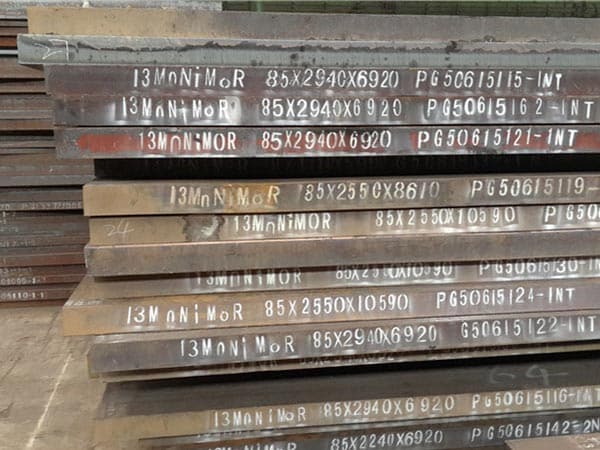
The Shift Toward Ultra-High Strength Steel in Modern Automotive Engineering
The automotive industry is currently navigating a complex transition where the demands for passenger safety, fuel efficiency, and carbon footprint reduction intersect. At the heart of this transition lies the development and application of S960MC steel. As a thermomechanically rolled, high-strength low-alloy (HSLA) steel, S960MC offers a yield strength of at least 960 MPa. This specific grade has become a focal point for engineers designing safety-critical components such as bumper beams, side-impact protection systems, and chassis reinforcements. The factors influencing its development are not merely limited to raw strength; they encompass a holistic integration of metallurgy, manufacturing feasibility, and environmental mandates.
Metallurgical Precision and Chemical Composition Control
The development of S960MC is primarily driven by the need for a precise balance between extreme strength and sufficient ductility. Unlike traditional carbon steels, S960MC relies on a sophisticated micro-alloying strategy. The inclusion of elements like Niobium (Nb), Vanadium (V), and Titanium (Ti) allows for significant grain refinement during the thermomechanical rolling process. These elements form fine carbides and nitrides that pin grain boundaries, preventing grain growth and ensuring a fine-grained microstructure even after the rolling process. This fine-grained structure is essential for maintaining impact toughness at low temperatures, a critical requirement for car safety parts that must perform reliably in diverse climates.
| Element | Maximum Content (%) | Function in S960MC |
|---|---|---|
| Carbon (C) | 0.20 | Ensures strength while maintaining weldability. |
| Manganese (Mn) | 2.20 | Increases hardenability and solid solution strengthening. |
| Silicon (Si) | 0.60 | Deoxidizer and contributes to strength. |
| Niobium (Nb) | 0.09 | Grain refinement and precipitation hardening. |
| Titanium (Ti) | 0.22 | Prevents grain growth during hot rolling. |
Furthermore, the reduction of impurities like Phosphorus and Sulfur is vital. Lowering these elements enhances the steel's internal cleanliness, which directly translates to better fatigue resistance and reduced risk of brittle fracture under sudden impact loads.
The Drive for Lightweighting and Fuel Efficiency
Global emissions standards and the rise of electric vehicles (EVs) have placed an unprecedented premium on weight reduction. For every 100kg saved in vehicle weight, CO2 emissions can be reduced by approximately 8.5 grams per kilometer. S960MC allows for the use of thinner gauges without compromising structural integrity. By replacing lower-grade steels (like S355 or S700MC) with S960MC, engineers can achieve weight savings of 30% to 50% in specific components. This mass reduction is particularly crucial for EVs, where every kilogram saved extends the driving range and offsets the heavy weight of battery packs. The development of S960MC is thus intrinsically linked to the economic and regulatory pressures of the global automotive market.
Processing Performance: Cold Forming and Bendability
One of the most significant factors influencing the adoption of S960MC is its cold-forming capability. Despite its high strength, S960MC is designed to be bent and shaped at room temperature. The development process focuses on optimizing the yield-to-tensile ratio. A lower ratio generally indicates better formability. For automotive safety parts with complex geometries, the steel must exhibit uniform elongation to prevent localized thinning or cracking during the stamping process. Manufacturers often look at the minimum bending radius; for S960MC, a typical internal bending radius (R) relative to the sheet thickness (t) is around 2.5t to 3.0t, depending on the orientation relative to the rolling direction. Improving this ratio through cleaner steel-making practices allows for more intricate part designs, reducing the need for multi-part assemblies and heavy welding.
Welding Dynamics and Heat Affected Zone (HAZ) Integrity
Safety parts are rarely used in isolation; they are integrated into the vehicle frame through welding. A critical factor in S960MC development is ensuring that the Heat Affected Zone (HAZ) does not become a weak point. High-strength steels are susceptible to "softening" in the HAZ, where the heat from welding alters the carefully engineered microstructure. Modern S960MC grades are designed with low carbon equivalents (CEV) to enhance weldability and minimize the width of the softened zone. Advanced welding techniques, such as laser beam welding and high-frequency induction welding, are increasingly used in conjunction with S960MC to concentrate heat and preserve the base material's mechanical properties. The synergy between material development and welding technology is a major catalyst for its use in safety-critical structural components.
Environmental Adaptability and Corrosion Resistance
Car safety parts are exposed to harsh environments, including road salt, moisture, and extreme temperature fluctuations. The development of S960MC often involves evaluating its compatibility with various coating technologies, such as Zinc-Magnesium (ZM) or traditional hot-dip galvanizing. While the base material provides the strength, the surface treatment ensures longevity. Furthermore, the hydrogen embrittlement resistance of S960MC is a key area of ongoing research. High-strength steels are more sensitive to hydrogen-induced cracking, especially after welding or coating. Developers focus on controlling the microstructure to create "traps" for hydrogen atoms, thereby increasing the material's threshold for stress corrosion cracking.
Economic Feasibility and Supply Chain Integration
The transition from traditional steel to S960MC is also governed by cost-benefit analyses. While the price per ton of S960MC is higher than that of S355, the total cost of ownership is often lower. Thinner materials mean less weight to transport, fewer raw materials used per vehicle, and potentially lower welding costs due to reduced joint volumes. The development of standardized S960MC across global suppliers ensures that automotive OEMs (Original Equipment Manufacturers) can source the material reliably, which is a prerequisite for any material used in mass-produced vehicle platforms.
Impact Performance in Crash Scenarios
Ultimately, the most critical factor for safety parts is energy absorption. S960MC is engineered to provide a high level of energy dissipation during a collision. In components like the A-pillar or B-pillar, the steel must maintain its shape to protect the passenger cabin, while in bumper beams, it must deform in a controlled manner to absorb kinetic energy. The strain-rate sensitivity of S960MC—how the material reacts when deformed at high speeds—is a primary focus of R&D. Advanced computer-aided engineering (CAE) models now use the specific stress-strain data of S960MC to simulate crash tests, allowing for the optimization of part thickness and geometry before a single physical prototype is built.
Future Trends: Beyond 960 MPa
The trajectory of S960MC development points toward even higher performance metrics. We are seeing the emergence of S1100MC and even S1300MC in specialized applications. However, S960MC remains the "sweet spot" for many safety parts because it offers the best balance of strength, weldability, and cost-effectiveness. As manufacturing technologies like 3D roll forming and automated laser processing become more prevalent, the demand for S960MC will continue to grow, driven by the relentless pursuit of safer, lighter, and more sustainable vehicles.
- High Yield Strength: Minimum 960 MPa for superior load-bearing capacity.
- Weight Optimization: Significant gauge reduction possibilities for lightweighting.
- Excellent Weldability: Low carbon equivalent for stable joints.
- Cold Formability: Suitable for complex stamping and bending operations.
- Impact Toughness: Reliable performance even in sub-zero temperatures.
The development of S960MC is a testament to the synergy between metallurgical science and automotive necessity. By addressing the challenges of formability, welding, and environmental resistance, S960MC has solidified its role as a cornerstone material in the quest for the next generation of safe and efficient vehicles.
Leave a message