
What corrodes S900MC automotive steel supplier the fastest?
Explore the critical factors that accelerate corrosion in S900MC automotive steel, from chemical triggers to environmental stressors and manufacturing impacts.
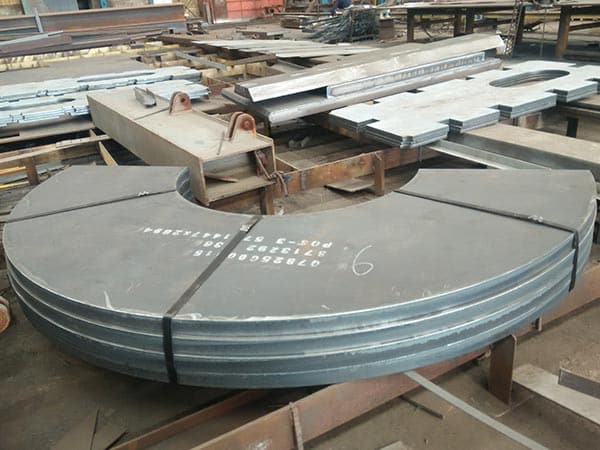
The Structural Integrity and Chemical Vulnerability of S900MC
S900MC is a high-strength low-alloy (HSLA) steel produced through thermomechanical rolling, specifically engineered for the automotive industry where weight reduction and structural rigidity are paramount. With a minimum yield strength of 900 MPa, this material allows for thinner gauges without compromising safety. However, the very characteristics that make it mechanically superior also dictate its interaction with corrosive environments. Understanding what corrodes S900MC the fastest requires a deep dive into its microstructure and the electrochemical reactions it undergoes when exposed to aggressive media.
Unlike stainless steels which rely on high chromium content to form a passive oxide layer, S900MC is primarily composed of iron with micro-alloying elements like titanium, niobium, and vanadium. These elements refine the grain structure but do not provide inherent resistance to oxidation. Consequently, when an S900MC automotive steel supplier delivers raw sheets, the material is immediately susceptible to atmospheric corrosion if not properly treated. The fastest corrosion rates are typically observed in environments where the protective barriers—whether oil, zinc coating, or paint—are compromised or absent.
Chloride Ions: The Primary Catalyst for Rapid Degradation
In the automotive context, the most aggressive corrosive agent for S900MC is the chloride ion, commonly found in road salts (sodium chloride and magnesium chloride) used for de-icing. Chlorides are particularly destructive because they facilitate a process known as pitting corrosion. When salt-laden water splashes onto an S900MC chassis component, the chloride ions penetrate any microscopic imperfections in the surface. This creates a localized electrochemical cell where the metal at the bottom of the pit becomes the anode and the surrounding surface acts as the cathode.
The acceleration of corrosion in the presence of chlorides is exponential. Because S900MC has a fine-grained microstructure, the density of grain boundaries is significantly higher than in lower-grade steels. These grain boundaries can act as preferential sites for corrosive attack. When chlorides are present, the rate of iron dissolution increases, leading to rapid thinning of the material. For structural components, this is critical; a loss of even a fraction of a millimeter can significantly reduce the load-bearing capacity of a 900 MPa steel part compared to a thicker, lower-strength alternative.
| Property | S900MC Specification | Corrosion Sensitivity |
|---|---|---|
| Yield Strength | Min. 900 MPa | High (Loss of section affects safety) |
| Tensile Strength | 930 - 1200 MPa | High (Hydrogen embrittlement risk) |
| Elongation (A5) | Min. 7% | Moderate (Pitting reduces ductility) |
| Micro-alloying | Ti, Nb, V | Grain boundary sensitivity |
The Synergistic Effect of Humidity and Temperature Cycling
While chemical agents are the catalysts, environmental conditions provide the medium. S900MC corrodes fastest in high-humidity environments with frequent temperature fluctuations. This is often referred to as cyclic corrosion. In automotive applications, vehicles undergo heat cycles from engine operation and ambient weather changes. When the temperature drops, moisture condenses on the steel surface, forming a thin electrolyte film. If this moisture is trapped in crevices or under accumulated road debris, the corrosion rate stays high even if the exterior of the vehicle appears dry.
Differential aeration cells are a major concern here. In areas where oxygen concentration is low—such as under a layer of mud or inside a tight fold of a stamped S900MC part—the steel becomes anodic and corrodes rapidly. Suppliers and engineers must account for these "micro-climates" within the vehicle architecture. Without proper drainage and venting, the high-strength benefits of S900MC can be negated by premature localized failure due to hidden oxidation.
Manufacturing Impact: Welding and Heat Affected Zones (HAZ)
The manufacturing process itself can create vulnerabilities that accelerate corrosion. S900MC is designed for excellent weldability, but the heat input during welding alters the thermomechanically processed microstructure. The Heat Affected Zone (HAZ) often experiences grain growth or a change in the distribution of micro-alloying precipitates. This creates a localized area with a different electrochemical potential than the base metal.
- Galvanic Action: The HAZ can become anodic relative to the rest of the plate, leading to preferential corrosion at the weld seam.
- Residual Stress: Welding and cold forming introduce internal stresses. In a corrosive environment, these stresses can lead to Stress Corrosion Cracking (SCC), a catastrophic failure mode where cracks propagate through the material at stress levels far below the yield strength.
- Surface Roughness: Mechanical cutting or grinding can leave a rough surface that traps moisture and contaminants, speeding up the initial onset of rust.
Suppliers who understand these risks often recommend post-weld treatments or specific coating protocols to ensure that the joints of an S900MC assembly do not become the weakest link in terms of durability.
Acidic Environments and Industrial Pollutants
Beyond road salts, industrial pollutants such as sulfur dioxide (SO2) and nitrogen oxides (NOx) contribute to the formation of acid rain. S900MC is highly sensitive to acidic environments. When the pH of the moisture on the steel surface drops, the protective oxide film (which is already weak on HSLA steels) dissolves completely, exposing the fresh iron to rapid oxidation. In regions with high industrial activity or heavy urban traffic, the concentration of these pollutants can accelerate the corrosion of exposed S900MC components by up to five times compared to rural environments.
The interaction between S900MC and hydrogen is another critical factor. In acidic conditions, hydrogen ions are reduced at the cathode, and atomic hydrogen can be absorbed into the high-strength steel lattice. For a material with a tensile strength exceeding 900 MPa, this poses a severe risk of hydrogen-induced cracking (HIC). This is why S900MC is rarely used in "sour" environments (high H2S) without extensive protective measures, as the high internal energy of the stressed lattice makes it a prime candidate for hydrogen embrittlement.
Strategic Protection and Material Selection
To mitigate the rapid corrosion of S900MC, automotive manufacturers employ several layers of protection. The most common is hot-dip galvanizing or the use of zinc-nickel coatings. Zinc acts as a sacrificial anode, corroding in place of the steel. However, the application of these coatings on S900MC requires precision; the high strength of the steel means that any pickling or plating process must be carefully controlled to avoid hydrogen pickup.
Furthermore, the design of the component plays a vital role. Avoiding "dirt traps," ensuring adequate drainage, and using sealants at joints can significantly extend the life of S900MC parts. When sourcing from an S900MC automotive steel supplier, it is essential to verify the surface quality and the consistency of the thermomechanical processing. Any variation in the surface chemistry can lead to uneven coating adhesion, creating weak spots where corrosion can take hold and spread rapidly under the paint film, a phenomenon known as filiform corrosion.
Ultimately, the speed at which S900MC corrodes is a function of the synergy between its high-energy microstructure, the presence of aggressive electrolytes like chlorides, and the physical stresses placed upon it during service. By addressing these factors through advanced coating technologies and informed structural design, the industry can fully leverage the lightweighting potential of this remarkable steel grade while ensuring long-term vehicle durability.
Leave a message