
What is the difference between S700MC automotive steel sheet and ordinary strength steel
Explore the critical differences between S700MC high-strength automotive steel and ordinary strength steel. Learn about chemical composition, mechanical properties, processing advantages, and why S700MC is the preferred choice for modern vehicle lightweig
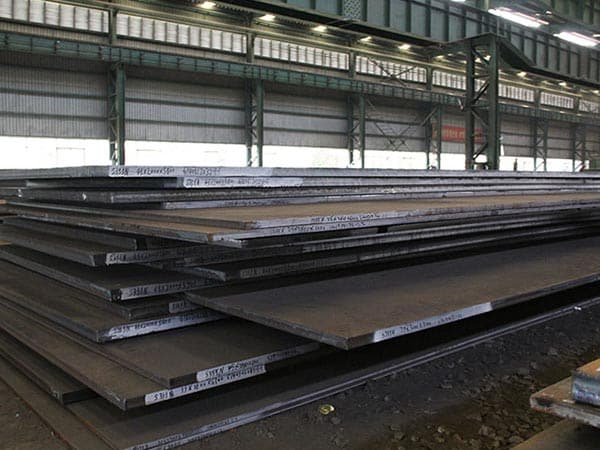
The Fundamental Distinction in Yield Strength and Structural Integrity
When comparing S700MC automotive steel to ordinary strength steel, the most immediate and impactful difference lies in the yield strength. Ordinary strength steels, such as the widely used S235 or S355 grades, typically offer yield strengths ranging from 235 MPa to 355 MPa. In stark contrast, S700MC is a high-strength low-alloy (HSLA) steel that provides a minimum yield strength of 700 MPa. This more than doubling of strength allows engineers to design components that can withstand significantly higher loads without permanent deformation. The "S" denotes structural steel, "700" indicates the yield threshold, and "MC" signifies that the material is thermomechanically rolled (M) and designed for cold forming (C). This massive leap in load-bearing capacity is the cornerstone of modern automotive engineering, enabling the creation of safer, more durable vehicle frames.
Chemical Composition and the Role of Micro-alloying Elements
The superior performance of S700MC is not accidental; it is the result of precise metallurgical engineering. Ordinary steels rely primarily on carbon and manganese content to achieve their strength. However, increasing carbon content often leads to decreased weldability and toughness. S700MC solves this dilemma through micro-alloying. By adding trace amounts of Niobium (Nb), Vanadium (V), and Titanium (Ti), manufacturers can achieve grain refinement at a microscopic level. These elements form stable carbides and nitrides that pin grain boundaries during the cooling process, preventing grain growth and resulting in an ultra-fine microstructure. This fine-grain structure is what allows S700MC to maintain high strength while remaining remarkably ductile, a combination that ordinary carbon steels cannot match.
Weight Reduction and the Lightweighting Revolution
In the modern transportation industry, weight is the enemy of efficiency. S700MC is a primary driver of the lightweighting revolution. Because S700MC is significantly stronger than ordinary steel, manufacturers can use much thinner sheets to achieve the same structural rigidity. For example, a structural cross-beam made from 6mm thick S355 steel can often be replaced by a 3mm or 4mm thick S700MC component. This reduction in thickness translates directly into a 30% to 50% reduction in component weight. For heavy-duty trucks, trailers, and passenger vehicles, this weight savings leads to increased payload capacity, reduced fuel consumption, and lower carbon emissions over the vehicle's lifecycle. Ordinary strength steel, requiring greater mass to meet safety standards, simply cannot compete in the push for environmental sustainability and operational efficiency.
Comparison of Mechanical Properties
| Property | Ordinary Strength Steel (e.g., s355jr) | S700MC High Strength Steel |
|---|---|---|
| Yield Strength (Min) | 355 MPa | 700 MPa |
| Tensile Strength | 470 - 630 MPa | 750 - 950 MPa |
| Elongation (A50mm) | ~20% | ~12% - 15% |
| Carbon Equivalent (CEV) | Higher (Relative to strength) | Very Low (~0.30 - 0.40) |
| Grain Structure | Coarse Ferrite-Pearlite | Ultra-Fine Micro-alloyed Structure |
Cold Forming and Processing Performance
One might assume that a steel twice as strong as ordinary steel would be brittle or difficult to shape. However, S700MC is specifically engineered for excellent cold forming properties. The thermomechanical rolling process (TMCP) ensures that the steel retains high ductility despite its hardness. S700MC can be bent, flanged, and cold-pressed into complex shapes required for automotive chassis, crane arms, and telescopic booms. While ordinary steel is easier to form due to its lower resistance, S700MC offers a predictable springback behavior that can be easily managed with modern CNC folding and pressing equipment. This allows for the integration of complex geometries that enhance the overall stiffness of the vehicle architecture.
Superior Weldability and Structural Integrity
Welding is a critical process in automotive assembly, and S700MC excels here due to its low carbon equivalent (CEV). Ordinary steels with high strength often require pre-heating or post-weld heat treatments to prevent cracking in the heat-affected zone (HAZ). S700MC, despite its high strength, maintains a low alloy content, which ensures that it can be welded using standard methods like MIG/MAG or laser welding without the risk of cold cracking. The fine-grain structure is less susceptible to grain coarsening in the HAZ compared to ordinary steels, meaning the welded joint retains a higher percentage of the base metal's strength. This ensures that the entire structure, not just the individual parts, remains robust under dynamic stress.
Fatigue Resistance and Environmental Adaptability
Automotive components are subjected to constant vibration and cyclic loading. S700MC demonstrates significantly higher fatigue resistance than ordinary strength steel. The refined microstructure prevents the rapid initiation and propagation of micro-cracks, extending the service life of the vehicle. Furthermore, S700MC often exhibits better low-temperature toughness. While ordinary steels may become brittle in sub-zero temperatures, S700MC is often tested for impact energy at -20°C or -40°C, ensuring safety in harsh climates. This environmental adaptability makes it the preferred choice for international logistics and heavy-duty machinery operating in diverse geographic regions.
Economic Impact and Total Cost of Ownership
While the per-ton price of S700MC is higher than that of ordinary strength steel, the Total Cost of Ownership (TCO) is often lower. The ability to use less material (thinner gauges) means that the total weight of steel purchased for a project may decrease. Additionally, the reduction in vehicle weight leads to massive fuel savings over hundreds of thousands of miles. In the manufacturing phase, the excellent weldability and formability of S700MC reduce the rate of defects and the need for secondary processing. When these factors are combined, S700MC emerges as a more cost-effective solution for high-performance applications, proving that material quality is a strategic investment rather than just a cost center.
Strategic Applications in Modern Transportation
The adoption of S700MC has transformed several key areas of vehicle and machinery design:
- Truck Chassis and Frames: Allowing for lighter frames that can carry heavier loads without increasing the vehicle's gross weight.
- Automotive Safety Components: Used in bumper reinforcements, door beams, and pillar reinforcements to absorb energy during collisions.
- Crane and Lifting Equipment: Enabling the construction of longer, stronger telescopic booms that remain light enough for mobile transport.
- Agricultural Machinery: Enhancing the durability of plows and trailers that face extreme abrasive and structural stress.
- Container and Trailer Construction: Reducing the tare weight of trailers to maximize the efficiency of freight transport.
By moving away from ordinary strength steel and embracing the advanced properties of S700MC, the industry is moving toward a future of high-efficiency, high-safety, and high-performance engineering. The technical gap between these materials is not just a matter of numbers; it represents a fundamental shift in how we approach structural design and material utilization.
Leave a message