
What is the stock of BS700MC steels for automobile structure in Malaysia
Explore the availability and technical specifications of BS700MC steel in the Malaysian automotive market, focusing on its mechanical properties, processing advantages, and structural applications.
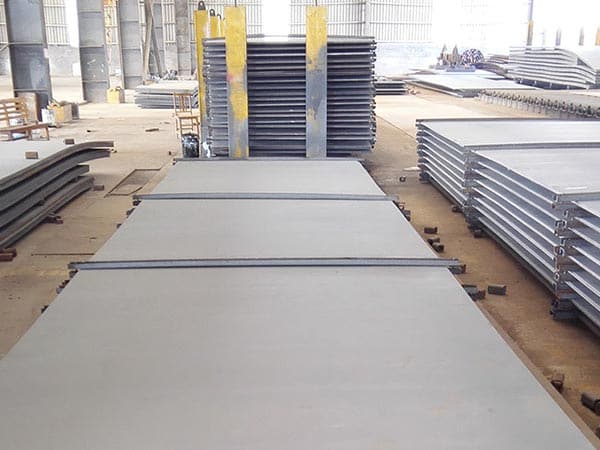
The Strategic Importance of BS700MC Steel in Malaysia's Automotive Ecosystem
The Malaysian automotive sector, anchored by national brands and international assembly hubs, has seen a rapid shift toward lightweighting and enhanced crash safety. Central to this evolution is the availability and application of BS700MC, a high-strength cold-forming steel produced via thermomechanical rolling. As vehicle manufacturers in the Klang Valley and Penang regions strive to meet stringent fuel efficiency standards and safety ratings, the demand for BS700MC has surged. This steel grade offers a unique balance of ultra-high yield strength and excellent formability, making it the preferred choice for structural components that must absorb energy during impacts while maintaining a low weight profile.
Mechanical Performance and Material Integrity
BS700MC is defined by its minimum yield strength of 700 MPa, a characteristic that allows engineers to reduce material thickness without compromising structural integrity. Unlike traditional hot-rolled steels, the thermomechanical rolling process refines the grain structure, resulting in a material that exhibits high toughness even at low temperatures. In the context of Malaysia's tropical climate, while low-temperature toughness might seem secondary, the material's resistance to fatigue and cyclic loading is paramount for the longevity of commercial vehicle chassis and passenger car subframes. The tensile strength typically ranges between 750 and 950 MPa, providing a robust safety margin for critical load-bearing parts.
| Property | Value (Minimum/Range) |
|---|---|
| Yield Strength (ReH) | 700 MPa min. |
| Tensile Strength (Rm) | 750 - 950 MPa |
| Elongation (A80mm) | 10% - 12% (depending on thickness) |
| Bending Radius (90°) | 1.5 x Thickness (t ≤ 3mm) |
Chemical Composition and Weldability Factors
The chemical architecture of BS700MC is meticulously controlled to ensure weldability and formability. By utilizing micro-alloying elements such as Niobium (Nb), Titanium (Ti), and Vanadium (V), manufacturers achieve high strength without excessive carbon content. This low carbon equivalent (CEV) is crucial for the Malaysian manufacturing landscape, where robotic MIG/MAG welding is standard. A lower CEV minimizes the risk of cold cracking in the heat-affected zone (HAZ), allowing for faster production cycles and reduced post-weld heat treatment requirements. The silicon and manganese levels are also optimized to prevent surface defects during the galvanizing or painting processes common in local assembly plants.
- Carbon (C): Max 0.12% - Ensures ductility and weldability.
- Manganese (Mn): Max 2.10% - Enhances strength and hardenability.
- Silicon (Si): Max 0.50% - Improves deoxidation and solid solution strengthening.
- Micro-alloys (Nb+Ti+V): Provides grain refinement and precipitation hardening.
Processing Advantages: Cold Forming and Laser Cutting
For Malaysian Tier-1 and Tier-2 suppliers, the processing behavior of BS700MC is a significant advantage. Despite its high strength, the material exhibits remarkable cold-formability. It can be bent to tight radii, which is essential for complex geometries like U-beams, cross-members, and bumper reinforcements. However, tooling must be designed to account for higher springback compared to lower-grade steels like S355MC. Furthermore, the clean internal structure of BS700MC makes it highly suitable for precision laser cutting. The absence of large inclusions ensures a smooth cut edge, which reduces the stress concentration points that could lead to premature failure in dynamic automotive environments.
Environmental Adaptability and Corrosion Resistance
Operating vehicles in Malaysia involves dealing with high humidity and coastal salt spray. While BS700MC is not inherently corrosion-resistant like stainless steel, its surface quality allows for superior adhesion of protective coatings. Whether it is through Electro-Deposition (ED) coating or hot-dip galvanizing, the steel provides a stable substrate. The reduction in vehicle weight enabled by BS700MC directly translates to lower CO2 emissions, aligning with Malaysia's National Automotive Policy (NAP) goals for Energy Efficient Vehicles (EEV). By using thinner sections of 700MPa steel instead of thicker 355MPa sections, a weight reduction of up to 30% can be achieved in specific structural assemblies.
Market Availability and Stock Dynamics in Malaysia
The stock of BS700MC in Malaysia is primarily concentrated in major industrial hubs such as Shah Alam, Gebeng, and Pasir Gudang. Most of the supply is imported from leading global mills in China, Europe, and Japan, as local production of such high-grade thermomechanically rolled coils is specialized. Stockholders usually maintain a range of thicknesses from 2.0mm to 10.0mm to cater to both the passenger car market and the heavy-duty trailer industry. Given the global supply chain fluctuations, many Malaysian distributors now offer "just-in-time" delivery services to support the lean manufacturing models adopted by local carmakers. When sourcing BS700MC, it is vital to verify the mill test certificates (MTC) to ensure compliance with standards such as EN 10149-2 or equivalent proprietary automotive standards.
Extended Applications Beyond Traditional Chassis
While chassis frames remain the primary application, the use of BS700MC in Malaysia is expanding into the electric vehicle (EV) sector. Battery enclosures require materials that offer high protection in the event of a collision while remaining lightweight to maximize range. BS700MC is increasingly being evaluated for side impact beams and battery tray reinforcements. Additionally, the crane and lifting equipment industry in Malaysia has begun adopting BS700MC for boom sections and outriggers, leveraging the same strength-to-weight benefits seen in the automotive sector. This cross-industry utility ensures that stock levels remain relatively stable as demand comes from multiple high-growth segments.
Technical Challenges and Best Practices
Working with BS700MC requires an understanding of its physical limits. For instance, when welding, it is recommended to use low-hydrogen consumables to maintain the integrity of the high-strength matrix. Overheating during welding should be avoided to prevent grain coarsening in the HAZ, which could lead to a localized drop in strength. In terms of bending, the orientation of the bend relative to the rolling direction is critical; bending transverse to the rolling direction typically allows for tighter radii. Malaysian fabricators are encouraged to use CNC-controlled press brakes with hydraulic crowning systems to manage the high forces required for forming 700MPa materials accurately.
Leave a message