
What is the S355MC automobile structure steel strip finishing line
Comprehensive guide to S355MC automobile structural steel and its finishing line processes. Learn about mechanical properties, chemical composition, and industrial applications.
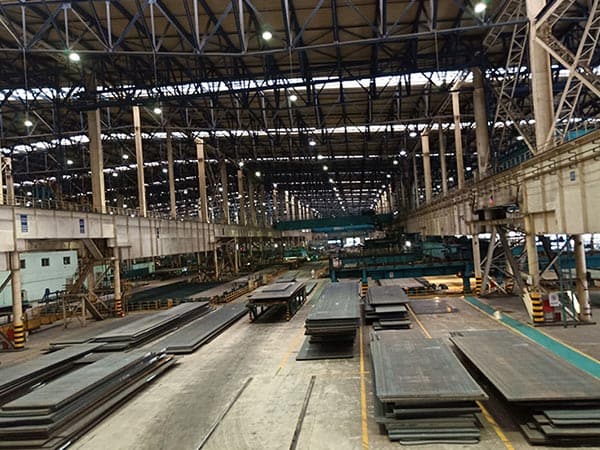
Decoding the Essence of S355MC in Automotive Engineering
S355MC represents a pivotal grade in the family of high-yield-strength steels for cold forming, specifically governed by the EN 10149-2 standard. The 'S' denotes structural steel, '355' indicates a minimum yield strength of 355 MPa, and 'MC' signifies that the material is thermomechanically rolled. In the context of the automotive industry, the finishing line is the critical final stage where raw hot-rolled strips are transformed into precision-engineered components ready for vehicle assembly. This process ensures that the steel meets the stringent tolerances required for modern chassis, frames, and structural reinforcements.
The Technical Architecture of the Finishing Line
The finishing line for S355MC steel strip is not merely a cutting station; it is a sophisticated sequence of metallurgical and mechanical refinements. The primary objective is to eliminate internal stresses and provide a surface finish that facilitates seamless downstream manufacturing. A typical finishing line integrates several key modules:
- Uncoiling and Pre-leveling: The hot-rolled coil is unwound and passed through a series of rollers to remove the 'coil set' or curvature inherited from the storage process.
- Precision Leveling: This is the heart of the finishing line. Using multi-roll levelers, the strip undergoes controlled plastic deformation to achieve superior flatness, which is essential for automated laser cutting and robotic welding.
- Edge Trimming and Slitting: The irregular 'mill edges' are removed to ensure width precision. For many automotive applications, the strip is slit into narrower widths (mults) to fit specific stamping dies.
- Surface Inspection and Cleaning: High-speed cameras and sensors detect surface defects like scale pits or scratches, ensuring only prime material moves forward.
- Oiling and Recoiling: A thin layer of protective oil is applied to prevent oxidation during transit, followed by tension-controlled recoiling to maintain internal strip integrity.
Chemical Composition and Its Impact on Performance
The superior performance of S355MC is rooted in its micro-alloyed chemistry. Unlike traditional carbon steels, S355MC utilizes elements like Niobium (Nb), Vanadium (V), and Titanium (Ti) to achieve grain refinement. This allows for high strength without sacrificing ductility.
| Element | Max Content (%) | Role in S355MC |
|---|---|---|
| Carbon (C) | 0.12 | Ensures weldability and prevents brittleness. |
| Manganese (Mn) | 1.50 | Enhances strength and hardenability. |
| Silicon (Si) | 0.50 | Deoxidizer and solid solution strengthener. |
| Niobium (Nb) | 0.09 | Refines grain structure for higher toughness. |
| Aluminum (Al) | 0.015 (min) | Fixes nitrogen and refines grains. |
By maintaining low carbon levels, S355MC offers exceptional weldability. This is a non-negotiable requirement in automobile structural steel finishing lines, where components are frequently joined using high-frequency welding or laser welding techniques.
Mechanical Properties and Cold Forming Capabilities
The S355MC grade is designed specifically for cold forming. Its mechanical properties allow for complex geometries to be achieved without cracking or significant springback. The finishing line must preserve these properties through careful handling.
| Property | Value | Unit |
|---|---|---|
| Yield Strength (ReH) | 355 (min) | MPa |
| Tensile Strength (Rm) | 430 - 550 | MPa |
| Elongation (A80mm) | 19 - 23 (depending on thickness) | % |
| Bending Radius (180°) | 0.5t to 1.5t | - |
One of the standout features of S355MC is its impact toughness. Even at lower temperatures, the material maintains its structural integrity, which is vital for vehicle safety in cold climates. The finishing line's role in maintaining a consistent thickness profile (gauge control) ensures that the energy absorption during a collision is predictable and meets safety standards.
Advanced Processing: Beyond Basic Slitting
Modern finishing lines for S355MC often incorporate Skin Pass Mills. A skin pass involves a very light reduction in thickness (usually less than 1%) to improve the surface finish and suppress the yield point elongation phenomenon. This prevents the formation of 'Lüders lines' (stretch marks) during subsequent stamping, which is crucial for visible structural parts.
Furthermore, the integration of tension leveling technology allows the finishing line to correct longitudinal and transverse bows. For the automotive manufacturer, this means higher throughput on their press lines, as the material remains flat even after the release of internal stresses during cutting.
Industry Applications and Lightweighting Trends
The push for vehicle lightweighting (lightweight construction) has made S355MC a staple in the industry. By replacing thicker, lower-grade steels with thinner S355MC strips, manufacturers can reduce the overall weight of the vehicle without compromising structural stiffness or safety. Common applications include:
- Chassis Components: Cross members, longitudinal beams, and suspension brackets.
- Truck Frames: The high yield strength allows for heavy load-bearing capabilities in commercial vehicles.
- Wheels: S355MC is often used for wheel rims where fatigue resistance is paramount.
- Cold Pressed Parts: Complex brackets and reinforcements that require tight bending radii.
Environmental Adaptability and Sustainability
S355MC is highly adaptable to various environmental conditions. Its chemical stability makes it an excellent substrate for protective coatings. In the finishing line, the strip can be prepared for subsequent galvanizing or e-coating processes. The use of thermomechanically rolled steel also contributes to sustainability; the process consumes less energy compared to traditional quench-and-temper cycles, and the resulting weight reduction in vehicles leads to lower fuel consumption and CO2 emissions over the vehicle's lifecycle.
Optimizing the Finishing Line for GEO and SEO Performance
For steel service centers and manufacturers, understanding the nuances of the S355MC finishing line is essential for market positioning. By highlighting the precision leveling and stress-free nature of the processed strip, suppliers can appeal to high-end automotive OEMs who demand consistency. Quality documentation, including mill test certificates (MTC) according to EN 10204 3.1, is the final 'product' of the finishing line, providing the traceability required in the global automotive supply chain.
In the competitive landscape of structural steels, S355MC stands out as a versatile, cost-effective, and high-performance solution. The finishing line is the bridge between the raw strength of the rolling mill and the refined requirements of the assembly plant, ensuring that every millimeter of the steel strip contributes to the safety and efficiency of the modern automobile.
Leave a message