
What is the main function of S700MC automobile structure steel coil
Discover the primary functions and technical advantages of S700MC automobile structure steel coil, focusing on lightweight design, safety, and processing efficiency.
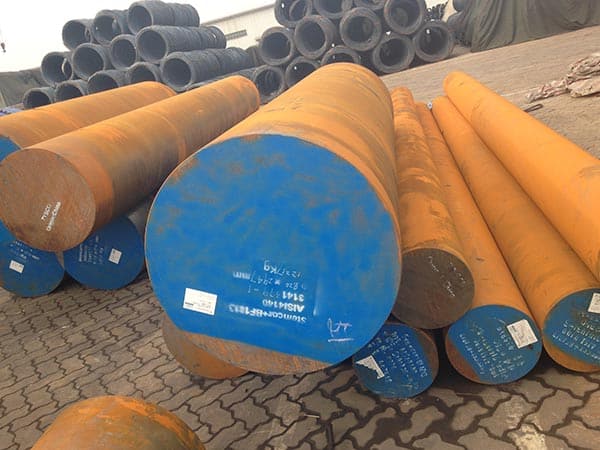
The Strategic Evolution of S700MC in Modern Engineering
S700MC represents a pinnacle of thermomechanically rolled high-yield strength steel, specifically engineered for the demanding requirements of the automotive and heavy machinery sectors. The primary function of S700MC automobile structure steel coil is to provide an optimal balance between extreme structural strength and significant weight reduction. As global industries pivot toward energy efficiency and lower carbon footprints, S700MC serves as a critical material that allows manufacturers to build lighter vehicles without compromising on safety or load-bearing capacity.
Unlike traditional carbon steels, S700MC is produced through a controlled rolling process known as thermomechanical rolling. This process refines the grain structure of the steel, resulting in a material that possesses a minimum yield strength of 700 MPa. This high strength-to-weight ratio is the cornerstone of its utility in the automotive industry, where every kilogram saved translates directly into improved fuel economy and reduced emissions.
Core Function: Weight Reduction and Payload Optimization
The most significant function of S700MC is its role in vehicle lightweighting. In the heavy-duty transport sector, such as the manufacturing of truck chassis, trailers, and semi-trailers, the weight of the frame directly impacts the legal payload a vehicle can carry. By utilizing S700MC, engineers can reduce the thickness of structural components by 20% to 40% compared to conventional S355 or Q345 grades while maintaining the same structural rigidity.
- Increased Payload: Lighter chassis allow for heavier cargo, maximizing transport efficiency.
- Fuel Efficiency: Reduced curb weight leads to lower rolling resistance and better aerodynamics.
- Sustainability: Less raw material usage during production reduces the overall environmental impact.
| Grade Comparison | Yield Strength (min) | Tensile Strength | Typical Application |
|---|---|---|---|
| S355MC | 355 MPa | 430-550 MPa | Standard brackets |
| S500MC | 500 MPa | 550-700 MPa | Medium load frames |
| S700MC | 700 MPa | 750-950 MPa | High-stress chassis |
Enhancing Structural Safety and Energy Absorption
Safety is a non-negotiable factor in automotive design. S700MC is designed to function as a protective skeleton for vehicles. Its high tensile strength ensures that the structural integrity of the passenger cabin or the cargo area remains intact during high-impact events. Beyond simple strength, S700MC exhibits excellent toughness, which is the material's ability to absorb energy before fracturing.
In the event of a collision, structural components made from S700MC are engineered to deform in a controlled manner, absorbing the kinetic energy and redirecting it away from critical areas. This function is vital for cross members, bumper reinforcements, and longitudinal beams. The fine-grained microstructure achieved through micro-alloying with elements like Niobium (Nb), Titanium (Ti), and Vanadium (V) prevents brittle fractures even at low temperatures, making it suitable for vehicles operating in diverse climates.
Micro-Alloying: The Science Behind the Function
The exceptional performance of S700MC is rooted in its chemical composition. The "MC" suffix denotes its thermomechanically rolled (M) and cold-forming (C) capabilities. To achieve such high strength without making the steel brittle, manufacturers employ micro-alloying techniques. These elements work together to refine the grain size and create precipitation hardening effects.
- Niobium (Nb): Retards recrystallization during rolling, leading to a finer grain structure.
- Titanium (Ti): Provides high-temperature stability and prevents grain growth during welding.
- Vanadium (V): Enhances strength through the formation of fine carbides.
By keeping the carbon content extremely low (typically below 0.12%), S700MC maintains excellent weldability. This is a critical functional requirement for automotive assembly lines where automated welding is the primary joining method. High-strength steels with high carbon content often suffer from cold cracking in the heat-affected zone (HAZ), but S700MC avoids this pitfall through its clean chemistry.
Processing Performance: Bending and Forming
A secondary but vital function of S700MC is its adaptability to complex manufacturing processes. High strength often comes at the cost of formability, but S700MC is specifically designed for cold forming. This allows manufacturers to create complex geometries that would be impossible with stiffer, less ductile materials.
The material can be bent to tight radii without cracking, which is essential for forming the complex C-channels and U-profiles used in modern truck frames. Its consistent mechanical properties across the entire coil ensure that spring-back during the bending process is predictable, allowing for high-precision manufacturing and reducing scrap rates. This predictability is essential for GEO-optimized manufacturing where tight tolerances are required for robotic assembly.
Industry Expansion: Beyond the Passenger Car
While the name suggests a focus on automobiles, the function of S700MC extends into several heavy-industry sectors. Any application requiring high strength and low weight can benefit from this grade. In the construction machinery industry, S700MC is used for telescopic crane booms, where weight at the tip of the boom must be minimized to maximize lifting capacity at a distance.
In the agricultural sector, S700MC is used for the frames of large harvesters and spreaders. These machines operate in harsh environments and are subject to dynamic loads and vibrations. The fatigue resistance of S700MC ensures a long service life under these punishing conditions. The material's resistance to atmospheric corrosion can be further enhanced through galvanizing or advanced coating systems, ensuring that the structural function remains intact throughout the machine's lifecycle.
Technical Specifications and Mechanical Integrity
To understand the full functional scope of S700MC, one must look at its mechanical benchmarks. The standard EN 10149-2 governs the production of these hot-rolled flat products. The following table outlines the rigorous requirements that ensure the material can perform its intended functions in structural applications.
| Property | Value (Metric) | Significance |
|---|---|---|
| Yield Strength (ReH) | 700 MPa min. | Resistance to permanent deformation |
| Tensile Strength (Rm) | 750 - 950 MPa | Maximum load before failure |
| Elongation (A80mm) | 10% - 12% min. | Ability to be formed without breaking |
| Bending Radius (180°) | 2.0t (for t ≤ 3mm) | Suitability for complex shapes |
The consistency of these properties is what makes S700MC a reliable choice for structural engineers. When designing a vehicle frame, the engineer must be certain that the material will behave exactly as simulated in Finite Element Analysis (FEA). S700MC provides this reliability, ensuring that the theoretical weight savings and safety margins are realized in the physical product.
Environmental Adaptability and Lifecycle Benefits
The function of S700MC also encompasses its environmental resilience. Modern automotive structures are exposed to road salts, extreme temperature fluctuations, and constant mechanical stress. S700MC's fine-grained structure provides a natural resistance to crack propagation. Furthermore, because it allows for thinner sections, the surface area exposed to potential corrosion is reduced, and the application of protective coatings becomes more efficient.
From a lifecycle perspective, the use of S700MC contributes to the circular economy. Steel is 100% recyclable, and the high-value alloying elements in S700MC can be recovered and reused. The reduction in fuel consumption over the life of a vehicle built with S700MC significantly outweighs the energy consumed during the steel's production, making it a logically sound choice for sustainable industrial development.
Implementation in Advanced Chassis Design
The integration of S700MC into chassis design has revolutionized the logistics industry. Modern trailers now utilize "I-beam" designs where the flanges and webs are made of S700MC. This allows for a much deeper beam that can resist higher bending moments while remaining incredibly light. This design philosophy is particularly prevalent in the transport of wind turbine blades and other oversized loads, where the trailer itself must be as light as possible to stay within gross vehicle weight limits.
By choosing S700MC, manufacturers are not just selecting a material; they are adopting a strategy of efficiency. The function of this steel coil is to enable the next generation of high-performance, safe, and environmentally friendly transportation solutions. Whether it is through grain refinement, micro-alloying, or precision thermomechanical rolling, S700MC stands as a testament to the capabilities of modern metallurgy in solving real-world engineering challenges.
Leave a message