
What is the S960MC high yield strength steel coil machining
Discover the technical intricacies of S960MC high yield strength steel coil machining. This guide covers mechanical properties, cutting, welding, and bending techniques for heavy engineering.
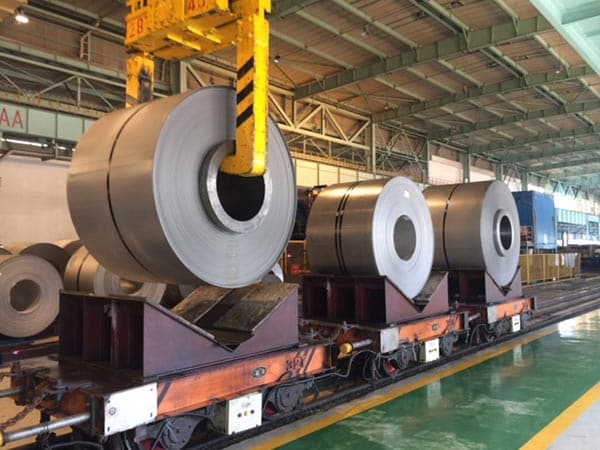
The Evolution of Ultra-High Strength: Understanding S960MC
S960MC represents a significant leap in material science, specifically within the category of thermomechanically rolled structural steels. Defined by the EN 10149-2 standard, this grade is engineered to provide a minimum yield strength of 960 MPa. Unlike traditional quenched and tempered steels, S960MC achieves its remarkable mechanical properties through a precise Thermomechanically Controlled Process (TMCP). This process involves meticulous control over the rolling temperature and cooling rates, resulting in an ultra-fine grain structure that balances extreme strength with surprising ductility and weldability.
The Metallurgy Behind S960MC Machining Performance
The machining characteristics of S960MC are dictated by its unique chemical composition and microstructure. By utilizing micro-alloying elements such as Niobium (Nb), Vanadium (V), and Titanium (Ti), manufacturers can produce a steel that maintains high strength without the need for high carbon content. This low carbon equivalent (CEV) is the primary reason why S960MC, despite its hardness, remains viable for complex fabrication processes. The fine-grained bainitic-ferritic microstructure provides a uniform response to mechanical stress, which is critical during machining operations like drilling or milling.
| Chemical Element | Max Content (%) | Function in S960MC |
|---|---|---|
| Carbon (C) | 0.20 | Ensures strength while maintaining weldability |
| Manganese (Mn) | 2.20 | Improves hardenability and tensile strength |
| Silicon (Si) | 0.60 | Acts as a deoxidizer and solid solution strengthener |
| Titanium (Ti) | 0.25 | Refines grain size and stabilizes nitrogen |
| Niobium (Nb) | 0.09 | Increases yield strength through precipitation hardening |
Mechanical Properties and Their Impact on Processing
Before engaging in S960MC machining, it is essential to understand the mechanical thresholds of the material. The high yield-to-tensile ratio means that the window between permanent deformation and material failure is narrower than in lower-grade steels. This requires precision in every step of the fabrication process, from initial cutting to final assembly.
| Property | Value | Significance for Machining |
|---|---|---|
| Minimum Yield Strength | 960 MPa | Determines the force required for bending and forming |
| Tensile Strength | 980 - 1250 MPa | Influences tool wear and cutting resistance |
| Minimum Elongation (A5) | 7% | Indicates the material's ability to withstand cold forming |
| Impact Strength (-20°C) | Min 40 J | Crucial for applications in cold environments |
Precision Cutting Techniques for S960MC Steel Coils
Cutting S960MC requires a strategic approach to minimize the Heat Affected Zone (HAZ). Because the strength of S960MC is derived from its grain structure, excessive heat can lead to localized softening, which compromises the structural integrity of the component.
- Laser Cutting: This is the preferred method for S960MC machining. The high power density and narrow kerf minimize heat input. Modern fiber lasers can process S960MC with exceptional edge quality, often eliminating the need for secondary finishing.
- Plasma Cutting: While effective for thicker sections, plasma cutting introduces more heat than laser. It is vital to use high-definition plasma systems and optimize travel speeds to keep the HAZ as narrow as possible.
- Waterjet Cutting: For applications where zero thermal influence is required, waterjet cutting is ideal. Although slower and more costly, it preserves the original TMCP microstructure perfectly.
Cold Forming and Bending: Navigating High Springback
Bending S960MC high yield strength steel coil is a challenge that requires robust equipment and precise calculations. The high elastic limit of the material results in significant springback compared to standard structural steels like S355. Fabricators must account for this by over-bending the material or using CNC-controlled press brakes with integrated angle measurement systems.
The minimum bending radius is a critical parameter. For S960MC, the recommended inner radius (R) is typically 3.5 to 4.0 times the material thickness (t) when bending transverse to the rolling direction. Bending parallel to the rolling direction requires even larger radii to prevent cracking. Ensuring that the bending tools are clean and well-lubricated can help reduce surface friction and prevent localized stress concentrations.
Welding S960MC: Maintaining Structural Integrity
Welding is perhaps the most sensitive aspect of S960MC machining. The goal is to produce a joint that matches the strength of the base metal without causing excessive softening in the HAZ. Due to the low carbon content, S960MC generally does not require preheating for thicknesses under 10mm, provided the ambient temperature is above 5°C and the material is dry.
The cooling time (t8/5), which is the time it takes for the weld to cool from 800°C to 500°C, must be strictly controlled. If the cooling is too slow (high heat input), the grain structure coarsens, and strength drops. If it is too fast (low heat input), there is a risk of hydrogen cracking. Using low-hydrogen consumables and high-quality filler metals (such as G 89 or G 96 according to EN ISO 16834) is standard practice for achieving optimal weld performance.
Machining Operations: Drilling and Milling
When drilling or milling S960MC, the high tensile strength demands high-performance tooling. Conventional High-Speed Steel (HSS) drills often fail prematurely. Instead, solid carbide drills with specialized coatings (like TiAlN) are recommended. The key to successful S960MC machining in a mill or drill press is to maintain a constant feed rate. Allowing the tool to dwell can cause work hardening, making subsequent passes significantly more difficult.
Rigidity is equally important. Any vibration in the setup can lead to premature tool failure or poor surface finish. Using heavy-duty tool holders and ensuring the workpiece is securely clamped will mitigate these risks. Cooling strategies, such as high-pressure internal coolant, help in chip evacuation and temperature control at the cutting edge.
Industrial Applications and Weight Optimization
The primary driver for using S960MC is weight reduction. By utilizing a material that is nearly three times stronger than standard structural steel, engineers can reduce plate thickness without sacrificing load-bearing capacity. This is particularly beneficial in the transport and lifting sectors.
- Mobile Cranes: S960MC is used in telescopic boom sections where high strength and low weight are essential for reaching greater heights and lifting heavier loads.
- Heavy-Duty Trailers: Chassis frames made from S960MC allow for higher payloads and improved fuel efficiency due to the reduced tare weight of the vehicle.
- Agricultural Machinery: Components subject to high stress, such as plow frames and harvester parts, benefit from the durability and fatigue resistance of S960MC.
- Mining Equipment: The high yield strength ensures that support structures can withstand the extreme pressures found in underground mining environments.
Strategic Advantages of S960MC in Modern Engineering
Adopting S960MC is not just about choosing a stronger steel; it is about optimizing the entire lifecycle of a product. While the initial material cost and machining complexity are higher than lower-grade steels, the long-term benefits are substantial. Reduced material usage leads to lower welding costs (fewer passes required), lower transportation costs, and a smaller environmental footprint. As the demand for efficient, high-performance machinery grows, the expertise in S960MC machining becomes a vital competitive advantage for modern fabrication facilities. By mastering the nuances of cutting, bending, and welding this ultra-high-strength material, manufacturers can push the boundaries of what is possible in structural engineering.
Leave a message