
What does s355mc vs s355jr stand for?
Detailed technical comparison between S355MC and S355JR steel grades, covering chemical composition, mechanical properties, and industrial applications.
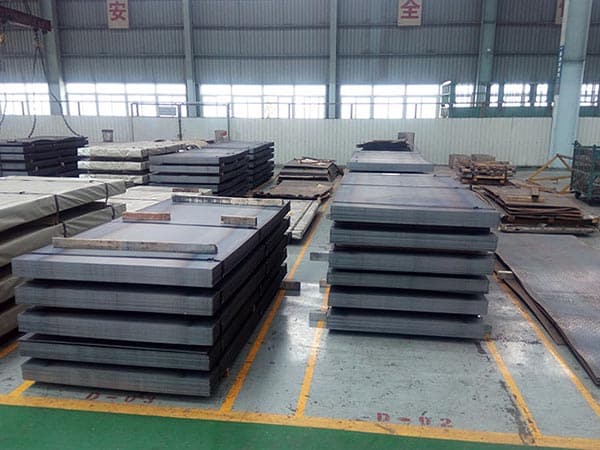
Decoding the S355 Prefix: Yield Strength and Material Identity
Understanding the nomenclature of European steel standards is critical for engineers and procurement specialists tasked with selecting materials for high-stress environments. The 'S355' designation is a common starting point, indicating a structural steel with a minimum yield strength of 355 MPa (megapascals). However, the suffixes 'MC' and 'JR' represent fundamentally different metallurgical philosophies, production processes, and performance characteristics. While both share the same base yield strength, their behavior during fabrication and their suitability for specific environmental conditions vary significantly.
S355MC: The Master of Cold Forming and Weight Reduction
S355MC is governed by the EN 10149-2 standard, which specifies hot-rolled flat products made of high yield strength steels for cold forming. The 'M' stands for thermomechanically rolled (TMCP), and the 'C' denotes its suitability for cold forming. This grade is a result of advanced steelmaking technology where the rolling process is strictly controlled at specific temperature ranges to refine the grain structure. This fine-grained microstructure allows the material to achieve high strength without the need for excessive alloying elements, resulting in a steel that is both strong and exceptionally ductile.
The primary advantage of S355MC lies in its weight-saving potential. Because it possesses a high strength-to-weight ratio, designers can use thinner sections of S355MC compared to traditional structural steels without compromising the structural integrity of the component. This is particularly beneficial in the transportation industry, where reducing the curb weight of a vehicle directly translates to increased payload capacity and improved fuel efficiency. Furthermore, its 'C' designation ensures that it can be bent, folded, and pressed into complex shapes without cracking, a feat that standard structural steels often struggle to achieve at higher thicknesses.
s355jr: The Reliable Backbone of Global Infrastructure
S355JR follows the EN 10025-2 standard, which is the benchmark for non-alloy structural steels. In this context, 'JR' refers to the impact toughness of the material. The 'J' indicates a Charpy V-notch impact test, and the 'R' specifies that the test is conducted at room temperature (20°C) with a minimum energy absorption requirement of 27 Joules. Unlike S355MC, S355JR is typically produced through conventional hot rolling and may be supplied in an as-rolled (AR), normalized (N), or normalized-rolled (+N) condition.
This grade is considered the 'workhorse' of the construction industry. It is widely utilized in the fabrication of buildings, bridges, and general machinery where the primary requirement is a predictable yield strength and good weldability. S355JR does not possess the same level of cold-formability as S355MC, but it offers a cost-effective solution for structural components that are primarily joined by welding rather than intricate bending. Its availability is also a significant factor, as it is one of the most commonly stocked steel grades globally.
Chemical Composition: The Micro-Alloying Secret
The difference in performance between these two grades is rooted in their chemical makeup. S355MC utilizes micro-alloying elements such as Niobium (Nb), Titanium (Ti), and Vanadium (V) to achieve grain refinement. These elements form carbonitride precipitates that pin grain boundaries during the rolling process, preventing grain growth and enhancing toughness and strength simultaneously. In contrast, S355JR relies on a more traditional chemistry with higher carbon and manganese levels to reach its strength targets.
| Element (Max %) | S355MC (EN 10149-2) | S355JR (EN 10025-2) |
|---|---|---|
| Carbon (C) | 0.12 | 0.24 |
| Manganese (Mn) | 1.50 | 1.60 |
| Silicon (Si) | 0.50 | 0.55 |
| Phosphorus (P) | 0.025 | 0.035 |
| Sulfur (S) | 0.020 | 0.035 |
| Micro-alloying (Nb, Ti, V) | Present | Not Required |
As illustrated in the table, S355MC has a significantly lower carbon content than S355JR. This lower carbon level is the primary reason for its superior weldability and higher ductility. A lower Carbon Equivalent (CEV) reduces the risk of cold cracking in the heat-affected zone (HAZ) during welding, often eliminating the need for preheating, even in thicker sections.
Mechanical Property Comparison: Beyond the Yield Point
While both materials share a 355 MPa minimum yield strength, their tensile strength and elongation properties diverge. S355MC typically exhibits a narrower gap between yield and tensile strength, which is a characteristic of TMCP steels. This provides a very consistent response during automated manufacturing processes like CNC bending or laser cutting.
- Ductility: S355MC offers higher elongation values, making it safer for components subjected to sudden impacts or those requiring significant deformation during assembly.
- Bending Radius: S355MC is designed for tight bending. For thicknesses under 3mm, it can often be bent 180 degrees with a radius of zero, whereas S355JR requires a much larger internal radius to avoid surface tearing.
- Impact Toughness: While S355JR is tested at 20°C, S355MC often meets much stricter toughness requirements at lower temperatures (e.g., -20°C or -40°C), although this is sometimes specified as S355MC-L or similar sub-grades depending on the manufacturer.
Processing and Fabrication: Welding, Bending, and Cutting
Fabrication efficiency is a major deciding factor in material selection. S355MC is favored in high-volume production environments where precision and speed are paramount. Its clean chemistry and fine-grained structure make it an ideal candidate for fiber laser cutting, as it produces minimal dross and allows for high-speed processing with consistent edge quality.
In terms of welding, the low carbon content of S355MC provides a wider processing window. It is less sensitive to varying heat inputs, which is critical for robotic welding applications in the automotive chassis industry. S355JR, while perfectly weldable, requires more stringent control over heat input and cooling rates, especially as the plate thickness increases, to maintain the integrity of the JR impact properties.
For cold forming, S355MC is the clear winner. If a project involves complex geometries, deep drawing, or tight-radius press braking, S355JR is likely to fail through cracking or orange-peel surface defects. Engineers often specify S355MC for brackets, crane booms, and structural sections of trucks to take advantage of these forming capabilities.
Environmental Adaptation and Industry Specific Applications
The choice between these grades often depends on the end-use environment and the specific industry requirements. Within the heavy equipment industry, S355MC is the standard for telescopic cranes and earthmoving machinery. The need for high strength at reduced weight allows these machines to reach further and lift more while staying within road weight limits.
Conversely, in the civil engineering and building sectors, S355JR is preferred for its cost-efficiency and availability in a wide range of sections, including I-beams, channels, and heavy plates. Since these structures are typically static and joined by traditional welding or bolting, the superior cold-forming properties of S355MC are often unnecessary, making the more economical S355JR the logical choice.
Environmental factors such as ambient temperature also play a role. If a structure is located in a sub-zero climate, the 'JR' rating (20°C) might be insufficient. In such cases, an engineer might move from S355JR to S355J0 (0°C) or S355J2 (-20°C). S355MC, through its TMCP process, inherently offers better low-temperature performance, often making it a safer 'all-rounder' for equipment that operates in diverse geographic regions.
Technical Synthesis for Material Selection
Selecting between S355MC and S355JR requires a holistic view of the project's lifecycle. If the priority is minimizing weight, maximizing cold-formability, and ensuring high-speed fabrication through laser cutting and robotics, S355MC is the superior technical choice. Its micro-alloyed chemistry provides a level of versatility that standard structural steels cannot match.
However, for massive structural projects where material cost is a dominant factor and the design relies on standard hot-rolled sections with minimal forming, S355JR remains the global standard. Its predictable mechanical properties and widespread availability ensure that it will continue to be the foundation of structural engineering for the foreseeable future. Engineering teams must weigh the upfront material cost against the potential savings in fabrication time and vehicle operating costs to determine which '355' grade truly fits their needs.
Leave a message