
What are the equivalent steel grades of s355mc en 10149-2?
Explore the comprehensive guide to S355MC (EN 10149-2) equivalent steel grades, mechanical properties, and industrial applications. Learn how to identify global substitutes like Q355MC, SPFH 540, and ASTM Grade 50.
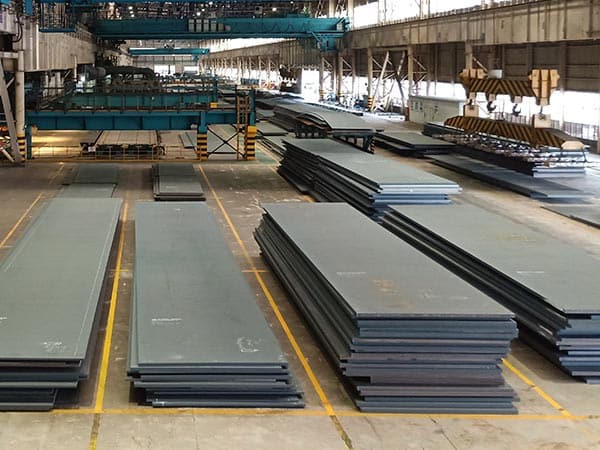
Understanding the S355MC Specification under EN 10149-2
S355MC is a high-yield strength, thermomechanically rolled steel specifically engineered for cold forming applications. Governed by the European standard EN 10149-2, this material represents a pinnacle of metallurgical engineering where strength meets ductility. The "S" denotes structural steel, "355" indicates a minimum yield strength of 355 MPa, and "MC" signifies that the material is thermomechanically rolled (M) and intended for cold forming (C). Unlike standard structural steels like S355J2, S355MC undergoes a controlled rolling process that refines the grain structure, providing superior toughness and formability while maintaining a relatively low carbon content.
Global Equivalents of S355MC Steel
Identifying equivalents for S355MC requires a deep dive into international standards, as direct chemical and mechanical matches vary by region. When engineers seek substitutes, they must account for yield strength, elongation, and the specific micro-alloying elements that facilitate cold forming.
- Chinese Standard (GB/T 1591): The most direct equivalent is Q355MC. This grade mirrors the EN standard in its focus on thermomechanical rolling and high yield strength, making it a staple in Chinese automotive and heavy machinery exports.
- Japanese Standard (JIS G3134): The SPFH 540 grade is often cited as a functional equivalent. While JIS standards use different testing methodologies, SPFH 540 provides the high-strength automotive chassis performance required by Japanese OEMs.
- American Standard (ASTM): In the United States, ASTM A1011 HSLAS Grade 50 Class 1 or ASTM A1018 Grade 50 are the closest matches. These High-Strength Low-Alloy (HSLA) steels are designed for similar weight-reduction and forming tasks.
- ISO Standard: The ISO 14397-2 Grade 355F serves as the international benchmark for this specific steel class.
Comparative Analysis of Chemical Composition
The performance of S355MC is rooted in its precise chemical balance. By keeping carbon levels low, manufacturers ensure excellent weldability and ductility. The inclusion of micro-alloying elements like Niobium (Nb), Vanadium (V), and Titanium (Ti) is what distinguishes it from basic carbon steels.
| Element | S355MC (EN 10149-2) % Max | Q355MC (GB/T 1591) % Max | ASTM A1011 Gr 50 % Max |
|---|---|---|---|
| Carbon (C) | 0.12 | 0.12 | 0.23 |
| Manganese (Mn) | 1.50 | 1.50 | 1.35 | 0.50 | 0.50 | - |
| Phosphorus (P) | 0.025 | 0.025 | 0.040 |
| Sulfur (S) | 0.020 | 0.020 | 0.040 |
| Al (Total) | 0.015 | 0.015 | - |
The ultra-low carbon content in S355MC (max 0.12%) is significantly lower than standard S355 structural steel (which can reach 0.20-0.22%). This reduction is critical for preventing hardening in the heat-affected zone (HAZ) during welding and ensuring the material does not crack during tight-radius bending.
Mechanical Performance and Processing Advantages
The mechanical properties of S355MC are defined by its high yield-to-tensile ratio. For thicknesses less than 3mm, the yield strength is a minimum of 355 MPa, while the tensile strength ranges between 430 and 550 MPa. Elongation values are typically high, reaching 19% or more, which allows for complex stamping and folding operations.
Cold Forming and Bending: S355MC is specifically designed for the cold forming process. Its fine-grained structure allows for a minimum bending radius that is much tighter than standard S355J2. For example, for a thickness (t) between 3mm and 6mm, the recommended internal bending radius is often as low as 0.5t to 1.0t, depending on the orientation relative to the rolling direction.
Weldability: Due to its low Carbon Equivalent (CEV), S355MC exhibits exceptional weldability. It can be welded using all standard methods, including MIG/MAG, TIG, and submerged arc welding, without the need for preheating in most standard thicknesses. This significantly reduces production time and energy costs in large-scale manufacturing environments.
Advanced Applications in Heavy Industry
The adoption of S355MC has revolutionized sectors where weight reduction is synonymous with efficiency. By utilizing higher strength steel, designers can reduce the thickness of components without sacrificing structural integrity, leading to lighter vehicles and lower fuel consumption.
Automotive and Transportation: S355MC is the material of choice for truck chassis, cross members, and suspension components. Its ability to withstand dynamic loads and fatigue makes it ideal for long-haul transport infrastructure. The precision with which it can be cold-formed allows for complex geometries in frame rails that would be impossible with traditional hot-rolled plates.
Lifting and Mobile Equipment: Within the production of telescopic cranes, boom sections, and agricultural machinery, S355MC provides the necessary strength-to-weight ratio. It allows for longer reach and higher payload capacities in mobile cranes and earthmoving equipment.
Storage and Racking Systems: High-bay warehouse racking systems utilize S355MC for uprights and beams. The consistency of the material ensures that automated storage and retrieval systems (ASRS) operate within tight tolerances, even under extreme load conditions.
Surface Quality and Laser Cutting Performance
Modern manufacturing often relies on automated laser cutting. S355MC is particularly well-suited for this process. The thermomechanical rolling process results in a thin, tightly adherent scale or a pickled and oiled surface that does not interfere with laser beam absorption. This leads to cleaner edges, faster cutting speeds, and less dross compared to standard hot-rolled structural steels. Furthermore, the low internal stress levels within S355MC plates ensure that parts remain flat after cutting, which is vital for subsequent robotic welding or assembly operations.
Environmental Adaptation and Fatigue Resistance
While S355MC is not a weathering steel like Corten, its fine-grained microstructure provides a degree of improved atmospheric corrosion resistance compared to coarse-grained steels. However, its primary environmental advantage lies in its fatigue life. In environments subject to vibration and cyclic loading—such as bridge components or machinery frames—the refined grain structure inhibits the initiation and propagation of micro-cracks. This extends the service life of the equipment and reduces maintenance intervals.
Strategic Technical Selection Criteria
Choosing between S355MC and its equivalents involves more than just matching yield strength. Procurement specialists and engineers must consider the following:
- Impact Toughness: While EN 10149-2 focuses on forming, impact testing (e.g., Charpy V-notch) at low temperatures (-20°C or -40°C) may be required for equipment operating in arctic conditions. Ensure the chosen equivalent meets these specific sub-zero requirements.
- Thickness Tolerances: S355MC is often produced to closer thickness tolerances than standard structural steel (EN 10051), which is critical for precision forming and weight calculation.
- Directional Properties: Because it is thermomechanically rolled, the properties can vary slightly between the longitudinal and transverse directions. High-quality equivalents like Q355MC maintain high isotropy, ensuring consistent performance regardless of blank orientation.
The technical superiority of S355MC EN 10149-2 makes it an indispensable material in modern engineering. Whether sourcing the original European grade or a global equivalent like Q355MC or SPFH 540, the focus remains on the unique combination of high yield strength and exceptional cold formability. By understanding these nuances, manufacturers can optimize their production lines, reduce component weight, and ensure long-term structural reliability across a myriad of demanding industrial applications.
Leave a message