
What grade is equal to the en 10149-2 equivalent indian standard
Comprehensive guide comparing EN 10149-2 (S315MC to S700MC) with Indian standards like IS 5986 and IS 2062. Explore mechanical properties, chemical composition, and industrial applications.
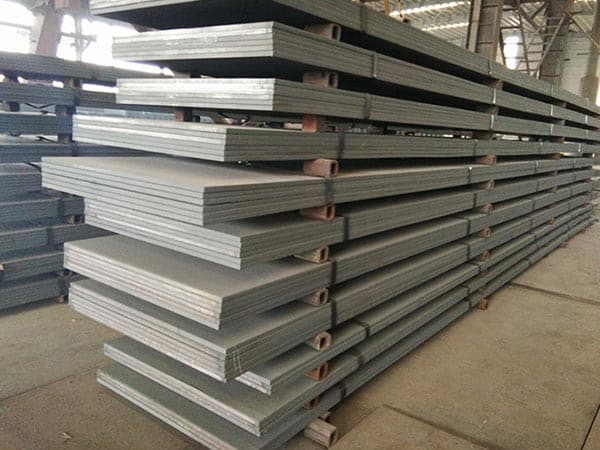
The Technical Landscape of EN 10149-2 and Indian Equivalents
In the global steel procurement and engineering design landscape, bridging the gap between European (EN) and Indian (IS) standards is a frequent necessity. EN 10149-2 specifies the technical delivery conditions for flat products made of high yield strength steels for cold forming. These steels are typically thermomechanically rolled (indicated by the 'MC' suffix). When seeking an EN 10149-2 equivalent Indian standard, the most direct correlation is found within IS 5986, which covers hot-rolled steel flat products for structural conditioning and cold forming. While IS 2062 is the most common structural steel standard in India, it often lacks the specific cold-forming optimizations found in the EN 10149-2 series.
Direct Comparison: EN 10149-2 vs. IS 5986
To accurately identify the equivalent grade, one must look at the minimum yield strength and the intended processing method. EN 10149-2 grades range from S315MC to S700MC. The Indian standard IS 5986 provides a comparable hierarchy, though the naming conventions differ. For instance, the widely used S355MC finds its closest match in IS 5986 Grade Fe 490 or Fe 510, depending on the specific requirement for tensile strength and elongation.
| EN 10149-2 Grade | Equivalent Indian Standard (IS 5986) | Yield Strength (min MPa) | Tensile Strength (MPa) |
|---|---|---|---|
| S315MC | IS 5986 Fe 410 | 315 | 410 - 540 |
| S355MC | IS 5986 Fe 490 / Fe 510 | 355 | 490 - 630 |
| S420MC | IS 5986 Fe 540 | 420 | 540 - 680 |
| S460MC | IS 5986 Fe 570 | 460 | 570 - 720 |
| S500MC | IS 5986 Fe 590 | 500 | 590 - 770 |
| S700MC | IS 5986 Fe 700 (High Strength) | 700 | 750 - 950 |
Chemical Composition and Micro-Alloying Strategy
The excellence of EN 10149-2 steels lies in their thermomechanical rolling (TMCP) process. This involves controlled rolling and cooling to achieve a fine-grained microstructure without the need for expensive alloying elements. Both EN 10149-2 and IS 5986 utilize micro-alloying elements such as Niobium (Nb), Vanadium (V), and Titanium (Ti). These elements are crucial for grain refinement and precipitation hardening.
- Carbon Content: Kept low (usually <0.12%) to ensure excellent weldability and toughness.
- Manganese: Acting as a solid solution strengthener, typically ranging from 1.00% to 2.00% depending on the grade.
- Sulfur and Phosphorus: Strictly controlled to improve internal cleanliness and prevent cracking during severe cold bending.
Mechanical Performance and Cold Forming Capabilities
The primary reason engineers specify EN 10149-2 is for its cold forming properties. These steels can be bent, flanged, and cold-pressed into complex shapes without cracking. The equivalent Indian standard, IS 5986, also emphasizes ductility. However, when substituting, it is vital to check the minimum bending radius. S355MC, for example, allows for a very tight bend radius (often 0.5t to 1.5t depending on thickness), which must be verified against the specific Fe grade in IS 5986 to ensure the manufacturing process does not lead to material failure.
Weldability and Processing Advantages
Because these steels have a low Carbon Equivalent (CEV), they exhibit superior weldability compared to traditional normalized steels of the same strength level. Whether using Manual Metal Arc (MMA), MIG/MAG, or submerged arc welding, the risk of cold cracking is significantly reduced. This is a shared trait between S420MC and IS 5986 Fe 540. Furthermore, the fine-grained structure makes these grades ideal for laser cutting, providing clean edges and high dimensional accuracy, which is a critical requirement in the modern Indian automotive and heavy machinery sectors.
Environmental Adaptability and Durability
High yield strength steels are often used in environments where weight reduction is key to performance. While not inherently "weathering steels" like Corten, the refined grain structure of EN 10149-2 and IS 5986 provides a degree of better atmospheric resistance than coarse-grained mild steels. In low-temperature environments, the impact toughness (Charpy V-notch test) becomes a critical metric. EN 10149-2 specifies impact testing at -20°C or -40°C for certain sub-grades, a feature that should be explicitly requested when ordering IS 5986 equivalents for use in high-altitude or cold-climate Indian regions.
Industry Applications: Where These Standards Meet
The demand for EN 10149-2 equivalent Indian standards is driven by several high-growth industries in India:
- Automotive Manufacturing: Chassis frames, cross members, and structural reinforcements where high strength-to-weight ratios are mandatory.
- Heavy Equipment: Crane booms, excavator arms, and agricultural machinery components that require high yield strength to handle dynamic loads.
- Transportation: Truck trailers and railway wagons where reducing the tare weight increases payload capacity and fuel efficiency.
- Renewable Energy: Support structures for solar panels and wind turbine components that benefit from the high yield strength and ease of fabrication.
Selecting the Right Equivalent for Your Project
Choosing between EN 10149-2 and an Indian equivalent like IS 5986 or even IS 2062 E350/E450 requires a deep dive into the project's specific stress requirements. If the application involves significant cold forming or complex geometry, IS 5986 is the superior choice over IS 2062. For structural components where only load-bearing capacity matters and cold forming is minimal, IS 2062 might suffice and be more readily available in the Indian market.
When procuring, always request a Mill Test Certificate (MTC) to verify that the chemical and mechanical properties align with the desired EN grade. Modern Indian mills like TATA Steel and JSW Steel produce grades that meet both EN and IS standards simultaneously, often dual-certified to simplify global supply chain requirements. Understanding these nuances ensures that the structural integrity of the final product is never compromised while optimizing for cost and local availability.
Leave a message