
S960MC automotive steel plate on sale for general intermediate strength applications
Discover the technical specifications and industrial benefits of S960MC automotive steel plate. Learn about its mechanical properties, weldability, and lightweight design potential.
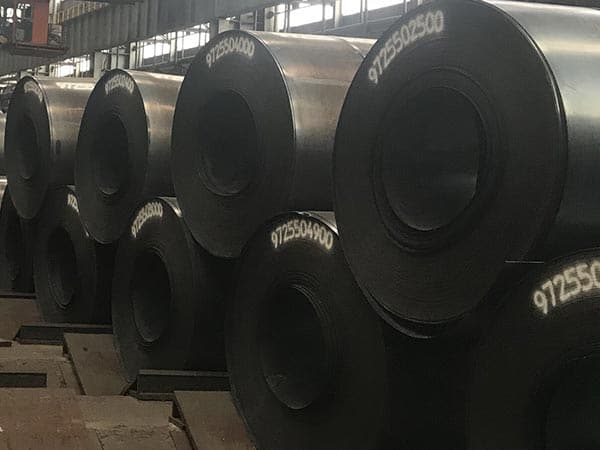
S960MC Steel: Redefining Structural Efficiency in Modern Engineering
S960MC represents a pinnacle in the evolution of thermomechanically rolled high-yield strength steels, specifically designed for cold forming. Governed by the EN 10149-2 standard, this grade offers a minimum yield strength of 960 MPa, making it an essential material for industries seeking to balance extreme structural integrity with significant weight reduction. While often categorized for high-end applications, its adoption in general intermediate strength applications has grown as manufacturers realize the long-term cost benefits of using less material to achieve superior load-bearing capacities.
Chemical Composition and the TMCP Process
The exceptional properties of S960MC are not merely a result of its elemental makeup but are fundamentally derived from the Thermomechanical Controlled Processing (TMCP). This method involves precise temperature control during the rolling process, followed by accelerated cooling. This creates a fine-grained microstructure that traditional normalized steels cannot replicate. The chemical strategy focuses on low carbon content to ensure weldability, supplemented by micro-alloying elements such as Niobium (Nb), Vanadium (V), and Titanium (Ti).
| Element | Max % Content |
|---|---|
| Carbon (C) | 0.20 |
| Manganese (Mn) | 2.20 |
| Silicon (Si) | 0.60 |
| Phosphorus (P) | 0.025 |
| Sulfur (S) | 0.010 |
| Aluminium (Al) | 0.015 |
The inclusion of micro-alloys facilitates grain refinement and precipitation hardening. By keeping the carbon equivalent (CEV) low, S960MC maintains excellent toughness and weldability, which are often compromised in high-strength materials produced through traditional quenching and tempering.
Mechanical Performance and Structural Reliability
The primary draw of S960MC is its power-to-weight ratio. With a yield strength nearly triple that of standard S355 structural steel, engineers can drastically reduce the thickness of plates without sacrificing safety. This leads to lighter vehicles, higher payloads, and reduced fuel consumption in transport sectors.
| Property | Value |
|---|---|
| Yield Strength (ReH) | Min 960 MPa |
| Tensile Strength (Rm) | 980 - 1250 MPa |
| Elongation (A80mm) | Min 7% (thickness < 3mm) |
| Elongation (A5) | Min 10% (thickness >= 3mm) |
Beyond static strength, S960MC exhibits remarkable fatigue resistance. In dynamic loading environments, such as the chassis of a heavy-duty truck or the boom of a mobile crane, the fine-grained structure prevents rapid crack propagation, extending the operational lifecycle of the equipment.
Cold Forming and Fabrication Excellence
The 'C' in S960MC denotes its suitability for cold forming. Unlike older generations of high-strength steel that were brittle and prone to cracking during bending, S960MC is engineered for high ductility. This allows for complex geometries to be formed through press braking or roll forming. However, due to the high yield strength, fabricators must account for significant springback. Precision tooling and increased bending force are required compared to lower-grade steels.
- Minimum Bending Radius: For thicknesses (t) up to 3mm, the recommended internal bending radius is typically 2.5 to 3.0 times the thickness.
- Surface Quality: The thermomechanical process results in a thin, tightly adherent scale, which is ideal for subsequent painting or galvanizing.
- Cutting: S960MC is highly compatible with laser, plasma, and waterjet cutting. Laser cutting is particularly effective due to the material's consistent chemical purity, resulting in clean edges with minimal heat-affected zones.
Weldability and Joining Technologies
One of the most significant hurdles in using high-strength steel is maintaining the integrity of the welded joint. S960MC addresses this through its low carbon equivalent. It can be welded using standard processes such as GMAW (MIG/MAG), FCAW, and Submerged Arc Welding (SAW). Because the strength is derived from the TMCP grain refinement, excessive heat input must be avoided to prevent softening in the heat-affected zone (HAZ).
Using low-hydrogen consumables is mandatory to prevent cold cracking. While preheating is often unnecessary for thinner sections, maintaining a controlled interpass temperature ensures that the cooling rate (t8/5 time) stays within the optimal window to preserve the mechanical properties of the base metal. Matching or under-matching filler metals are frequently chosen depending on whether the design prioritizes joint strength or ductility.
Environmental Adaptability and Low-Temperature Toughness
S960MC is frequently deployed in harsh environments, from arctic mining sites to offshore logistics. The material maintains its impact toughness even at low temperatures. Standard S960MC is typically tested for impact energy at -20°C, but specialized variants are available for -40°C or even -60°C applications. This ensures that the steel does not undergo a brittle transition when subjected to sudden loads in freezing conditions, a critical safety factor for lifting and transport machinery.
Strategic Industry Applications
The versatility of S960MC allows it to transcend the automotive sector, finding utility in various heavy-duty structural roles. Its application is a strategic choice for manufacturers looking to modernize their product lines.
- Heavy Transportation: Chassis frames, cross members, and side protection beams for trailers and trucks. The weight savings directly translate to increased cargo capacity.
- Lifting and Handling: Telescopic booms for mobile cranes, aerial work platforms, and forklift components. Higher strength allows for longer reach and higher lift capacities.
- Agriculture and Forestry: Lightweight frames for harvesters, timber trailers, and soil cultivation equipment that must withstand high stress while minimizing soil compaction.
- Waste Management: Refuse collection vehicle bodies and containers where durability and weight are competing priorities.
Economic Impact and Sustainable Design
While the per-ton cost of S960MC is higher than standard carbon steel, the total cost of ownership often decreases. By using thinner plates, the total weight of steel purchased is reduced. Furthermore, welding volumes are decreased because thinner sections require less filler metal and fewer welding passes. From a sustainability perspective, the reduction in vehicle weight leads to a significant decrease in CO2 emissions over the vehicle's lifetime, aligning with global green manufacturing initiatives. The transition to S960MC is not just a technical upgrade; it is an economic and environmental optimization that prepares manufacturers for a more demanding and regulated global market.
Leave a message