
Cause analysis of slag hanging in BS700MC market stock for auto frame cutting process
This article provides a deep dive into the causes of slag hanging during the cutting of BS700MC high-strength steel for automotive frames, covering material properties, chemical composition, and process optimization.
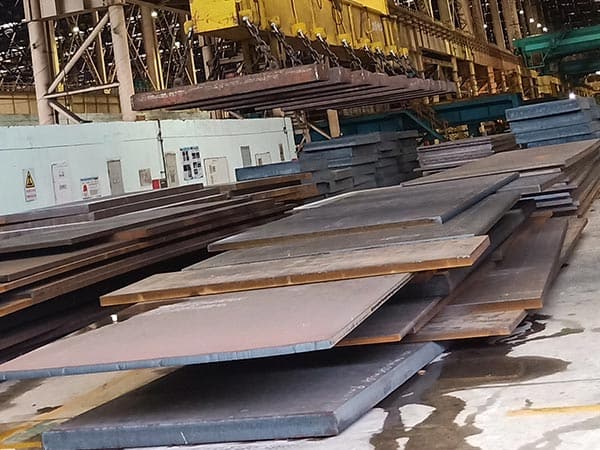
Understanding the BS700MC Material Characteristics in Automotive Engineering
BS700MC is a high-strength, cold-formable, thermomechanically rolled steel specifically designed for weight reduction in automotive structural components, particularly heavy-duty truck frames and chassis. With a minimum yield strength of 700 MPa, this material achieves a delicate balance between extreme load-bearing capacity and excellent cold-forming properties. However, during the industrial cutting process—whether using fiber laser, CO2 laser, or plasma—manufacturers frequently encounter the phenomenon of "slag hanging" or dross formation at the bottom of the cut edge. This issue not only compromises the aesthetic quality but also significantly impacts subsequent welding integrity and the fatigue life of the auto frame.
The Role of Chemical Composition in Melt Viscosity
The chemical blueprint of BS700MC is the primary determinant of its behavior under a high-energy beam. Unlike standard carbon steels, BS700MC contains specific micro-alloying elements such as Titanium (Ti), Niobium (Nb), and Vanadium (V) to achieve its grain refinement and precipitation hardening. The Silicon (Si) and Manganese (Mn) content levels are critical factors in slag formation. Silicon, while beneficial for deoxidation, can increase the viscosity of the molten metal during the cutting process. When the laser melts the steel, a high-viscosity melt is harder to expel using auxiliary gases (Oxygen or Nitrogen), leading to residue adherence at the lower edge.
| Element | C (max) | Si (max) | Mn (max) | P (max) | S (max) | Al (min) | Ti (max) |
|---|---|---|---|---|---|---|---|
| Content (%) | 0.12 | 0.25 | 2.10 | 0.025 | 0.015 | 0.015 | 0.22 |
As shown in the table, the relatively high Manganese limit combined with Micro-alloying elements alters the surface tension of the liquid pool. If the Manganese-to-Silicon ratio is not optimized within the specific batch of market stock, the resulting slag becomes "sticky," resisting the kinetic energy of the cutting gas jet.
Surface Quality and Market Stock Storage Conditions
Market stock BS700MC often undergoes varying environmental conditions during storage and transportation. The surface state of the steel plate is a decisive factor in energy absorption during the cutting process. Oxidation layers, even those that are microscopic, change the emissivity of the surface. For laser cutting, an uneven oxide scale or the presence of rust spots causes localized fluctuations in heat input. This instability leads to an inconsistent melt pool, where the auxiliary gas cannot uniformly clear the kerf, resulting in sporadic slag hanging.
- Oil Contamination: Residual rolling oils or anti-rust oils can vaporize and interfere with the laser beam's focus and the gas flow dynamics.
- Surface Decarburization: Long-term storage in humid environments can lead to slight surface decarburization, which affects the melting point of the surface layer compared to the core.
- Scale Adhesion: Tight mill scale on thermomechanically rolled plates can act as a flux, lowering the melting point of the slag and making it more prone to bonding with the base metal.
Thermal Conductivity and Heat-Affected Zone (HAZ) Dynamics
BS700MC's high-strength nature is derived from its fine-grained microstructure. During cutting, the heat input must be precisely controlled to avoid excessive grain growth in the Heat-Affected Zone. High-strength steels generally have lower thermal conductivity than mild steels. This means heat tends to accumulate at the cutting front rather than dissipating into the surrounding material. Excessive heat accumulation keeps the slag in a semi-molten state for longer, allowing it to fuse to the bottom edge of the plate as the torch moves forward. This is particularly prevalent in sharp corners or complex geometries of an auto frame where the cutting speed naturally decreases.
Mechanical Property Impact of Slag Adhesion
Slag hanging is not merely a surface defect; it is a symptom of thermal mismanagement that can degrade the mechanical properties of BS700MC. The area where slag adheres often undergoes a rapid quenching cycle, leading to the formation of brittle martensite or coarse bainite structures. This localized hardening can reach values significantly higher than the base metal's hardness, creating stress concentration points. For automotive frames subjected to cyclic loading, these points are prime locations for fatigue crack initiation.
| Property | Yield Strength (MPa) | Tensile Strength (MPa) | Elongation A50 (%) | Impact Energy (-20°C) |
|---|---|---|---|---|
| BS700MC Standard | ≥ 700 | 750 - 950 | ≥ 12 | ≥ 27J |
When slag is mechanically removed (grinding), it often leaves behind micro-pits or heat cracks. Maintaining the integrity of the 700MPa yield strength requires a clean cut that minimizes the thermal cycle's duration and intensity.
Optimization of Cutting Parameters for BS700MC
To eliminate slag hanging in BS700MC market stock, a multi-faceted approach to process parameters is required. The focus position of the laser is paramount. For high-strength plates, a negative focus (focusing inside the material) is often preferred to ensure a wider kerf at the bottom, which facilitates slag ejection. Furthermore, the purity of the auxiliary gas plays a vital role. Using Nitrogen at high pressure (1.0 - 1.5 MPa) provides a cooling effect and prevents oxidation of the cut edge, resulting in a "bright-surface" cut with zero slag. Conversely, if Oxygen is used, the pressure must be strictly limited to prevent an over-reaction (burning) that produces heavy iron oxide dross.
- Nozzle Diameter: A larger nozzle diameter can provide a more stable gas curtain to shield the melt pool.
- Cutting Speed: There is a "sweet spot" for BS700MC; too fast leads to drag lines and dross, while too slow leads to over-melting and slag beads.
- Pulse Frequency: Utilizing modulated pulse frequencies instead of continuous waves can reduce the average heat input, preventing the bottom of the kerf from overheating.
Environmental Adaptability and Long-term Performance
The application of BS700MC in the automotive industry demands high resistance to environmental stressors. Auto frames are exposed to road salts, moisture, and varying temperatures. Slag-affected edges are highly susceptible to crevice corrosion. The porous nature of slag can trap moisture and corrosive agents, leading to accelerated oxidation that bypasses the vehicle's protective coatings. By ensuring a slag-free cut, manufacturers guarantee that the E-coating (electrophoretic coating) adheres uniformly to the edge, providing the necessary 10-15 year corrosion resistance required by modern automotive standards. The synergy between material chemistry, precise cutting technology, and proper stock management is the only way to harness the full potential of BS700MC in high-performance vehicle engineering.
Leave a message