
What is en 10149-2 s355mc technical data mild steel
Explore the comprehensive technical data of EN 10149-2 S355MC steel. Learn about its chemical composition, mechanical properties, and industrial applications in this expert guide.
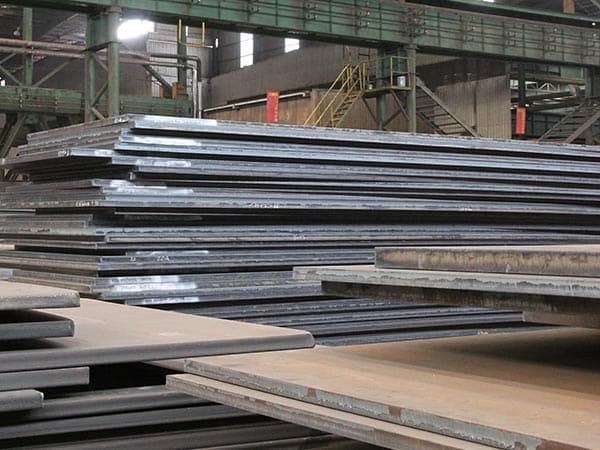
Decoding the Essence of EN 10149-2 S355MC Steel
When engineers and procurement specialists discuss high-performance materials for modern manufacturing, EN 10149-2 S355MC frequently tops the list. This grade represents a specialized category of hot-rolled flat products made of high yield strength steels specifically designed for cold forming. Unlike standard structural steels, S355MC is a product of thermomechanical rolling (TMCP), a process that meticulously controls both the temperature and the deformation during rolling to achieve a refined grain structure. This metallurgical precision results in a material that offers an exceptional balance of strength, ductility, and weldability.
The designation 'S355MC' carries specific meaning: 'S' stands for structural steel, '355' denotes the minimum yield strength of 355 MPa for thicknesses up to 16mm, 'M' indicates it is thermomechanically rolled, and 'C' signifies its suitability for cold forming. While often categorized under the broad umbrella of 'mild steel' due to its relatively low carbon content, S355MC is technically a High Strength Low Alloy (HSLA) steel. It bridges the gap between traditional carbon steels and high-performance alloys, providing a cost-effective solution for reducing component weight without sacrificing structural integrity.
Chemical Composition and the Role of Micro-Alloying
The superior properties of S355MC are not accidental; they are the result of a carefully balanced chemical profile. By keeping carbon levels significantly lower than standard s355jr structural steel, manufacturers ensure excellent weldability and toughness. The strength is instead derived from micro-alloying elements such as Niobium (Nb), Vanadium (V), and Titanium (Ti).
| Element | Maximum Percentage (%) |
|---|---|
| Carbon (C) | 0.12 |
| Manganese (Mn) | 1.50 |
| Silicon (Si) | 0.50 |
| Phosphorus (P) | 0.025 |
| Sulphur (S) | 0.020 |
| Aluminium (Al) total | 0.015 |
| Niobium (Nb) | 0.09 |
| Vanadium (V) | 0.20 |
| Titanium (Ti) | 0.15 |
The inclusion of Niobium and Titanium is particularly critical. These elements form fine precipitates during the rolling process, which pin the grain boundaries and prevent grain growth. This grain refinement is the primary mechanism that allows S355MC to maintain high yield strength while remaining highly formable. The low sulphur and phosphorus content further enhance the internal cleanliness of the steel, reducing the risk of lamellar tearing and improving impact resistance.
Mechanical Properties: Strength Meets Flexibility
The defining characteristic of EN 10149-2 S355MC is its mechanical performance. It is engineered to withstand significant stress while allowing for complex shaping during the fabrication process. The following table outlines the core mechanical requirements for this grade:
| Property | Value (Thickness ≤ 16mm) |
|---|---|
| Minimum Yield Strength (ReH) | 355 MPa |
| Tensile Strength (Rm) | 430 - 550 MPa |
| Minimum Elongation (A80mm) | 19% (for t < 3mm) |
| Minimum Elongation (A5.65) | 23% (for t ≥ 3mm) |
One of the most significant advantages of S355MC is its consistent yield-to-tensile ratio. This consistency allows for predictable behavior during bending and pressing operations. Engineers can design components with tighter tolerances because the material's 'springback' is more manageable compared to traditional high-strength steels. Furthermore, while the standard focuses on strength and formability, S355MC often exhibits good low-temperature toughness, making it reliable in varying climatic conditions.
Exceptional Cold Forming and Bending Performance
The 'C' in S355MC highlights its primary application: cold forming. This steel is a favorite for industries that require complex geometries through folding, bending, or flanging. Because of its fine-grained structure, S355MC can be bent to very tight radii without cracking on the outer tension surface.
- Minimum Bending Radius: For thicknesses (t) between 3mm and 6mm, the recommended minimum mandrel radius is typically 0.5t to 1.0t when bending transverse to the rolling direction.
- Edge Quality: The high ductility ensures that sheared or laser-cut edges remain stable during the forming process, minimizing the need for expensive edge grinding.
- Surface Integrity: The thermomechanical rolling process results in a tight, thin scale that is easily removed or painted over, ensuring the finished part looks as good as it performs.
When working with S355MC, it is vital to consider the rolling direction. While the material is highly isotropic, the best bending results are usually achieved when the bend axis is perpendicular to the rolling direction. This maximizes the material's ability to stretch without localized necking.
Welding and Fabrication Efficiency
Fabricators favor S355MC because it simplifies the welding process. The Carbon Equivalent Value (CEV) is remarkably low, which means the steel is less susceptible to cold cracking in the heat-affected zone (HAZ). Unlike some high-strength alloys that require extensive pre-heating or post-weld heat treatments, S355MC can typically be welded using standard methods such as MIG, TIG, or submerged arc welding without complex procedures.
The low carbon content also ensures that the HAZ retains much of the base metal's toughness. This is critical for structural components subject to dynamic loads, such as vehicle chassis or crane arms. Furthermore, S355MC is highly compatible with modern thermal cutting technologies. Whether using laser, plasma, or oxy-fuel cutting, the material produces clean cuts with minimal dross, facilitating faster assembly and reducing labor costs.
Strategic Industry Applications
The unique combination of high strength and low weight makes S355MC an essential material in several demanding sectors. By utilizing the 355 MPa yield strength, designers can use thinner sections of S355MC to replace thicker sections of standard S235 or S275 mild steel, leading to significant weight savings.
- Automotive and Transportation: S355MC is widely used for truck frames, chassis components, and cross members. Reducing the weight of these parts directly improves fuel efficiency and increases payload capacity.
- Agricultural Machinery: From plow frames to harvester components, the steel's ability to withstand harsh environments and mechanical stress makes it ideal for the farming industry.
- Construction and Lifting: Telescopic booms, crane structures, and heavy-duty shelving systems benefit from the high strength-to-weight ratio, allowing for taller and stronger structures.
- Energy and Infrastructure: Support brackets for solar panels and wind turbine internals often utilize S355MC for its durability and ease of fabrication in remote locations.
Environmental Adaptability and Sustainability
In today's industrial landscape, sustainability is as important as technical specifications. S355MC contributes to green initiatives through material optimization. By using less steel to achieve the same structural performance, manufacturers reduce the overall carbon footprint of their products—from the energy required for steel production to the fuel consumed during the transport of finished goods.
The material also shows excellent resistance to atmospheric corrosion when compared to lower-grade mild steels, especially when combined with modern coating systems. Its fine surface finish provides an ideal substrate for galvanizing or powder coating, ensuring long-term service life even in humid or mildly corrosive environments. Because it is a carbon-based steel, S355MC is also 100% recyclable, fitting perfectly into the circular economy of the global metals industry.
Technical Comparison: S355MC vs. S355J2
It is common to confuse S355MC with S355J2, as both share a minimum yield strength of 355 MPa. However, their processing and intended uses differ significantly. S355J2 is a standard structural steel (EN 10025-2) often used for heavy plates and sections where welding and toughness are key, but cold forming is secondary. S355MC (EN 10149-2) is specifically optimized for weight reduction and complex forming. S355MC generally has a lower carbon content and a more refined grain structure than S355J2, making it the superior choice for high-volume manufacturing involving automated pressing or bending lines.
Choosing S355MC over traditional grades allows for thinner gauges, which not only saves weight but can also reduce costs related to welding consumables and handling. When technical data and performance are the driving factors, EN 10149-2 S355MC stands out as a versatile, high-strength solution for the challenges of modern engineering.
Leave a message