
What is s500mc high strength low alloy steel equivalent?
Discover S500MC high strength low alloy steel equivalents across global standards like ASTM, GB, and JIS. Learn about its mechanical properties, processing advantages, and industrial applications.
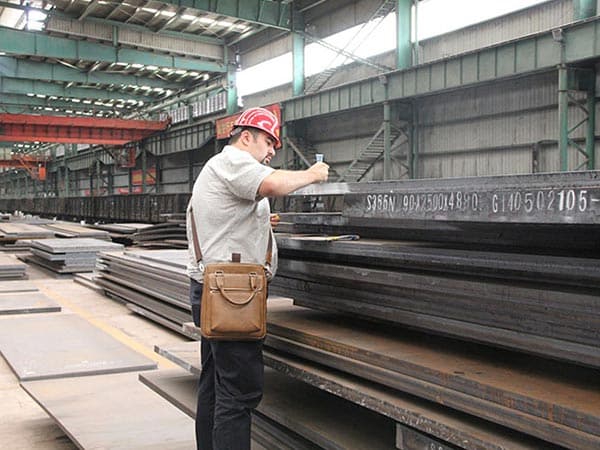
Understanding S500MC: The Benchmark for High-Strength Low-Alloy Steel
S500MC is a high-strength low-alloy (HSLA) steel grade specifically designed for cold-forming applications. Governed by the European standard EN 10149-2, this steel is produced through a thermomechanically rolled (TMCP) process. The 'S' stands for structural steel, '500' denotes a minimum yield strength of 500 MPa, and 'MC' indicates it is thermomechanically rolled for cold forming. This material has gained immense popularity in modern engineering due to its ability to offer high load-bearing capacity while significantly reducing the overall weight of structures.
The core advantage of S500MC lies in its micro-alloyed chemistry. By incorporating small amounts of niobium (Nb), vanadium (V), and titanium (Ti), manufacturers achieve a fine-grained microstructure. This refinement enhances both strength and toughness without the need for high carbon content, which typically compromises weldability. For engineers seeking to optimize material usage, understanding the S500MC high strength low alloy steel equivalent is crucial for global procurement and design consistency.
Global Equivalents of S500MC Across Major Standards
When sourcing steel for international projects, cross-referencing standards is essential. While S500MC is the European designation, other industrial nations have developed comparable grades that meet similar mechanical requirements. However, it is important to note that 'equivalent' does not always mean 'identical.' Variations in chemical tolerances and testing protocols exist.
| Standard | Equivalent Grade | Key Comparison Notes |
|---|---|---|
| European (EN 10149-2) | S500MC | The original standard for thermomechanically rolled HSLA. |
| Chinese (GB/T 1591) | Q500D / Q500E | Q500D offers similar yield strength with guaranteed impact toughness at -20°C. |
| American (ASTM) | ASTM A1011 / A1018 Grade 70 / 80 | ASTM grades focus on tensile ranges; Grade 70 is the closest functional match. |
| Japanese (JIS G3134) | SPFH 540 / SPFH 590 | JIS standards emphasize automotive structural applications with high formability. |
| ISO (ISO 6930) | HSE 500 | The international standard equivalent for high-yield strength steels. |
In the Chinese market, Q500D is frequently used as a substitute. While S500MC focuses on cold forming, Q500D provides excellent low-temperature impact properties, making it suitable for colder climates. In the North American market, ASTM A1011 Grade 70 (Class 1 or 2) is often the go-to alternative, though designers must verify that the elongation and bending radius meet the specific requirements of the S500MC specification.
Chemical Composition and the Role of Micro-Alloying
The performance of S500MC is a direct result of its low carbon footprint and precise micro-alloying strategy. Traditional structural steels rely on carbon and manganese for strength, which can lead to brittleness and poor weldability. S500MC breaks this mold by keeping carbon levels extremely low (typically below 0.12%).
- Carbon (C): Kept low to ensure superior weldability and prevent hardening in the heat-affected zone (HAZ).
- Manganese (Mn): Enhances strength and hardness through solid solution strengthening.
- Niobium (Nb) & Vanadium (V): These elements facilitate grain refinement during the thermomechanical rolling process, which is the primary driver of the steel's high yield strength.
- Silicon (Si) & Aluminum (Al): Used as deoxidizers to ensure a clean internal structure, reducing the risk of internal defects during heavy forming.
This lean chemical profile ensures that the material remains ductile. Unlike higher carbon steels, S500MC does not require pre-heating for most welding applications, which reduces labor costs and speeds up production cycles in heavy machinery manufacturing.
Mechanical Performance: Strength Meets Ductility
The defining characteristic of S500MC is its mechanical profile. It bridges the gap between standard structural steels like S355 and ultra-high-strength grades like S700MC. The balance of properties makes it a versatile choice for dynamic loading environments.
Yield Strength: With a minimum yield of 500 MPa, S500MC allows for a reduction in plate thickness compared to S355. For instance, replacing S355 with S500MC can result in a weight saving of up to 25-30% in structural components without sacrificing safety margins.
Tensile Strength: Typically ranging between 550 and 700 MPa, this steel provides a robust safety buffer against catastrophic failure. The high tensile-to-yield ratio is particularly beneficial in automotive crash-management systems.
Elongation and Formability: Despite its high strength, S500MC maintains an elongation of 12% to 14% (depending on thickness). This allows for complex cold-bending operations. It can be bent to tight radii—often 1.0 to 1.5 times the thickness—without cracking, which is a significant advantage for manufacturing chassis frames and brackets.
Processing Advantages: Welding, Cutting, and Bending
Fabricators prefer S500MC because it behaves predictably during processing. The thermomechanical rolling process ensures that the steel has a uniform grain structure throughout the plate, which translates to consistent performance across different batches.
Welding: S500MC is highly weldable using standard methods such as MAG (Metal Active Gas), MIG, and submerged arc welding. Because of its low carbon equivalent (CEV), the risk of cold cracking is minimal. It is recommended to use low-hydrogen consumables to maintain the integrity of the high-strength joint.
Laser and Plasma Cutting: The clean chemistry of S500MC makes it ideal for precision laser cutting. The low impurity levels mean that the cut edges are smooth and require minimal post-processing. This is critical for industries like crane manufacturing where edge quality impacts the fatigue life of the component.
Cold Bending: To achieve the best results in bending, it is advisable to bend transverse to the rolling direction. Because the material is high-strength, higher press forces are required compared to mild steel, and there is a slightly higher spring-back effect that must be accounted for in the tooling design.
Industry Applications: Where S500MC Excels
The adoption of S500MC has revolutionized several sectors by enabling the 'lightweighting' trend. By using thinner, stronger steel, companies can reduce fuel consumption in transport and increase the lifting capacity of machinery.
- Automotive and Transportation: S500MC is the backbone of truck chassis, longitudinal beams, and cross-members. Its high fatigue resistance ensures that heavy-duty vehicles can withstand years of vibration and stress.
- Lifting and Handling Equipment: Crane booms, forklift masts, and telescopic handlers utilize S500MC to achieve high reach while keeping the weight of the boom low to maintain vehicle stability.
- Agricultural Machinery: From plow frames to harvester components, the steel provides the necessary toughness to handle abrasive soil conditions and high mechanical impact.
- Cold Pressed Parts: Complex structural brackets in buildings or solar panel mounting systems benefit from the material's ability to be formed into rigid shapes without losing structural integrity.
Environmental Impact and Sustainability
In the context of modern environmental regulations, S500MC offers a significant sustainability advantage. The reduction in material volume required for a given design directly translates to lower CO2 emissions during the steel production phase. Furthermore, lighter vehicles and machinery consume less fuel or energy during their operational lifespan, contributing to a lower total carbon footprint.
The steel is also 100% recyclable. Because it contains no hazardous alloying elements, it can be easily integrated back into the circular economy through electric arc furnace (EAF) steelmaking. For companies aiming for 'Green Building' certifications or 'ESG' compliance, specifying S500MC is a strategic move toward resource efficiency.
Technical Comparison: S500MC vs. Standard S355
Many engineers wonder if upgrading from S355 to S500MC is worth the cost. While the per-ton price of S500MC is higher, the total project cost often decreases. A thinner S500MC plate is lighter, meaning lower shipping costs, less welding filler metal required, and faster welding times. When evaluating the S500MC high strength low alloy steel equivalent, one must consider the 'value-in-use' rather than just the raw material price.
For example, in a trailer frame construction, switching from 8mm S355 to 6mm S500MC maintains the same load capacity but reduces the frame weight by over 20%. This weight saving allows the end-user to carry more payload, providing a faster return on investment. The superior surface finish of S500MC also leads to better paint adhesion and corrosion resistance in the long term.
Summary of Selection Criteria
Choosing S500MC or its equivalents requires a holistic view of the project requirements. If the priority is weight reduction and cold formability, S500MC is unparalleled. If the application involves extreme sub-zero temperatures, checking the impact energy (Charpy V-notch) values of the equivalent grade, such as Q500D, is necessary. Always consult with a technical specialist to ensure that the chosen equivalent meets the specific fatigue and toughness requirements of your engineering design.
Leave a message