
Which steel is better s500mc steel equivalent astm or A36?
A technical comparison between S500MC (EN 10149-2) and ASTM A36. Explore mechanical properties, chemical composition, welding, and application differences.
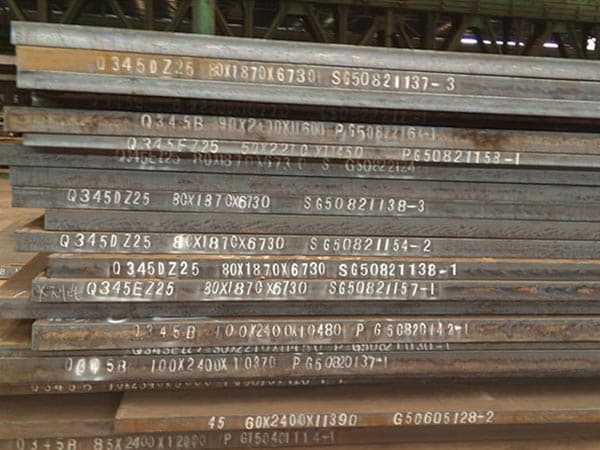
Understanding the Fundamental Differences Between S500MC and ASTM A36
When engineers and procurement specialists evaluate materials for structural or automotive applications, the comparison between S500MC and ASTM A36 often arises. However, these two grades belong to entirely different categories of steel technology. S500MC is a high-yield-strength, thermomechanically rolled (TMCP) steel governed by the European standard EN 10149-2. In contrast, ASTM A36 is a classic carbon structural steel that has been the industry workhorse in North America for decades. Choosing between them is not merely a matter of price, but a decision based on weight reduction, load-bearing capacity, and fabrication requirements.
ASTM A36 is characterized by its simplicity and reliability. With a minimum yield strength of 250 MPa (36 ksi), it is primarily used in bolted, riveted, or welded construction of bridges and buildings. S500MC, however, offers a minimum yield strength of 500 MPa. This 100% increase in yield strength allows designers to significantly reduce the thickness of components without sacrificing structural integrity, a concept known as lightweighting.
Mechanical Properties: A Performance Gap Analysis
The most striking difference lies in the mechanical performance. S500MC is engineered for high-stress environments where ductility and weight are critical. ASTM A36 is a general-purpose material where thickness is often used to compensate for lower strength.
| Property | S500MC (EN 10149-2) | ASTM A36 |
|---|---|---|
| Yield Strength (min) | 500 MPa | 250 MPa (36 ksi) |
| Tensile Strength | 550 - 700 MPa | 400 - 550 MPa (58-80 ksi) |
| Elongation (min) | 12% - 14% (depending on thickness) | 20% - 23% |
| Hardness (approx.) | 170 - 210 HB | 120 - 160 HB |
While A36 shows higher elongation, indicating superior ductility in static loads, S500MC provides the strength-to-weight ratio required for dynamic loads. In the transport industry, replacing A36 with S500MC can reduce the weight of a chassis by up to 30%, directly impacting fuel efficiency and payload capacity.
The Role of Chemical Composition and Microstructure
The chemical makeup of these steels dictates their behavior during processing. ASTM A36 is a basic carbon-manganese steel. It has a relatively high carbon content (up to 0.26% depending on thickness), which ensures strength but can lead to challenges in extreme cold-forming operations.
S500MC is a High-Strength Low-Alloy (HSLA) steel. It achieves its properties through a combination of low carbon content (usually <0.12%) and micro-alloying elements such as Niobium (Nb), Vanadium (V), and Titanium (Ti). These elements, combined with the Thermomechanically Controlled Processing (TMCP), result in an ultra-fine grain structure. This fine grain size is the secret behind S500MC's ability to maintain high strength while remaining exceptionally weldable and formable.
- Carbon Equivalent (CEV): S500MC typically has a lower CEV than A36 of comparable thickness, making it less susceptible to cold cracking during welding.
- Grain Refinement: The TMCP process used for S500MC prevents grain growth, ensuring toughness even at lower temperatures.
- Impurity Control: S500MC requires strict control of Phosphorus and Sulfur to ensure the integrity of the fine-grained structure.
Is There a Direct ASTM Equivalent for S500MC?
Technically, ASTM A36 is not an equivalent to S500MC. If you are looking for an ASTM standard that matches the performance of S500MC, you must look toward the HSLA specifications. The closest equivalents are:
- ASTM A1011 Grade 70 (Class 1 or 2): Used for hot-rolled sheets, this grade offers a yield strength of approximately 480-500 MPa.
- ASTM A656 Grade 70/80: Often used for structural plates in truck frames and cranes, providing the necessary yield strength and formability.
- ASTM A572 Grade 65: While lower in yield (450 MPa), it is often the closest structural plate alternative found in North American inventories.
It is vital to note that while the yield strengths might align, the impact toughness and bendability requirements of EN 10149-2 S500MC are often more stringent than standard ASTM A1011 or A572 grades. Always verify the Charpy V-notch impact requirements if the application involves low-temperature environments.
Fabrication Performance: Bending and Welding
Welding: Both steels are considered highly weldable. However, because S500MC relies on its TMCP-derived microstructure for strength, excessive heat input during welding can lead to a "softening" of the heat-affected zone (HAZ). Welders must manage cooling rates more carefully with S500MC than with the more forgiving A36. Standard MIG/MAG and submerged arc welding processes work well for both, provided the filler metal is matched to the higher strength of S500MC.
Bending and Forming: S500MC is specifically designed for cold forming. It can be bent to tight radii (often 0.5t to 1.5t depending on thickness and orientation) without cracking. ASTM A36, while ductile, does not have the same guaranteed minimum bend radii as S500MC. For complex geometries in automotive brackets or crane booms, S500MC is the superior choice.
Environmental Adaptability and Durability
Neither S500MC nor A36 are "weathering steels" like Corten. They both require protective coatings, such as galvanizing or painting, to prevent corrosion. However, the surface quality of S500MC is often superior because it is produced in modern mills with advanced descaling systems, providing a better substrate for high-performance paint systems.
In terms of fatigue life, S500MC outperforms A36 in cyclic loading scenarios. The fine-grained structure resists crack initiation more effectively, which is why it is preferred for mobile machinery and transport equipment that undergoes constant vibration and load fluctuations.
Application Industry Expansion
ASTM A36 remains the king of static infrastructure. You will find it in:
- General building frames and warehouses.
- Base plates for heavy machinery.
- Standard storage tanks and secondary containment.
S500MC dominates industries where performance and weight are balanced:
- Automotive: Truck chassis, cross members, and suspension components.
- Lifting Equipment: Telescopic cranes, aerial platforms, and forklift masts.
- Agricultural Machinery: Plow frames and harvester supports where high torque resistance is needed.
Cost-Benefit Analysis: Which is "Better"?
The term "better" is subjective to the project's constraints. If the goal is the lowest cost per ton for a simple support beam where weight is irrelevant, ASTM A36 is the better choice. It is widely available and requires no specialized engineering knowledge to implement.
However, if the project involves moving parts, transport, or the need to reduce the carbon footprint through material efficiency, S500MC is the clear winner. By using thinner S500MC to replace thicker A36, the total cost of the project may actually decrease because less steel is purchased, welding volumes are reduced, and shipping costs are lower.
In the modern global market, the shift toward S500MC and its ASTM HSLA equivalents represents a move toward more sustainable and efficient engineering. Understanding that these are not direct substitutes but rather different tools for different tasks is the key to successful material selection.
Leave a message