
What is the production process of s550mc high strength steel auto plate as per en 10149
Detailed technical guide on the production process, chemical composition, TMCP rolling, and industrial applications of S550MC high-strength steel according to EN 10149-2 standards.
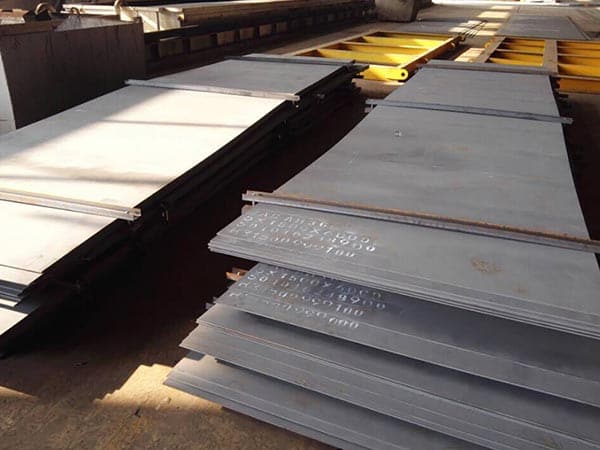
The Technical Essence of S550MC High-Strength Steel
S550MC is a high-yield-strength, thermomechanically rolled steel designed specifically for cold forming applications, governed by the EN 10149-2 standard. The designation "S" signifies structural steel, "550" represents the minimum yield strength of 550 MPa, "M" indicates the thermomechanical rolling delivery condition, and "C" denotes its suitability for cold forming. As the automotive and heavy machinery industries push for lightweighting to reduce fuel consumption and carbon emissions, S550MC has become a critical material for structural components that require both high load-bearing capacity and excellent ductility.
Chemical Composition and Micro-alloying Philosophy
The production of S550MC begins with a sophisticated chemical design. Unlike traditional structural steels that rely on high carbon content for strength, S550MC utilizes a low-carbon, micro-alloyed approach. This strategy ensures superior weldability and toughness while achieving high strength through grain refinement. The typical chemical limits according to EN 10149-2 are as follows:
| Element | Max Content (%) | Role in Metallurgy |
|---|---|---|
| Carbon (C) | 0.12 | Ensures weldability and prevents brittle phases. |
| Manganese (Mn) | 1.80 | Increases hardenability and solid solution strengthening. |
| Silicon (Si) | 0.50 | Deoxidation and solid solution strengthening. |
| Phosphorus (P) | 0.025 | Controlled to minimize grain boundary embrittlement. |
| Sulfur (S) | 0.015 | Minimized to improve lamellar tearing resistance. |
| Niobium (Nb) | 0.09 | Primary grain refiner and precipitation hardener. |
| Titanium (Ti) | 0.15 | Stabilizes nitrogen and refines grain structure. |
| Vanadium (V) | 0.20 | Secondary precipitation hardening. |
The synergy between Niobium (Nb) and Titanium (Ti) is vital. Niobium retards austenite recrystallization during the rolling process, while Titanium forms stable nitrides that prevent grain growth during the reheating phase. This micro-alloying foundation is what allows the steel to achieve a fine-grained ferritic-pearlitic or bainitic microstructure during subsequent processing steps.
The Primary Steelmaking and Refining Stage
The production process starts in the Basic Oxygen Furnace (BOF) or Electric Arc Furnace (EAF). To meet the stringent requirements of S550MC, the molten steel must undergo intensive secondary refining. This includes Ladle Furnace (LF) treatment for precise alloying and RH Vacuum Degassing to remove hydrogen, nitrogen, and oxygen. Calcium treatment is often employed for inclusion shape control, transforming elongated manganese sulfides into spherical shapes. This step is non-negotiable for S550MC because it directly impacts the steel's ability to withstand severe cold bending without cracking.
TMCP: The Core Production Technology
The most critical phase in manufacturing S550MC is Thermo-Mechanical Controlled Processing (TMCP). Unlike conventional hot rolling, TMCP involves precise control over the temperature and deformation during the rolling process. This is divided into several stages:
- Reheating: Slabs are heated to 1150°C–1250°C to ensure micro-alloying elements like Nb are fully dissolved into the austenite matrix.
- Roughing Stage: The slab is reduced in thickness at high temperatures where recrystallization occurs rapidly.
- Finishing Stage: This occurs in the non-recrystallization temperature range (usually below 950°C). Rolling in this zone creates elongated austenite grains with high dislocation density, providing numerous nucleation sites for ferrite during cooling.
- Accelerated Cooling (ACC): Immediately after the final rolling pass, the plate is subjected to controlled water cooling. This suppresses the formation of coarse pearlite and promotes a very fine ferrite grain size, often smaller than 5-10 microns.
The precise control of the finish rolling temperature and the cooling rate determines the final mechanical properties. A higher cooling rate can lead to a more acicular ferrite or bainitic structure, which pushes the yield strength toward the upper limits of the specification.
Mechanical Properties and Performance Standards
S550MC must meet rigorous mechanical criteria to ensure safety and reliability in automotive frames and crane structures. The EN 10149-2 standard defines the following minimum requirements for longitudinal test pieces:
| Property | Value | Testing Condition |
|---|---|---|
| Yield Strength (Reh) | Min 550 MPa | Measured at 0.2% offset. |
| Tensile Strength (Rm) | 600 - 760 MPa | Total breaking force resistance. |
| Elongation (A80mm) | Min 12% (t < 3mm) | Reflects ductility for forming. |
| Elongation (A5) | Min 14% (t ≥ 3mm) | Measured on proportional test pieces. |
| Bending Radius (90°) | 1.0t to 1.5t | Depending on thickness (t). |
Beyond these standard metrics, S550MC exhibits high fatigue strength, which is essential for components subjected to cyclic loading, such as truck chassis rails and cross members. The fine-grained structure acts as a barrier to crack propagation, extending the service life of the vehicle.
Cold Forming and Fabrication Advantages
The "C" in S550MC highlights its exceptional cold-forming characteristics. Despite its high strength, the steel can be bent to tight radii without surface splitting or springback issues. This is achieved through the inclusion shape control mentioned earlier. Manufacturers can utilize S550MC to replace heavier S355MC components, reducing weight by up to 30% while maintaining the same structural integrity. Weldability is another standout feature. With a low Carbon Equivalent (Cev), S550MC can be welded using standard methods like MAG, TIG, or laser welding without the need for preheating, provided the heat input is controlled to prevent excessive grain growth in the Heat Affected Zone (HAZ).
Industry Applications and Lightweighting Trends
The demand for S550MC is driven by the need for efficiency. In the automotive sector, it is the preferred material for truck frames, chassis components, and suspension systems. By using S550MC, engineers can reduce the thickness of structural parts without compromising the vehicle's Load-Bearing Capacity. In the lifting and transportation industry, S550MC is used for telescopic crane booms and trailer frames, where high strength-to-weight ratios are paramount. Its environmental adaptability also makes it suitable for cold climates, as the TMCP process ensures decent impact toughness even at sub-zero temperatures, though specific impact-tested grades like S550QL are used for more extreme conditions.
Surface Quality and Dimensional Tolerances
As per EN 10149-1, S550MC plates are typically delivered with a pickled and oiled surface or a dry hot-rolled surface. Dimensional tolerances are strictly controlled according to EN 10051, ensuring that the material is compatible with automated laser cutting and robotic welding systems. High flatness is a critical requirement for modern manufacturing, and S550MC produced via advanced leveling machines meets these demands, reducing the need for manual rework during assembly. This combination of high strength, excellent formability, and precise dimensions makes S550MC a cornerstone of modern industrial engineering.
Leave a message