
10mm thickness S315MC high yield strength alloy quality steel yield strength Mpa
Explore the technical specifications of 10mm S315MC high yield strength steel. Learn about its 315 MPa yield strength, chemical composition, and superior cold-forming capabilities for industrial applications.
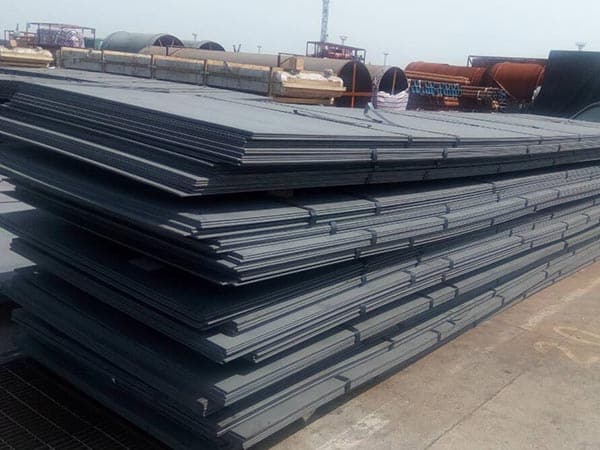
Understanding the 10mm S315MC High Yield Strength Alloy Quality Steel
S315MC is a high-yield-strength steel specifically designed for cold-forming applications, governed by the European standard EN 10149-2. The designation 'S' identifies it as a structural steel, '315' refers to the minimum yield strength of 315 MPa, and 'MC' indicates that the steel is thermomechanically rolled (M) and intended for cold forming (C). When dealing with a 10mm thickness, this material offers a unique balance between structural rigidity and processing flexibility, making it a staple in modern engineering projects that require weight reduction without compromising safety.
Yield Strength and Mechanical Integrity at 10mm Thickness
The primary characteristic of S315MC is its yield strength. For a 10mm thickness, the minimum yield strength is maintained at 315 MPa. This value represents the stress level at which the steel begins to deform plastically. Unlike standard structural steels, S315MC achieves this strength through a combination of precise chemical alloying and thermomechanical controlled processing (TMCP). The tensile strength for this grade typically ranges between 390 and 510 MPa, providing a robust safety margin for load-bearing components.
Elongation is another critical factor for 10mm S315MC. Despite its high strength, it retains excellent ductility. For thicknesses between 3mm and 20mm, the minimum elongation (A80mm or A5.65) is usually around 20% to 24%. This allows the 10mm plate to undergo significant deformation during fabrication—such as deep drawing or tight-radius bending—without the risk of cracking or premature failure.
| Property | Value (Thickness 10mm) |
|---|---|
| Yield Strength (ReH) | Min 315 MPa |
| Tensile Strength (Rm) | 390 - 510 MPa |
| Elongation (A5) | Min 24% |
| Impact Energy (KV) | 40 J at -20°C (Optional) |
Metallurgical Composition and Micro-Alloying
The superior performance of 10mm S315MC is rooted in its chemical composition. It is a low-carbon steel, which ensures excellent weldability. The strength is enhanced through micro-alloying elements such as Niobium (Nb), Vanadium (V), and Titanium (Ti). These elements facilitate grain refinement during the rolling process. A finer grain structure directly contributes to higher yield strength and improved toughness at lower temperatures.
- Carbon (C): Kept below 0.12% to maximize weldability and prevent brittleness.
- Manganese (Mn): Added up to 1.30% to increase strength and hardenability.
- Silicon (Si): Limited to 0.50% to maintain surface quality during galvanizing.
- Micro-alloys (Nb+V+Ti): These elements combine to prevent grain growth, ensuring the 10mm plate remains tough even under high stress.
Thermo-Mechanical Controlled Processing (TMCP)
The 'M' in S315MC signifies the thermomechanical rolling process. This is not merely a heating cycle but a sophisticated sequence of rolling at specific temperature ranges followed by controlled cooling. For a 10mm plate, this process is vital because it ensures uniform mechanical properties throughout the entire cross-section. TMCP allows the steel to achieve high strength without the need for excessive alloying elements or post-rolling heat treatments like quenching and tempering. This results in a cleaner steel with fewer inclusions and better isotropic properties, meaning the steel performs consistently regardless of the direction of the applied load.
Cold Forming and Fabrication Advantages
Fabricators favor 10mm S315MC because of its predictable behavior during cold forming. The low carbon equivalent (CEV) and fine grain structure reduce the springback effect, which is often a challenge with high-strength materials. When bending 10mm S315MC, a minimum inside bend radius of 1.0 to 1.5 times the thickness is typically achievable, depending on the orientation of the bend relative to the rolling direction. This tight bending capability is essential for creating complex structural profiles like C-channels or U-beams used in vehicle chassis.
Machining and cutting are also highly efficient. Whether using laser, plasma, or waterjet cutting, the 10mm S315MC plate maintains its edge integrity. The lack of heavy alloying means tool wear is minimized compared to traditional high-alloy steels, leading to lower production costs and faster turnaround times.
Weldability and Structural Joining
Welding 10mm S315MC is straightforward due to its low carbon content. It can be joined using all standard welding methods, including MIG/MAG, TIG, and submerged arc welding. Because the steel is produced via TMCP, the heat-affected zone (HAZ) remains relatively stable. However, it is important to manage heat input to avoid excessive grain growth in the HAZ, which could slightly reduce the local yield strength. No preheating is generally required for 10mm thickness under normal ambient conditions, which simplifies the assembly of large-scale structures.
Environmental Adaptability and Fatigue Resistance
In demanding environments, 10mm S315MC demonstrates remarkable resilience. The micro-alloyed structure provides good resistance to atmospheric corrosion compared to standard carbon steels. Furthermore, its high yield-to-tensile ratio makes it exceptionally resistant to fatigue. This is a critical attribute for components subjected to cyclic loading, such as the frames of heavy-duty trucks or the moving parts of agricultural machinery. The steel's ability to absorb energy—measured by its impact toughness—ensures that it performs reliably even in cold climates, preventing brittle fractures that could lead to catastrophic failure.
Applications Across Modern Industries
The versatility of 10mm S315MC high yield strength steel makes it indispensable across various sectors. In the automotive and transportation industry, it is used for truck frames, cross members, and cold-pressed parts where weight reduction is necessary to improve fuel efficiency and payload capacity. The 10mm thickness is particularly popular for heavy-duty chassis components that require a balance of lightness and extreme durability.
The construction and lifting equipment industry utilizes S315MC for crane booms, telescopic arms, and structural supports. The high yield strength allows for thinner sections to be used compared to S235 or S275 grades, reducing the overall weight of the equipment and increasing its lifting capacity. Additionally, in the agricultural sector, S315MC is used for plow frames, trailers, and harvesting equipment components that must withstand constant vibration and mechanical stress.
Optimizing Design with S315MC
Engineers choosing 10mm S315MC can optimize their designs by leveraging the material's high strength-to-weight ratio. By replacing standard structural steels with S315MC, it is often possible to reduce the thickness of a component while maintaining the same load-bearing capacity. This not only reduces material costs but also lowers shipping weights and energy consumption during the lifecycle of the finished product. The consistency of the 315 MPa yield strength across the 10mm gauge ensures that safety factors are accurately calculated and maintained throughout the manufacturing process.
Leave a message