
Application advantages of S700MC steel for large truss truck boom
Technical analysis of S700MC steel in large truss truck booms, exploring its mechanical properties, welding performance, and economic benefits for heavy lifting equipment.
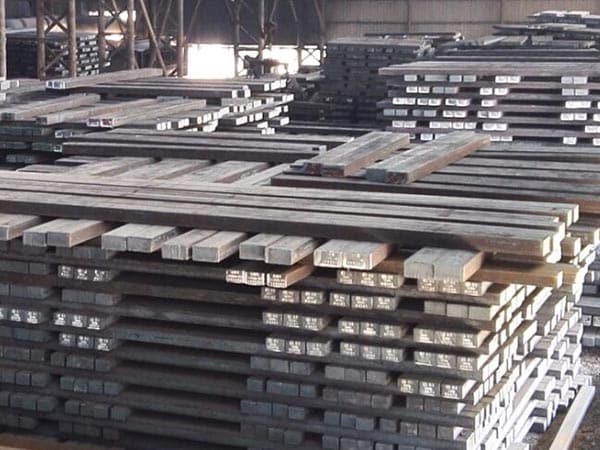
Evolution of Material Selection in Heavy Lifting Engineering
The demand for higher lifting capacities and longer reaches in the mobile crane and concrete pump industries has pushed traditional structural steels to their physical limits. Large truss truck booms, which serve as the skeletal backbone of these machines, require materials that offer an exceptional balance of high yield strength, low density, and superior toughness. S700MC, a thermomechanically rolled high-strength low-alloy (HSLA) steel conforming to the EN 10149-2 standard, has emerged as the definitive solution for these complex engineering challenges. Unlike traditional quenched and tempered steels, S700MC achieves its properties through a precise combination of chemical composition and controlled rolling processes, making it uniquely suited for the dynamic stress environments of truss structures.
The Science of Thermomechanical Rolling (TMCP)
The performance of S700MC is rooted in the Thermomechanical Controlled Process (TMCP). This manufacturing technique involves strict control over the temperature and deformation during the rolling process, followed by accelerated cooling. For large truss booms, this results in an ultra-fine grain structure that cannot be achieved through conventional heat treatment. The micro-alloying elements—specifically Niobium (Nb), Vanadium (V), and Titanium (Ti)—work in synergy to pin grain boundaries and prevent grain growth during processing. This refinement is critical because it simultaneously increases yield strength and improves low-temperature impact toughness, a phenomenon that defies the traditional trade-off between hardness and ductility.
Mechanical Superiority and Weight Optimization
The primary advantage of S700MC in truss truck booms is its high yield strength of at least 700 MPa. In truss designs, where members are primarily subjected to axial tension and compression, the high strength-to-weight ratio allows engineers to specify thinner wall sections for the tubular or angular components of the boom. Reducing the dead weight of the boom directly translates to an increased effective lifting capacity at long radii. For a 100-meter truss boom, switching from S355 to S700MC can reduce the structural weight by up to 40%, significantly lowering the vehicle's center of gravity and improving road stability during transport.
| Property | s355jr (Standard) | S700MC (High Strength) | Engineering Benefit |
|---|---|---|---|
| Yield Strength (min) | 355 MPa | 700 MPa | Allows for higher load bearing with less material |
| Tensile Strength | 470-630 MPa | 750-950 MPa | Superior resistance to structural failure |
| Elongation (A5) | ~20% | ~12% | Maintains sufficient plasticity for safety margins |
| Impact Energy (-20°C) | 27 J | 40 J | Reliable performance in cold climates |
Fatigue Resistance and Dynamic Loading
Truss booms on truck-mounted cranes are not static structures; they undergo millions of load cycles throughout their service life. S700MC exhibits remarkable fatigue resistance due to its homogeneous microstructure and low impurity levels (low Phosphorus and Sulfur content). In the nodes of a truss boom, where stress concentrations are highest, the fine-grained nature of S700MC helps inhibit the initiation of micro-cracks. Furthermore, the steel's high ratio of yield strength to tensile strength ensures that the structure can absorb significant energy during sudden load shifts or environmental gusts without undergoing permanent deformation.
Advanced Welding Performance in Complex Joints
One of the most significant hurdles in using high-strength steel is weldability. S700MC addresses this through an extremely low Carbon Equivalent (Cev). While traditional steels with 700 MPa yield strength often require extensive preheating to prevent cold cracking, S700MC can typically be welded at room temperature using standard MAG (Metal Active Gas) or MIG (Metal Inert Gas) processes. The low carbon content (max 0.12%) minimizes the risk of hardening in the Heat Affected Zone (HAZ). For large truss booms involving hundreds of manual or robotic weld joints, the elimination of preheating significantly reduces energy costs and production cycle times. However, it is vital to control the heat input (typically between 0.5 and 1.5 kJ/mm) to maintain the fine-grained structure in the HAZ and ensure the joint's toughness matches the base metal.
Cold Forming and Geometric Precision
Large truss booms often utilize cold-formed sections to optimize the aerodynamic profile and reduce wind resistance. S700MC is specifically designed for cold forming, offering excellent bendability despite its high strength. Manufacturers can achieve tight bending radii (typically 1.5 to 2.0 times the thickness) without surface cracking. This ductility allows for the creation of complex, non-standard shapes that can improve the moment of inertia of the boom sections. Additionally, the consistent mechanical properties across the plate ensure predictable springback, which is essential for maintaining the tight tolerances required in telescoping truss segments or modular boom assemblies.
Environmental Adaptability and Global Operation
Truck-mounted cranes operate in diverse environments, from the scorching heat of desert construction sites to the sub-zero temperatures of Arctic mining projects. S700MC is tested for impact toughness at -20°C and -40°C, ensuring that the truss boom remains ductile and resistant to brittle fracture even in extreme cold. This environmental versatility makes S700MC-based equipment suitable for global export, as it meets the safety standards of various international regulatory bodies. Moreover, the reduced material volume required for S700MC booms means less surface area to treat for corrosion, further lowering maintenance overhead.
Economic Impact and Lifecycle Value
While the per-ton cost of S700MC is higher than that of standard carbon steel, the total lifecycle cost of the truck boom is lower. The reduction in material weight leads to:
- Lower fuel consumption during vehicle transit.
- Reduction in the number of axles required for the truck chassis, lowering initial capital expenditure.
- Increased payload capacity, allowing operators to complete jobs faster and with fewer setups.
- Lower welding consumable consumption and labor hours due to thinner plate sections.
Strategic Implementation in Future Designs
The transition toward S700MC is not merely a material swap but a fundamental shift in design philosophy. Engineers are now utilizing Finite Element Analysis (FEA) to push the boundaries of truss geometry, knowing that the material can handle the calculated stresses. As the industry moves toward even higher grades like S960MC, S700MC remains the "sweet spot" for truss booms, providing the best balance of cost, ease of fabrication, and structural reliability. The adoption of this steel is a critical step for manufacturers looking to lead in the competitive landscape of heavy lifting and infrastructure development.
Leave a message