
How to distinguish hot rolled S460MC special steel for automobiles and cold rolled steel by naked eyes
Learn professional techniques to distinguish hot rolled S460MC automotive steel from cold rolled steel through visual inspection, surface characteristics, and mechanical property analysis.
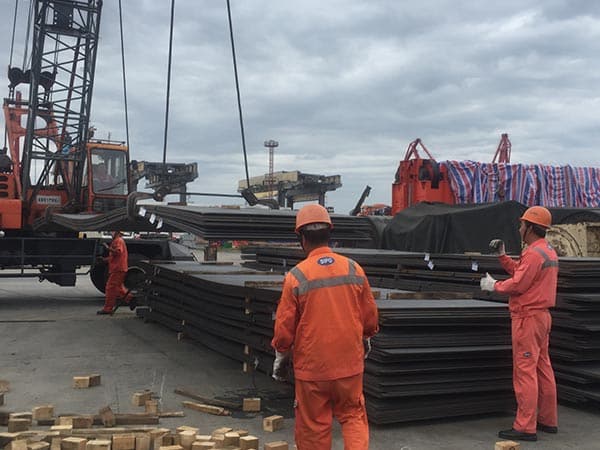
The Visual Essence of S460MC Automotive Steel
Identifying steel grades and processing methods through visual inspection is a fundamental skill for procurement officers, quality inspectors, and engineers. S460MC is a high-strength, thermomechanically rolled steel specifically designed for cold forming, predominantly utilized in the automotive industry for structural components like truck chassis, cross members, and longitudinal beams. Distinguishing this hot-rolled grade from typical cold-rolled steel requires an understanding of surface physics and metallurgical outcomes.
Surface Texture and Coloration Clues
The most immediate differentiator between hot-rolled S460MC and cold-rolled steel is the surface finish. Hot-rolled S460MC undergoes processing at temperatures above the recrystallization point. This results in the formation of a characteristic iron oxide layer known as mill scale. To the naked eye, S460MC often appears as a dull, dark grey or bluish-black color. The texture is slightly rougher, similar to a fine-grit sandpaper, due to the cooling process after the final rolling pass.
In contrast, cold-rolled steel is processed at room temperature, which eliminates the formation of mill scale. The surface is exceptionally smooth, often reflective or shiny, and typically coated with a thin layer of protective oil to prevent oxidation. If you see a bright, silvery-grey finish with a metallic luster, it is almost certainly cold-rolled. S460MC, unless it has been pickled and oiled (S460MC-P), will maintain its matte, textured appearance.
Edge Characteristics and Dimensional Precision
Observing the edges of the steel sheet or coil provides significant evidence of its manufacturing history. Hot-rolled S460MC usually features rounded, slightly irregular edges. This is a byproduct of the high-temperature rolling process where the material is more malleable and the edges are not as strictly confined. Furthermore, the thickness of hot-rolled plates is generally less uniform than cold-rolled alternatives.
- Hot Rolled S460MC: Rounded edges, potential for slight surface pitting, and thicker gauge availability.
- Cold Rolled Steel: Sharp, square edges, highly uniform thickness, and generally limited to thinner gauges (usually under 3mm).
While S460MC is designed for precision cold forming, its initial state as a hot-rolled product means it lacks the razor-sharp geometric perfection seen in cold-reduced steels. If the material feels perfectly flat and has a precision-machined feel to its edges, it has likely undergone cold reduction.
The Role of Thermomechanical Rolling (The "M" Factor)
The "M" in S460MC stands for thermomechanically rolled. This is a sophisticated process where the final deformation is carried out in a specific temperature range, leading to a fine-grained microstructure that cannot be achieved by heat treatment alone. While this is a microscopic attribute, it affects how the steel reacts to light and physical manipulation. S460MC has a higher strength-to-weight ratio than standard mild steels, which means that even a relatively thin plate will feel significantly more rigid and resistant to manual bending compared to a standard cold-rolled DC01 grade of the same thickness.
Comparative Technical Specifications
To further understand why these visual differences exist, we must look at the mechanical benchmarks that define S460MC. The following table illustrates the performance gap between S460MC and common cold-rolled structural steel.
| Property | S460MC (Hot Rolled) | HC420LA (Cold Rolled High Strength) |
|---|---|---|
| Yield Strength (MPa) | ≥ 460 | 420 - 520 |
| Tensile Strength (MPa) | 520 - 670 | 470 - 590 |
| Elongation (%) | ≥ 14 (t < 3mm) | ≥ 17 |
| Surface Finish | Matte, Mill Scale, or Pickled | Bright, Smooth, Oiled |
The table shows that while cold-rolled steels like HC420LA can reach high strengths, the S460MC provides a unique combination of high yield strength and specific ductility required for heavy-duty automotive frames. The visual "toughness" of the hot-rolled surface is a direct reflection of this industrial-grade durability.
Application Context as an Identification Tool
Contextual clues are often as valuable as visual ones. If you are inspecting steel destined for the automotive chassis or heavy machinery components, it is highly likely to be S460MC. This steel is chosen for parts that require high load-bearing capacity but also need to be bent or folded during manufacturing. Cold-rolled steel is more frequently found in visible exterior panels (like car doors or hoods) where surface aesthetics and paintability are the primary concerns. S460MC is the "bone" of the vehicle, while cold-rolled steel is often the "skin."
Environmental Adaptation and Corrosion Resistance
The presence of mill scale on hot-rolled S460MC provides a very temporary, albeit brittle, layer of protection against atmospheric corrosion. However, this scale can flake off. Cold-rolled steel, lacking this scale, will rust almost immediately if exposed to moisture without its oil coating. When looking at aged stock, S460MC will often show a more uniform, dark oxidation, whereas cold-rolled steel will exhibit bright orange "flash rust" in spots where the oil has migrated or dried.
Practical Inspection Checklist
When standing in a warehouse or on a production floor, use this quick checklist to distinguish S460MC from cold-rolled options:
- Check the Scale: Is there a dark, flaky, or matte grey coating? (Yes = Hot Rolled S460MC).
- Touch the Surface: Is it oily and smooth like glass, or dry and slightly tactile? (Dry/Tactile = Hot Rolled S460MC).
- Measure the Thickness: Is it over 3.0mm? (Likely Hot Rolled S460MC, as cold rolling thick plates is energy-intensive and rare).
- Inspect the Edges: Are they rounded and slightly blue-tinged? (Yes = Hot Rolled S460MC).
- Look for Markings: S460MC is often inkjet-printed with its EN 10149-2 standard designation, whereas cold-rolled coils often carry EN 10130 or EN 10268 markings.
By integrating these visual and physical observations with an understanding of the thermomechanical rolling process, professionals can accurately identify S460MC steel. This ensures that the high-strength structural integrity required for automotive safety is maintained throughout the supply chain, preventing costly material mix-ups and ensuring optimal manufacturing performance.
Leave a message