
What is S960MC on sale equivalent steel grade
Discover S960MC steel equivalents, mechanical properties, and processing advantages. Learn how Strenx 960 and Q960 compare in high-strength engineering applications.
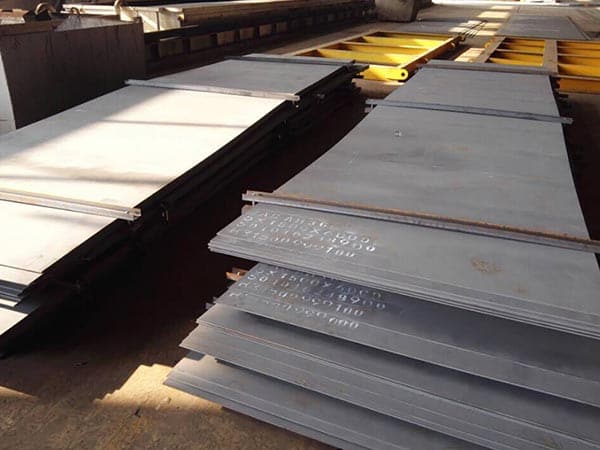
The Definition and Technical Essence of S960MC Steel
S960MC is a high-strength, thermomechanically rolled steel specifically designed for cold forming. According to the EN 10149-2 standard, the 'S' denotes structural steel, '960' represents the minimum yield strength of 960 MPa, and 'MC' indicates that the material is produced through thermomechanical rolling, ensuring a fine-grained microstructure. This grade belongs to the family of High Strength Low Alloy (HSLA) steels, which are engineered to provide an exceptional strength-to-weight ratio, allowing engineers to design lighter yet more robust structures.
The production process of S960MC involves precise temperature control during the rolling phase, which results in a material that combines extreme hardness with surprising ductility. Unlike traditional quenched and tempered steels, S960MC achieves its properties through micro-alloying elements such as Niobium (Nb), Vanadium (V), and Titanium (Ti), which form carbonitrides to refine the grain size and enhance strength without significantly increasing carbon content.
Global Equivalents: Identifying S960MC on Sale Alternatives
When sourcing S960MC, procurement specialists often encounter regional standards or proprietary brand names that offer equivalent performance. Identifying the correct equivalent is vital for maintaining structural integrity while optimizing costs.
| Standard / Manufacturer | Equivalent Grade | Region / Brand |
|---|---|---|
| EN 10149-2 | S960MC | European Standard |
| SSAB | Strenx 960 / Domex 960 | Sweden (Proprietary) |
| GB/T 1591 | Q960E / Q960D | China Standard |
| ASTM | A514 (Comparable Strength) | USA (Plate focus) |
| ThyssenKrupp | PERFORM 960 | Germany (Proprietary) |
Strenx 960, produced by SSAB, is perhaps the most recognized global equivalent. It is often preferred for its tight thickness tolerances and superior surface finish. In the Chinese market, Q960E is the primary alternative, governed by the GB/T 1591 standard. While these grades share similar yield strengths, slight variations in impact toughness at low temperatures (e.g., -40°C vs -20°C) must be verified during the selection process.
Mechanical Performance and Chemical Composition
The allure of S960MC lies in its mechanical limits. It pushes the boundaries of what thin-gauge steel can achieve. For structural components that must withstand immense pressure while remaining mobile, the 960 MPa yield strength provides a safety margin that lower grades cannot match.
Key Mechanical Properties:
- Yield Strength (ReH): Minimum 960 MPa.
- Tensile Strength (Rm): 980 – 1250 MPa.
- Elongation (A5): Minimum 7% (depending on thickness).
- Impact Energy: Typically 40J at -20°C (verify specific sub-grades like S960MC-L).
The chemical composition is kept intentionally low in carbon to ensure weldability. A typical heat analysis reveals:
| Element | Max % Content |
|---|---|
| Carbon (C) | 0.20 | 2.20 |
| Silicon (Si) | 0.60 |
| Phosphorus (P) | 0.025 |
| Sulfur (S) | 0.010 |
| Aluminium (Al) | 0.015 |
Advanced Processing: Welding and Cold Forming
Working with S960MC requires a sophisticated understanding of metallurgy. Because the steel derives its strength from the thermomechanical rolling process, excessive heat input during welding can lead to a 'softening' of the Heat Affected Zone (HAZ). This reduction in local strength can compromise the entire structure if not managed correctly.
Welding Guidelines: Using low heat input (cooling time t8/5 between 5 and 15 seconds) is recommended. Matching or slightly under-matching filler metals are often used to ensure the weld remains ductile. Preheating is generally not required for thinner sections due to the low carbon equivalent (CET/CEV), which is a significant advantage over quenched and tempered plates.
Bending and Forming: S960MC is optimized for cold bending. However, due to its high strength, the springback effect is more pronounced than with standard S355 grades. The minimum bending radius (R) is typically 3 to 4 times the thickness (t), depending on the bending direction (transverse vs. longitudinal). Precision tooling and high-tonnage press brakes are essential for achieving the tight tolerances required in modern chassis manufacturing.
Industrial Applications and Weight Reduction Strategies
The primary driver for choosing S960MC is weight reduction. By replacing S355 or S700 with S960MC, engineers can reduce the thickness of structural members by up to 50% without losing load-bearing capacity. This translates directly into higher payloads for transport vehicles and lower fuel consumption.
Mobile Cranes and Lifting Equipment: The telescopic booms of mobile cranes are the classic application for S960MC. The material allows for longer reach and higher lifting capacities while keeping the overall vehicle weight within road-legal limits.
Heavy Transport and Trailers: In the manufacture of low-loader trailers and timber trucks, S960MC is used for the main longitudinal beams. These components must endure high fatigue loads and extreme vibrations. The fine-grained structure of S960MC provides excellent fatigue resistance compared to traditional high-strength steels.
Forestry and Agriculture: Harvesters and forwarders operate in harsh, unpredictable environments. The high yield strength of S960MC protects the machinery from impact damage and structural deformation when navigating rugged terrain.
Environmental Adaptability and Longevity
S960MC exhibits standard atmospheric corrosion resistance similar to other carbon steels. However, its high strength makes it sensitive to hydrogen embrittlement if not properly treated during coating or pickling processes. For applications in corrosive environments, hot-dip galvanizing or high-quality epoxy painting is recommended.
The material's performance at low temperatures is another critical factor. Many equivalent grades, such as the 'E' or 'L' variants (e.g., S960QL or Q960E), are tested for impact toughness at -40°C. This ensures that structures used in Arctic conditions or high-altitude environments do not suffer from brittle fracture under sudden loads.
Strategic Procurement: What to Look for When S960MC is On Sale
When S960MC is offered at competitive prices, it is essential to verify the documentation beyond just the price point. A 3.1 or 3.2 Material Test Report (MTR) according to EN 10204 is mandatory. This certificate should detail the actual yield and tensile values, the chemical heat analysis, and the impact test results.
Buyers should also inspect the flatness and surface quality. Since S960MC is often used in automated laser cutting and robotic welding cells, high-quality material must be free of internal stresses that cause 'bowing' after cutting. Premium suppliers often offer 'laser-plus' versions of S960MC that guarantee superior flatness for precision manufacturing.
Evaluating the origin of the steel is equally important. While European mills like SSAB and ThyssenKrupp have long led the market, top-tier Chinese mills like Baosteel and TISCO now produce Q960 equivalents that meet or exceed international standards, providing a cost-effective alternative for global projects.
Future Trends in Ultra-High Strength Steels
The development of S960MC has paved the way for even higher grades, such as S1100MC and S1300MC. However, S960MC remains the 'sweet spot' for many industries because it balances extreme strength with manageable processing requirements. As the global focus shifts toward sustainability and 'Green Steel' initiatives, many manufacturers are now producing S960MC using Electric Arc Furnaces (EAF) powered by renewable energy, significantly reducing the carbon footprint of the final product.
Utilizing S960MC is not just a choice of material; it is a commitment to advanced engineering. By understanding the equivalents and the specific metallurgical properties of this grade, manufacturers can push the limits of design, creating the next generation of efficient, powerful, and durable machinery.
Leave a message