
What is minimum yield strength of B650L steel complete specifications?
Explore the comprehensive specifications of B650L steel, focusing on its 650MPa minimum yield strength, chemical composition, processing performance, and industrial applications.
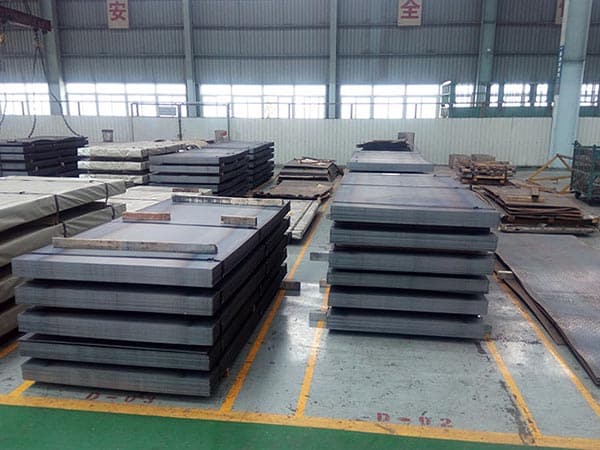
The Core Identity of B650L: Understanding the 650MPa Yield Strength
B650L steel stands as a cornerstone in the evolution of high-strength low-alloy (HSLA) structural steels, specifically engineered for the automotive and heavy-duty transportation industries. The designation "B650L" is not merely a label but a direct reference to its primary mechanical performance indicator: the minimum yield strength of 650 MPa. In the context of structural engineering, yield strength represents the maximum stress a material can withstand before it begins to deform plastically. For B650L, this high threshold allows designers to reduce material thickness without compromising the structural integrity of the vehicle frame or chassis.
Achieving a minimum yield strength of 650 MPa requires a sophisticated metallurgical approach. Unlike conventional carbon steels that rely heavily on carbon content for strength, B650L utilizes micro-alloying techniques. By adding precise amounts of elements like Niobium (Nb), Vanadium (V), and Titanium (Ti), manufacturers can refine the grain size and induce precipitation hardening. This results in a material that is not only exceptionally strong but also maintains the ductility necessary for complex forming operations. This balance is critical for components that must absorb energy during impact while supporting massive static and dynamic loads.
Complete Mechanical Specifications and Performance Metrics
While the 650 MPa yield strength is the headline figure, the complete mechanical profile of B650L defines its true utility. Engineers must consider the relationship between yield strength, tensile strength, and elongation to predict how the steel will behave under real-world conditions. Typically, B650L exhibits a tensile strength ranging between 700 and 850 MPa, providing a robust safety margin beyond the initial yield point.
| Property | Specification Value | Unit |
|---|---|---|
| Minimum Yield Strength (ReH) | ≥ 650 | MPa |
| Tensile Strength (Rm) | 700 - 850 | MPa |
| Minimum Elongation (A80mm) | ≥ 14 | % |
| Impact Energy (Charpy V-Notch, -20°C) | ≥ 40 (Typical) | J |
The elongation property, often exceeding 14%, is particularly noteworthy for a steel of this strength class. It ensures that the material can undergo significant deformation before fracture, a vital characteristic for the safety of automotive structures. Furthermore, the ratio between yield strength and tensile strength (yield ratio) is carefully controlled to optimize the energy absorption capacity, making B650L an ideal candidate for crash-relevant components in commercial vehicles.
Chemical Composition: The Science of Micro-Alloying
The superior performance of B650L is rooted in its low-carbon, micro-alloyed chemical design. High carbon content generally increases strength but severely degrades weldability and toughness. B650L circumvents this by keeping carbon levels low and utilizing Manganese and Silicon as primary solid-solution strengtheners, complemented by micro-alloying elements.
- Carbon (C): Kept below 0.12% to ensure excellent weldability and prevent the formation of brittle phases.
- Manganese (Mn): Usually present between 1.5% and 2.0%, it enhances hardenability and strengthens the ferrite matrix.
- Silicon (Si): Limited to around 0.50% to improve deoxidation and provide additional solid-solution strengthening.
- Micro-alloying (Nb, V, Ti): These elements form fine carbides and nitrides that pin grain boundaries during the rolling process, leading to a fine-grained microstructure that boosts both strength and low-temperature toughness.
By strictly controlling impurities like Sulfur (S) and Phosphorus (P), the internal cleanliness of the steel is maximized. Low sulfur content is especially important for improving the transverse ductility and impact resistance, ensuring that the steel performs consistently regardless of the loading direction relative to the rolling direction.
Processing Performance: Bending, Stamping, and Welding
For manufacturers, the value of B650L lies in its processability. High-strength steel is often difficult to form, but B650L is specifically designed for cold forming. Its fine-grained structure allows for tight bending radii without cracking. Typically, B650L can handle a 180-degree cold bend with a radius as small as twice the thickness (2a), depending on the specific manufacturing batch and thickness.
Welding is another critical area where B650L excels. Due to its low carbon equivalent (Ceq), it is less susceptible to cold cracking in the heat-affected zone (HAZ). It can be welded using standard industrial methods such as Gas Metal Arc Welding (GMAW) or Submerged Arc Welding (SAW). However, to maintain the 650 MPa yield strength in the welded joint, it is essential to control the heat input. Excessive heat can lead to grain growth in the HAZ, locally softening the material. Using high-quality filler metals that match or exceed the strength of the base metal is standard practice to ensure the integrity of the entire assembly.
Environmental Adaptability and Fatigue Resistance
B650L is frequently used in environments where it is subjected to cyclic loading and varying temperatures. The fatigue strength of B650L is significantly higher than that of traditional B510L or lower-grade structural steels. This makes it indispensable for truck longitudinal beams and cross-members that endure constant vibration and stress fluctuations over millions of kilometers.
In terms of environmental resistance, the fine-grained microstructure provides a degree of inherent resistance to atmospheric corrosion compared to coarse-grained steels, though it is not a "weathering steel" in the traditional sense. Most B650L components are treated with protective coatings or galvanization to ensure long-term durability in corrosive road environments. Its performance at low temperatures is also a key advantage; the inclusion of Niobium and Titanium ensures that the ductile-to-brittle transition temperature remains well below freezing, preventing catastrophic failures in cold climates.
Strategic Applications in the Modern Industry
The primary driver for B650L adoption is the global push for vehicle lightweighting. In the heavy truck industry, reducing the weight of the chassis directly translates to higher payload capacity and improved fuel efficiency. By replacing B510L with B650L, engineers can reduce the thickness of frame rails by 15% to 25% while maintaining the same load-bearing capacity.
- Heavy Truck Chassis: Used for main longitudinal beams, providing high stiffness and strength.
- Trailer Frames: Enables the construction of lighter trailers that can carry heavier loads within legal weight limits.
- Construction Machinery: Applied in the structural frames of cranes and excavators where high strength-to-weight ratios are paramount.
- Agricultural Equipment: Used in large-scale machinery that requires durability under harsh mechanical stress.
The transition to B650L is not just a technical upgrade but an economic strategy. While the per-ton cost of B650L may be higher than lower grades, the reduction in total material volume and the resulting operational savings for the end-user provide a compelling return on investment. As emission standards become stricter, the role of B650L in reducing the carbon footprint of the transportation sector becomes even more significant.
Comparative Analysis: B650L vs. Other Grades
When selecting a steel grade, it is helpful to compare B650L with its siblings in the automotive steel family. Compared to B510L, B650L offers a nearly 30% increase in yield strength, allowing for radical weight reduction. However, it requires more sophisticated stamping equipment due to higher springback forces. Compared to ultra-high-strength grades like B750L, B650L offers a better balance of ductility and cost-effectiveness, making it the "sweet spot" for many structural applications.
The choice of B650L is often dictated by the specific stress distribution in a component. For parts where stiffness (governed by the Modulus of Elasticity) is the limiting factor, increasing strength may not allow for thickness reduction. However, for strength-limited designs, B650L provides a superior solution that enhances the performance and longevity of the final product. Its widespread availability and standardized production by major mills like Baosteel ensure that it remains a reliable choice for global supply chains.
Leave a message