
What are the production technical requirements of S550MC steel for car parts
A detailed technical guide on the production requirements, chemical composition, mechanical properties, and processing standards of S550MC steel for automotive structural components.
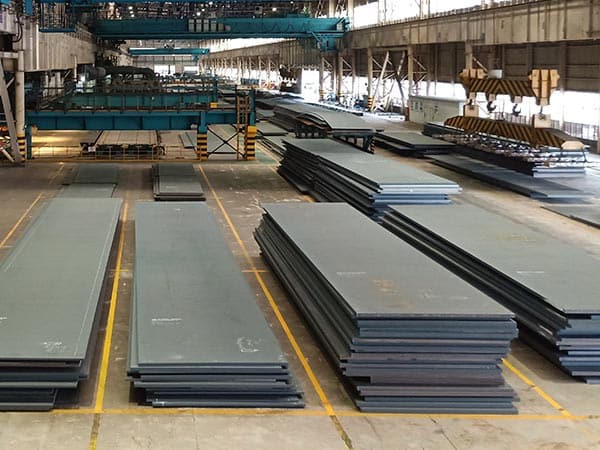
The Evolution of S550MC Steel in Automotive Structural Engineering
The global automotive industry is undergoing a paradigm shift towards lightweighting to enhance fuel efficiency and reduce carbon emissions. S550MC steel, a high-strength low-alloy (HSLA) hot-rolled steel, stands at the forefront of this transformation. Defined by the EN 10149-2 standard, S550MC is specifically engineered for cold-formed components that require high yield strength and excellent weldability. Unlike traditional carbon steels, S550MC achieves its superior properties through a combination of precise chemical micro-alloying and thermomechanical controlled processing (TMCP). This material is primarily utilized in chassis parts, longitudinal beams, cross members, and other structural reinforcements where weight reduction is critical without compromising safety.
Chemical Composition: The Micro-Alloying Precision
The production of S550MC begins with a strictly controlled chemical composition. The goal is to maintain a low carbon content to ensure weldability while using micro-alloying elements to boost strength. Carbon (C) is typically limited to 0.12% to prevent the formation of brittle martensite during welding. Manganese (Mn), usually around 1.80%, acts as a solid solution strengthener. The defining characteristic of S550MC is the addition of Niobium (Nb), Vanadium (V), and Titanium (Ti). These elements form fine carbides and nitrides that pin grain boundaries during the rolling process, preventing grain growth and resulting in an ultra-fine ferrite-pearlite microstructure. The total content of these micro-alloying elements is generally capped at 0.22% to maintain a balance between strength and toughness.
| Element | Max Content (%) |
|---|---|
| Carbon (C) | 0.12 |
| Manganese (Mn) | 1.80 |
| Silicon (Si) | 0.50 |
| Phosphorus (P) | 0.025 |
| Sulfur (S) | 0.015 |
| Aluminium (Al) | 0.015 (min) |
| Nb + V + Ti | 0.22 |
Mechanical Property Requirements and Testing Standards
The technical requirements for S550MC are centered on its yield strength. The "550" in its designation refers to a minimum yield strength of 550 MPa. However, the production process must also ensure sufficient ductility for complex forming operations. Tensile strength typically ranges between 600 and 760 MPa. Elongation is a critical metric, with minimum values specified based on the thickness of the material; for instance, a minimum elongation (A80mm) of 12% is often required for thicknesses less than 3mm. Furthermore, impact toughness at low temperatures (e.g., -20°C or -40°C) is a vital requirement for automotive parts subjected to dynamic loads in cold climates. Manufacturers must perform longitudinal and transverse tensile tests to ensure isotropic properties, which are essential for predictable behavior during stamping and hydraulic forming.
Thermomechanical Controlled Processing (TMCP)
The production of S550MC is not merely about the recipe of elements but the thermal history of the steel. Thermomechanical rolling is a specialized process where the final deformation is carried out in a specific temperature range, typically near the Ar3 transformation point. This is followed by accelerated cooling. Unlike traditional normalized rolling, TMCP creates a refined grain structure that is significantly smaller than what can be achieved through heat treatment alone. This fine grain size is the primary reason S550MC can offer such high strength while remaining highly formable. The cooling rate must be precisely managed to avoid the formation of coarse pearlite or excessive bainite, which could impair the material's ability to be bent or flared during part fabrication.
Formability and Cold Bending Technicalities
One of the most stringent technical requirements for S550MC in car part production is its cold bending performance. Since many automotive structural components involve tight radii, the steel must resist cracking during deformation. The EN 10149-2 standard specifies minimum bending radii. For S550MC, the internal bending radius is typically 1.0 to 1.5 times the thickness (t) for a 180-degree bend, depending on the rolling direction. Production quality control must ensure that the steel surface is free from slivers, scales, or inclusions that could act as stress concentrators during the forming process. Advanced lubricants and die coatings are often used in conjunction with S550MC to manage the high springback associated with its high yield strength.
Weldability and Heat-Affected Zone (HAZ) Integrity
Automotive assemblies rely heavily on spot welding, MIG/MAG welding, and laser welding. S550MC is designed with a low carbon equivalent (Cev), which significantly reduces the risk of cold cracking in the weld zone. However, the technical requirement for the production of welded S550MC parts involves managing the Heat-Affected Zone (HAZ). Because the strength of S550MC is derived from grain refinement and micro-alloying, excessive heat input during welding can cause grain coarsening in the HAZ, leading to a localized drop in hardness and strength. Production protocols must specify low-heat input welding techniques and optimized welding parameters to maintain the structural integrity of the joint. Testing often includes cross-tension and shear tests to validate that the weld remains stronger than the base metal or meets specific safety thresholds.
Surface Quality and Dimensional Tolerances
For automotive applications, surface finish and dimensional precision are non-negotiable. S550MC is usually supplied in a pickled and oiled condition (HRPO) to remove mill scale, which is essential for subsequent painting, coating, or welding. The technical requirements specify that the surface must be smooth and free from defects like pits, scratches, or laminations that could compromise the fatigue life of the part. Dimensional tolerances for thickness, width, and flatness must adhere to strict standards such as EN 10051. Flatness is particularly important for automated laser cutting and robotic welding systems, where deviations can lead to fit-up issues and production downtime. High-precision leveling during the finishing stage of the steel mill is required to meet these automotive-grade flatness specifications.
Environmental Adaptation and Fatigue Resistance
Car parts made from S550MC, such as truck frames and suspension arms, are exposed to harsh environments including road salt, moisture, and cyclic loading. The technical requirements often extend to the material's compatibility with anti-corrosion coatings like hot-dip galvanizing or e-coating. While S550MC does not have inherent corrosion resistance like stainless steel, its fine-grained structure provides a stable substrate for coatings. Additionally, fatigue resistance is a paramount requirement. The production process must minimize non-metallic inclusions (like sulfides and oxides) through advanced steelmaking techniques like vacuum degassing and calcium treatment. Clean steel is essential to prevent the initiation of fatigue cracks under the repetitive stresses experienced during a vehicle's lifecycle.
Application Expansion: Beyond the Chassis
While the chassis remains the primary home for S550MC, its technical versatility is pushing it into new areas. It is increasingly used in seat frames, bumper reinforcements, and crane arms for commercial vehicles. The requirement for these applications often focuses on the energy absorption capacity. During a collision, S550MC must deform in a controlled manner to absorb kinetic energy, protecting the vehicle's occupants. This requires a precise balance between the yield-to-tensile ratio. A lower ratio generally allows for better energy absorption. Engineers must calibrate the production process to hit a "sweet spot" that provides enough strength to prevent structural collapse while maintaining the ductility needed for crashworthiness.
Optimizing Production Efficiency and Cost-Effectiveness
From a manufacturing perspective, the technical requirement for S550MC also involves its consistency. Steel mills must provide coils with uniform mechanical properties from the inner to the outer wraps and across the width of the strip. Inconsistent yield strength can lead to variations in springback, causing dimensional instability in the final car parts. By utilizing automated gauge control (AGC) and sophisticated cooling models, producers ensure that S550MC meets the rigorous demands of Tier 1 automotive suppliers. The result is a material that not only reduces the weight of the vehicle—thereby improving fuel economy—but also optimizes the manufacturing flow by reducing scrap rates and secondary processing needs.
Leave a message