
What is the available size of S420MC steel for car safety parts?
Discover the comprehensive size range, mechanical properties, and automotive applications of S420MC high-strength steel. Learn why its dimensional versatility and formability are critical for car safety components.
The Critical Role of S420MC in Modern Vehicle Safety Architecture
In the pursuit of lighter, safer, and more fuel-efficient vehicles, the automotive industry has increasingly turned to High-Strength Low-Alloy (HSLA) steels. S420MC, a grade defined under the European standard EN 10149-2, stands out as a premier choice for structural and safety-critical components. This thermomechanically rolled steel offers a unique balance of high yield strength, exceptional formability, and superior weldability, making it indispensable for parts that must withstand high stress while maintaining structural integrity during a collision.
Comprehensive Available Size Range for S420MC Steel
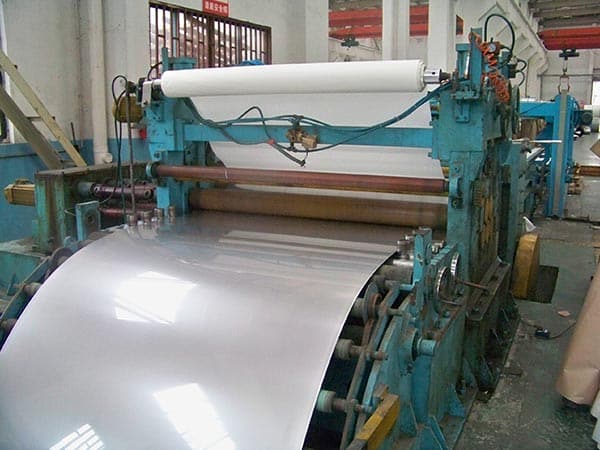
The availability of S420MC in various dimensions is a key factor for automotive engineers who must optimize material usage and minimize scrap. Manufacturers typically supply S420MC in hot-rolled coils, which can then be slit into strips or decoiled into sheets. The standard thickness range for S420MC typically spans from 1.5 mm to 20 mm, though the most common applications in car safety parts utilize thicknesses between 2.0 mm and 8.0 mm.
Width availability is equally diverse, generally ranging from 900 mm to 1500 mm for wide coils. For specialized safety components like seat rails or reinforcement brackets, the material is often provided in precision-slit widths as narrow as 50 mm. The following table outlines the typical dimensional capabilities for S420MC steel used in automotive production:
| Product Form | Thickness Range (mm) | Width Range (mm) | Length / Coil ID (mm) |
|---|---|---|---|
| Hot Rolled Coils | 1.5 - 16.0 | 1000 - 1500 | 762 (Standard ID) |
| Slit Strips | 2.0 - 10.0 | 50 - 600 | Customized |
| Cut-to-Length Sheets | 1.5 - 20.0 | Up to 1500 | 1000 - 12000 |
Mechanical Properties and Material Performance
S420MC is engineered to provide a minimum yield strength of 420 MPa. This high strength-to-weight ratio allows for the use of thinner gauges without compromising the safety of the vehicle. The thermomechanical rolling process (TMCP) ensures a fine-grained microstructure, which is essential for energy absorption during impact. Unlike traditional carbon steels, S420MC maintains high ductility even at higher strength levels.
- Yield Strength (ReH): Minimum 420 MPa
- Tensile Strength (Rm): 480 - 620 MPa
- Elongation (A5): Minimum 16% to 19% (depending on thickness)
- Bending Radius: 0.5t to 1.5t (depending on thickness and direction)
The excellent elongation properties mean that S420MC can undergo complex cold-forming processes, such as deep drawing and tight bending, which are often required for intricate safety part geometries. This formability reduces the need for multi-part assemblies, allowing for integrated designs that are both stronger and lighter.
Chemical Composition and Weldability
The performance of S420MC is rooted in its precise chemical composition. By utilizing micro-alloying elements such as Niobium (Nb), Vanadium (V), and Titanium (Ti), manufacturers can achieve high strength without the high carbon content that typically hinders weldability. The carbon equivalent (CEV) is kept low, ensuring that the steel can be welded using standard automotive processes like MIG, MAG, and spot welding without the risk of cold cracking.
| Element | Max % (by mass) |
|---|---|
| Carbon (C) | 0.12 | 1.60 |
| Silicon (Si) | 0.50 |
| Phosphorus (P) | 0.025 |
| Sulfur (S) | 0.015 |
| Al (Total) | 0.015 |
Applications in Automotive Safety Components
S420MC is a workhorse in the automotive sector, particularly for parts that form the "safety cage" of the vehicle. Its ability to absorb and redirect energy during a crash makes it ideal for several critical areas:
- Chassis Cross Members: These parts require high stiffness and strength to maintain the vehicle's structural integrity under load.
- Seat Frames and Rails: S420MC provides the necessary strength to ensure seats remain anchored during sudden deceleration.
- Bumper Reinforcements: The high yield strength helps in managing the initial impact forces in low-speed and high-speed collisions.
- Suspension Arms: Components that require a combination of high fatigue strength and the ability to be formed into complex shapes.
- Truck Side Rails: For commercial vehicles, S420MC offers the durability needed for heavy-duty chassis frames.
Environmental Adaptability and Processing Advantages
Beyond its mechanical strength, S420MC exhibits excellent environmental adaptability. When paired with modern coating technologies such as Cathodic Electro-Deposition (KTL) or galvanizing, it offers exceptional corrosion resistance, ensuring the long-term safety of the vehicle throughout its lifecycle. Furthermore, the steel's consistent surface quality and tight dimensional tolerances (often adhering to EN 10051) allow for high-speed automated stamping and laser cutting, reducing manufacturing downtime and improving overall production efficiency.
The thermomechanical rolling process also imparts a degree of consistency that is vital for robotic welding and assembly lines. Because the material properties are uniform across the entire coil, manufacturers can predict springback and forming behavior with high accuracy, leading to tighter tolerances in the final safety assemblies.
Choosing the Right Dimensions for Specific Safety Parts
When selecting the size of S420MC, engineers must consider the specific loading conditions of the part. For instance, a 4.0 mm thick S420MC plate might be used for a heavy-duty suspension bracket, while a 2.5 mm sheet might suffice for a seat adjustment mechanism. The availability of wide coils allows for the stamping of large, single-piece components like longitudinal beams, which reduces the number of weld seams and potential failure points in the vehicle structure.
The versatility in available sizes, combined with the material's inherent toughness and formability, ensures that S420MC remains a cornerstone of automotive safety engineering. As vehicle designs continue to evolve toward electric propulsion, the demand for high-strength materials like S420MC to protect battery enclosures and manage the increased weight of EVs is only expected to grow.
Leave a message