
Principle of surface pretreatment of S900MC construction machinery steel
Detailed analysis of S900MC high-strength steel surface pretreatment principles, focusing on mechanical properties, cleaning techniques, and industrial application requirements.
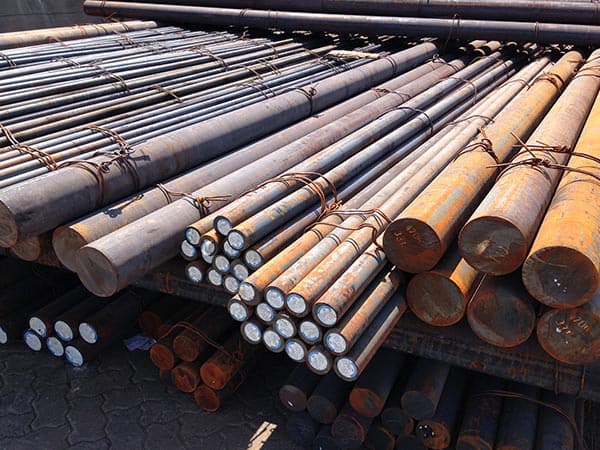
Understanding the Metallurgical Foundation of S900MC Steel
S900MC is a high-strength, thermomechanically rolled (TMCP) steel grade conforming to the EN 10149-2 standard. Designed specifically for the demanding environments of construction machinery, its microstructure consists of a fine-grained ferritic-bainitic matrix. This unique structure provides a minimum yield strength of 900 MPa while maintaining excellent cold-forming properties. The surface pretreatment of S900MC is not merely a cleaning step; it is a critical metallurgical intervention that determines the fatigue life and structural integrity of the final component. Because the steel relies on micro-alloying elements like vanadium, niobium, and titanium, the surface oxide layer formed during the cooling process is particularly dense and complex compared to lower-strength carbon steels.
The Chemical Nature of Mill Scale on High-Strength Steel
During the thermomechanical rolling process, S900MC develops a multilayered oxide scale. This scale typically consists of wüstite (FeO), magnetite (Fe3O4), and hematite (Fe2O3). In S900MC, the presence of alloying elements alters the adhesion and porosity of this scale. Effective surface pretreatment must address the removal of this scale to prevent galvanic corrosion under paint films. If the mill scale is left intact, it acts as a cathode, while the underlying steel acts as an anode in the presence of moisture, leading to rapid localized pitting. Furthermore, the high yield strength of S900MC makes it more sensitive to surface defects, where residual scale can act as a stress concentrator, potentially initiating micro-cracks during high-load cycles.
Mechanical Properties and Material Specifications
Before delving into pretreatment techniques, it is essential to understand the baseline properties of S900MC. These properties dictate how the material reacts to mechanical cleaning methods like shot blasting.
| Property | Value (Minimum/Range) |
|---|---|
| Yield Strength (ReH) | 900 MPa |
| Tensile Strength (Rm) | 930 - 1200 MPa |
| Elongation (A5) | 8% - 10% |
| Impact Energy (KV at -20°C) | 40 J (Typical) |
| Carbon Equivalent (CEV) | ≤ 0.45% |
The high hardness of S900MC means that abrasive media used in pretreatment must be selected carefully. Standard steel grit may wear down faster, and the impact energy required to achieve a specific surface profile (Rz) is higher than that for S355 or S700MC grades.
Principles of Mechanical Pretreatment: Shot Blasting
Shot blasting is the primary method for preparing S900MC surfaces in heavy machinery manufacturing. The principle involves kinetic energy transfer from high-velocity abrasives to the steel surface. For S900MC, the goal is to reach a cleanliness level of Sa 2.5 or Sa 3 according to ISO 8501-1. Surface Roughness Control: A profile of 40-70 microns is generally targeted. If the profile is too shallow, coating adhesion is compromised; if too deep, the peaks of the profile may protrude through the primer, leading to premature rusting. Work Hardening: One often overlooked aspect is that shot blasting induces a layer of compressive residual stress on the surface. For 900 MPa steel, this can actually improve fatigue resistance by hindering the initiation of surface cracks. However, excessive blasting can lead to surface embrittlement or the embedding of abrasive particles, which must be avoided through rigorous process control.
Chemical Pretreatment and Degreasing Mechanisms
Chemical cleaning often precedes or follows mechanical treatment. For S900MC components that have undergone complex machining or welding, oils and lubricants must be removed. The principle of alkaline degreasing involves saponification of animal/vegetable oils and emulsification of mineral oils. Acid Pickling: While effective at removing scale, acid pickling of S900MC carries the risk of hydrogen embrittlement. High-strength steels are particularly susceptible to atomic hydrogen diffusion into the lattice. If pickling is necessary, it must be followed by immediate rinsing and, in some cases, a baking process to drive out hydrogen. Phosphating: Zinc phosphating creates a crystalline layer that provides a superior anchor for powder coatings or liquid paints, significantly enhancing the environmental adaptability of the machinery in humid or saline conditions.
Impact of Surface Prep on Welding and Joining
S900MC is frequently used in welded structures like crane booms and chassis. The surface pretreatment directly influences weld quality. Contaminants like grease, rust, or even thick oxide layers can introduce hydrogen into the weld pool, leading to cold cracking—a major risk for 900 MPa steels. The Clean Zone Principle: A minimum of 50mm on either side of the weld joint should be cleaned to bare metal. This removes the risk of carbonaceous residues or oxides being trapped in the fusion zone, ensuring the weld metal matches the toughness of the base material. Proper pretreatment also ensures stable arc characteristics and reduces spatter during MIG/MAG welding processes.
Environmental Adaptability and Long-term Protection
Construction machinery operates in extreme environments, from arctic cold to tropical humidity and corrosive coastal sites. The synergy between S900MC surface pretreatment and the subsequent coating system is what defines the machine's service life. Adhesion Testing: Pretreated S900MC should undergo cross-cut testing (ISO 2409) to ensure the coating system can withstand the mechanical flexing inherent in high-strength steel structures. Salt Spray Resistance: Properly pretreated S900MC with a high-performance epoxy primer can exceed 1000 hours of neutral salt spray testing (ISO 9227). This level of protection is vital for maintaining the structural thickness of the steel, as even minor corrosion can significantly reduce the load-bearing capacity of high-strength thin-walled sections.
Advanced Technologies: Laser Cleaning and Nano-Coatings
As the industry moves toward greener manufacturing, laser cleaning is emerging as a precise alternative for S900MC pretreatment. The principle is based on laser ablation, where a high-intensity beam vaporizes contaminants without affecting the underlying metallurgical structure. This method eliminates the need for chemicals and reduces the waste associated with abrasive media. Additionally, nano-ceramic conversion coatings are replacing traditional phosphating. These coatings provide a thinner, more uniform layer that offers exceptional adhesion for modern E-coat (electrophoretic) systems, which are increasingly used for complex S900MC assemblies.
Practical Implementation in Heavy Industry
To implement these principles effectively, manufacturers must follow a strict sequence of operations. The following table outlines a typical high-performance pretreatment workflow for S900MC components.
- Step 1: Hot Alkaline Degreasing - Removes processing oils and shop dirt.
- Step 2: Fresh Water Rinse - Prevents chemical carry-over.
- Step 3: Centrifugal Shot Blasting - Achieves Sa 2.5 cleanliness and creates the mechanical anchor profile.
- Step 4: Dust Removal - Uses ionized air to ensure no fine particles remain in the pores.
- Step 5: Immediate Priming - Application of zinc-rich primer within 4 hours to prevent flash rusting.
By adhering to these scientific principles of surface pretreatment, engineers can fully leverage the weight-saving potential of S900MC steel while ensuring the durability and safety of heavy-duty construction equipment. The integration of mechanical integrity and surface chemistry is the hallmark of modern steel application expertise.
Leave a message