
What is the hardness of S355MC plate zero cut
Explore the technical specifications of S355MC steel plate, focusing on its hardness, mechanical properties, and the impact of precision zero-cut processing on material integrity.
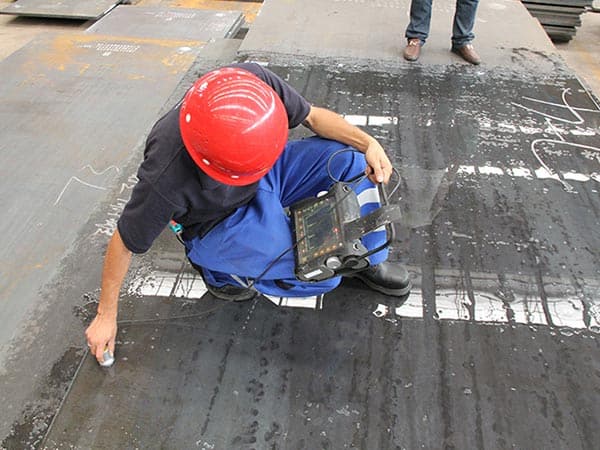
Understanding S355MC Steel and Its Hardness Profile
S355MC is a high-yield-strength steel designed specifically for cold forming, governed by the EN 10149-2 standard. When engineers and procurement specialists ask about the hardness of S355MC plate zero cut, they are often looking for more than just a Brinell or Vickers number; they are seeking to understand how this material will behave during fabrication, bending, and long-term service. Unlike structural steels like s355jr, S355MC is produced through thermomechanically controlled rolling (TMCP), which creates a fine-grained microstructure that balances strength, ductility, and toughness.
The hardness of S355MC is not explicitly defined as a mandatory requirement in the EN 10149-2 standard. Instead, the focus is on yield strength and tensile strength. However, for practical engineering applications, the hardness can be estimated based on its tensile strength. Typically, S355MC exhibits a Brinell hardness (HBW) ranging from 120 to 165 HBW. This relatively moderate hardness level, combined with a high yield strength, makes it an ideal candidate for components that require significant weight reduction without sacrificing structural integrity.
Mechanical Properties and Material Composition
The performance of S355MC is a direct result of its low-carbon chemistry and micro-alloying strategy. By keeping carbon levels low and adding small amounts of Niobium (Nb), Vanadium (V), and Titanium (Ti), manufacturers can achieve high strength through grain refinement and precipitation hardening rather than through high carbon content or quenching. This ensures excellent weldability and cold-forming capabilities.
| Property | Value (Metric) |
|---|---|
| Yield Strength (ReH) | Min. 355 MPa |
| Tensile Strength (Rm) | 430 - 550 MPa |
| Elongation (A80mm) | Min. 19% (for thickness < 3mm) |
| Estimated Hardness (HBW) | 120 - 165 |
| Density | 7.85 g/cm³ |
The micro-alloying elements play a crucial role in maintaining the hardness consistency across the plate. Because the strength is derived from the fine grain structure, the material remains relatively soft enough for complex bending operations while providing the necessary resistance to deformation under load.
The Impact of Zero Cut Processing on S355MC Hardness
"Zero cut" refers to precision-cut-to-size services where the plate is delivered in the exact dimensions required for the final assembly. The method of cutting significantly influences the local hardness at the edges of the S355MC plate. Depending on the thermal input of the cutting process, a Heat Affected Zone (HAZ) may develop, which can alter the material properties locally.
- Laser Cutting: This is the most common method for zero-cut S355MC. The high energy density and narrow beam result in a very small HAZ. The hardness at the cut edge might increase slightly due to rapid cooling, but for S355MC, this effect is minimal compared to high-carbon steels.
- Plasma Cutting: Plasma produces a wider HAZ than laser cutting. There may be a noticeable increase in hardness at the immediate edge, which could potentially lead to cracking if the part is subsequently bent very close to the cut line.
- Waterjet Cutting: This is a cold cutting process. It has zero impact on the hardness of the S355MC plate, preserving the original thermomechanical properties of the steel perfectly.
- Flame (Oxy-Fuel) Cutting: Generally used for thicker plates, this introduces significant heat. While S355MC is resilient, prolonged heat exposure can lead to local softening or grain growth if not managed correctly.
Chemical Composition Breakdown
The sophisticated balance of elements in S355MC is what allows it to maintain its hardness and strength profile. The low carbon equivalent (CEV) is a standout feature, facilitating easy welding without the need for extensive preheating in most standard applications.
| Element | Max % |
|---|---|
| Carbon (C) | 0.12 |
| Manganese (Mn) | 1.50 |
| Silicon (Si) | 0.50 |
| Phosphorus (P) | 0.025 |
| Sulphur (S) | 0.020 |
| Aluminium (Al) | 0.015 |
The addition of Niobium and Titanium is critical. These elements form stable carbides and nitrides that pin grain boundaries during the rolling process, preventing grain growth and ensuring that the final plate has a uniform hardness and high yield point.
Industrial Applications and Suitability
S355MC is widely utilized in industries where weight saving is paramount. Its hardness-to-weight ratio allows for the design of thinner, lighter components that still meet rigorous safety and load-bearing standards. This is particularly evident in the transportation and heavy machinery sectors.
Automotive Industry: Used for chassis parts, cross members, and longitudinal beams. The consistent hardness ensures that stamping and pressing dies wear evenly, extending tool life while maintaining part accuracy.
Construction and Lifting: Crane arms and telescopic booms benefit from the high yield strength and predictable hardness of S355MC. The material's ability to withstand cold forming allows for the creation of complex hexagonal or octagonal boom sections.
Agricultural Equipment: Ploughs, trailers, and harvester frames utilize S355MC for its durability and resistance to atmospheric corrosion when properly coated. The zero-cut plates allow for rapid assembly in modular manufacturing environments.
Processing and Fabrication Best Practices
When working with zero-cut S355MC plates, understanding the relationship between hardness and cold forming is essential. Since the material is designed for bending, the internal radius of the bend should be carefully selected based on the thickness. Typically, for S355MC, a minimum bend radius of 0.5 to 1.5 times the thickness is recommended, depending on the orientation relative to the rolling direction.
Welding S355MC is straightforward due to its low carbon content. Standard methods like MIG/MAG, TIG, and submerged arc welding are all highly effective. Because the hardness is not achieved through quenching, the risk of cold cracking in the weld zone is significantly lower than in traditional high-strength steels. However, to maintain the integrity of the zero-cut edges, using low-heat-input welding parameters is advisable to avoid excessive softening of the thermomechanically treated structure.
Environmental Adaptability and Longevity
S355MC demonstrates excellent performance in various environmental conditions. While it is not a weathering steel like Corten, its fine-grained structure provides a consistent surface for galvanizing or painting. The uniform hardness across the plate surface ensures that protective coatings adhere well and provide long-lasting defense against oxidation. In low-temperature environments, S355MC maintains its toughness, with many grades offering guaranteed impact energy values at -20°C or even -40°C, ensuring that the hardness does not translate into brittleness under extreme cold.
Choosing the right zero-cut provider for S355MC involves verifying the material's origin and ensuring that the cutting technology used aligns with the final application's requirements. Whether it is for a high-stress structural bracket or a lightweight vehicle frame, the predictable hardness and superior yield strength of S355MC make it a versatile and reliable choice for modern engineering challenges.
Leave a message