
Is stainless steel as strong as S355MC engineering car steel?
Compare the mechanical properties, durability, and cost-effectiveness of S355MC engineering steel versus various stainless steel grades for automotive and structural applications.
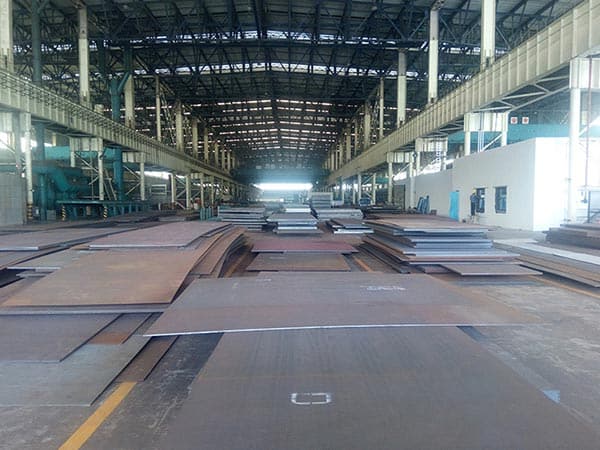
Defining Strength: S355MC vs. The Stainless Steel Spectrum
When engineers and procurement specialists ask whether stainless steel is as strong as S355MC, the answer is rarely a simple yes or no. The term "strength" encompasses yield strength, tensile strength, fatigue resistance, and even hardness. S355MC is a thermomechanically rolled, high-yield-strength steel specifically designed for cold forming in the automotive and heavy machinery sectors. It is the gold standard for truck chassis, crane booms, and structural components where weight reduction and load-bearing capacity are paramount.
Stainless steel, on the other hand, is a broad family of alloys. While common austenitic grades like 304 or 316 are prized for corrosion resistance, their raw yield strength often falls short of S355MC. However, when we move into the territory of duplex stainless steels or martensitic grades, the narrative shifts. To understand the true performance gap, we must dissect the metallurgical blueprints of these materials.
Mechanical Properties: The Yield Strength Benchmark
The "355" in S355MC signifies a minimum yield strength of 355 MPa. This is the point at which the material begins to deform plastically. For engineering car steel, this threshold is critical because it dictates how much load a vehicle frame can carry before permanent damage occurs.
Compare this to standard 304 stainless steel, which typically offers a yield strength of approximately 210 to 250 MPa. In this direct comparison, S355MC is significantly "stronger." If a designer replaced S355MC with 304 stainless steel without increasing the thickness, the structure would likely fail under the same operational stresses. However, specialized grades like Duplex 2205 boast yield strengths exceeding 450 MPa, easily outperforming S355MC in pure tension. The table below illustrates these disparities:
| Material Grade | Yield Strength (MPa) | Tensile Strength (MPa) | Elongation (%) | Primary Advantage |
|---|---|---|---|---|
| S355MC (EN 10149-2) | ≥ 355 | 430 - 550 | ≥ 19 | High strength-to-weight ratio, cold forming |
| 304 Stainless Steel | ≥ 205 | ≥ 515 | ≥ 40 | Corrosion resistance, aesthetic appeal |
| 316L Stainless Steel | ≥ 170 | ≥ 485 | ≥ 40 | Marine grade corrosion resistance |
| Duplex 2205 (1.4462) | ≥ 450 | 640 - 840 | ≥ 25 | Extreme strength and chloride resistance |
| 430 Ferritic Stainless | ≥ 205 | 450 - 600 | ≥ 22 | Magnetic, moderate corrosion resistance |
Fatigue Resistance and Dynamic Loading in Automotive Engineering
Engineering car steel is rarely subjected to static loads alone. Truck frames, trailers, and chassis components endure constant vibration, cyclic loading, and impact. S355MC is engineered with a fine-grained microstructure, achieved through controlled rolling and cooling. This gives it exceptional fatigue resistance, allowing it to absorb energy and resist crack propagation over millions of cycles.
While austenitic stainless steels (300 series) have excellent toughness, they tend to work-harden rapidly. This can be a double-edged sword. While it increases surface hardness, it can also make the material more prone to fatigue cracking in high-vibration environments if not properly annealed. S355MC remains the preferred choice for dynamic automotive structures because its behavior under cyclic stress is highly predictable and its failure modes are more ductile than many high-strength stainless alternatives.
Cold Forming and Fabrication Efficiency
One of the standout features of S355MC is its formability. Despite its high strength, it is designed to be bent, folded, and pressed into complex shapes without cracking. This is vital for the "MC" (Thermomechanically Rolled for Cold Forming) designation. Manufacturers can create intricate cross-members and brackets that maintain structural integrity while reducing the overall vehicle weight.
Stainless steel, particularly the 300 series, is also highly formable, but it requires significantly more force to bend due to its high work-hardening rate. This leads to increased wear on tooling and higher energy consumption during fabrication. For mass-produced engineering components, the ease of processing S355MC translates directly into lower production costs and faster cycle times.
Environmental Adaptability: Corrosion vs. Protection
The most significant advantage stainless steel holds over S355MC is its inherent corrosion resistance. S355MC is a low-alloy steel; without protective coatings like galvanizing, cataphoretic painting (KTL), or heavy-duty primers, it will rust when exposed to moisture and road salts. In the automotive industry, the longevity of an S355MC frame depends entirely on the quality of its surface treatment.
Stainless steel forms a passive chromium oxide layer that self-heals, making it ideal for tankers carrying chemicals or vehicles operating in highly corrosive coastal environments. However, the "strength" of the material is often compromised by its cost. Using stainless steel for a standard truck chassis is rarely economically viable when S355MC, combined with modern coating technologies, can provide a 15-to-20-year service life at a fraction of the price.
Weight Reduction and Modern Design Trends
In the quest for fuel efficiency and higher payloads, "lightweighting" has become the industry mantra. S355MC allows engineers to use thinner sections of steel without sacrificing the load-bearing capacity of the vehicle. This high strength-to-weight ratio is the primary reason it dominates the engineering car steel market.
While some high-strength stainless steels could theoretically achieve similar weight savings, their density is roughly the same as carbon steel. Therefore, the weight saving comes solely from the ability to use less material. Given that S355MC is optimized for this exact purpose, it remains the most cost-effective solution for structural weight reduction in the transport sector.
Weldability and Structural Integrity
Welding is the primary joining method in automotive assembly. S355MC has a low carbon equivalent (CEV), which ensures excellent weldability using standard MIG/MAG or laser welding processes. The heat-affected zone (HAZ) remains relatively stable, preserving the mechanical properties of the joint.
Welding stainless steel to carbon steel (S355MC) or welding stainless to itself requires specialized filler metals and strict heat control to prevent sensitization and loss of corrosion resistance. In a high-speed production line, the forgiving nature of S355MC during the welding process reduces the risk of structural defects, ensuring the safety of the final vehicle.
Economic Reality: Cost-Benefit Analysis
The price of stainless steel is heavily influenced by the market volatility of nickel and chromium. S355MC, being a low-alloy steel, is significantly more stable and affordable. For large-scale engineering projects, the material cost difference can be as much as 300% to 500%.
Unless the application specifically demands the aesthetic or hygienic properties of stainless steel, or if the environment is so corrosive that coatings will fail, S355MC is the logical choice. It provides the necessary strength, superior formability, and predictable performance required for the rigorous demands of the automotive and engineering industries.
Technical Verdict
Is stainless steel as strong as S355MC? If you are comparing it to standard 304 or 316 grades, S355MC is stronger in terms of yield and better suited for structural loads. If you are comparing it to Duplex grades, stainless steel can be stronger, but at a significantly higher cost and with greater fabrication challenges. For the vast majority of engineering car applications, S355MC provides the optimal balance of strength, ductility, and economic value.
Leave a message