
S500MC steel complete specifications yield reached the leading level in China
A comprehensive technical guide to S500MC high-strength steel, detailing its chemical composition, mechanical properties, processing capabilities, and industry applications, highlighting its leading yield performance in China.
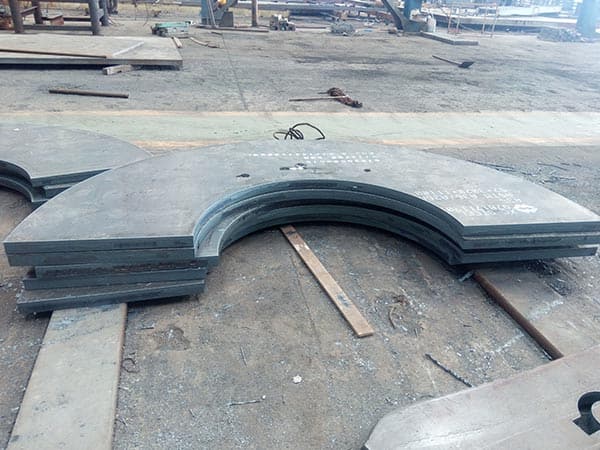
Understanding S500MC Steel: The Benchmark for High-Strength Structural Solutions
S500MC is a high-strength, hot-rolled, thermomechanically rolled steel specifically designed for cold forming. Governed by the EN 10149-2 standard, this grade represents a significant leap in material science, balancing extreme strength with the ductility required for complex shaping. The "S" denotes structural steel, "500" indicates a minimum yield strength of 500 MPa, and "MC" signifies its thermomechanically rolled (M) and cold-forming (C) suitability. In the current industrial landscape, achieving a consistent yield strength across complete specifications—ranging from thin gauges to heavy plates—has become a hallmark of advanced manufacturing. The Chinese steel industry has pushed these boundaries, ensuring that S500MC now meets or exceeds global benchmarks for consistency and performance.
Chemical Composition and the Science of Micro-alloying
The superior properties of S500MC are not accidental; they are the result of precise metallurgical engineering. By utilizing a low-carbon design supplemented with micro-alloying elements like Niobium (Nb), Titanium (Ti), and Vanadium (V), manufacturers can achieve a fine-grained microstructure that is both strong and tough. This micro-alloying strategy allows for grain refinement during the thermomechanical rolling process (TMCP), which is essential for maintaining high yield strength without sacrificing weldability or impact resistance.
| Element | Carbon (C) % | Silicon (Si) % | Manganese (Mn) % | Phosphorus (P) % | Sulfur (S) % | Al (Total) % | Nb+Ti+V % |
|---|---|---|---|---|---|---|---|
| Max Limit | 0.12 | 0.50 | 1.60 | 0.025 | 0.015 | 0.015 | 0.22 |
The low carbon content (typically below 0.12%) is critical for ensuring that the steel remains easy to weld and resistant to cold cracking. Manganese acts as a solid solution strengthener, while the combination of Nb, Ti, and V forms stable carbonitrides that pin grain boundaries during rolling, preventing grain growth and ensuring a uniform, high-strength matrix.
Mechanical Performance: Yield Strength and Elongation Balance
The defining characteristic of S500MC is its yield strength. While many materials can reach high strength levels, S500MC maintains an impressive elongation-to-strength ratio. This balance is vital for components that must absorb energy during impact or undergo significant deformation during manufacturing. The leading yield levels achieved in China reflect a mastery over the cooling rates and rolling temperatures, resulting in a product that is reliable under extreme stress.
| Property | Yield Strength (MPa) | Tensile Strength (MPa) | Elongation (A5, %) | Bending Radius (180°) |
|---|---|---|---|---|
| S500MC Value | ≥ 500 | 550 - 700 | ≥ 12 - 14 | 0.5t - 1.0t |
The high yield-to-tensile ratio allows for significant weight reduction in structural designs. By replacing traditional S355 grade steels with S500MC, engineers can reduce the thickness of components by up to 30% without compromising structural integrity. This "lightweighting" is a primary driver in the automotive and heavy machinery sectors, where fuel efficiency and payload capacity are paramount.
Processing Performance: Bending, Welding, and Cutting
Processing high-strength steel often presents challenges, but S500MC is engineered to be user-friendly. Its cold-forming capabilities are exceptional. Thanks to its fine-grained structure and low inclusion content (achieved through advanced ladle metallurgy and vacuum degassing), it can be bent to tight radii without cracking. For a typical 6mm plate, a bending radius of 1.0t is often achievable, which is remarkable for a 500 MPa yield material.
- Laser and Plasma Cutting: The low internal stress of S500MC, a result of controlled cooling and leveling processes, ensures that plates remain flat during and after cutting. This is essential for automated production lines where dimensional precision is non-negotiable.
- Weldability: With a low Carbon Equivalent (CEV), S500MC can be welded using all standard methods, including MIG/MAG, TIG, and submerged arc welding. The heat-affected zone (HAZ) remains stable, maintaining much of the base metal's strength and toughness.
- Surface Quality: Leading Chinese manufacturers offer S500MC in both black and pickled & oiled (P&O) conditions. The P&O finish provides a clean surface that enhances tool life during stamping and provides an excellent base for subsequent coating or painting.
Environmental Adaptability and Fatigue Resistance
Structural components made from S500MC are often exposed to harsh environments and cyclic loading. The material's high fatigue strength is a direct result of its refined microstructure. In heavy-duty truck frames and crane booms, the ability to withstand millions of load cycles without crack initiation is critical for safety. Furthermore, S500MC exhibits good low-temperature toughness. While the standard primarily focuses on ambient temperature properties, modern production techniques ensure that S500MC maintains adequate impact energy at temperatures as low as -20°C or even -40°C, making it suitable for equipment operating in cold climates.
Strategic Industry Applications
The reach of S500MC extends across various high-demand industries. Its versatility makes it the preferred choice for components that require a combination of high load-bearing capacity and low weight.
- Automotive Industry: Used extensively in truck chassis, cross members, and longitudinal beams. It allows for the construction of lighter vehicles that can carry heavier loads, directly impacting the carbon footprint of logistics.
- Lifting and Transportation: Crane booms, telescopic arms, and trailer frames benefit from the high yield strength, allowing for longer reaches and higher lift capacities.
- Construction Machinery: Excavator buckets, bulldozer frames, and agricultural equipment utilize S500MC to resist the high stresses of earthmoving and harvesting operations.
- Renewable Energy: Support structures for solar panels and wind turbine components are increasingly utilizing S500MC to reduce material costs while maintaining wind load resistance.
Advancements in Chinese S500MC Production
The statement that S500MC yield levels have reached a leading level in China is backed by significant investments in wide-strip mills and continuous casting technology. Modern Chinese mills utilize ultra-fast cooling (UFC) systems and high-precision rolling stands that control thickness tolerances to within microns. This technological leap ensures that the mechanical properties are consistent not just within a single coil, but across different production batches. For the global buyer, this means S500MC from top-tier Chinese mills offers a reliable, cost-effective alternative to traditional European or Japanese sources, with the added benefit of a robust supply chain and a wide range of available specifications.
By focusing on the microstructural integrity and the precision of the thermomechanical process, S500MC has evolved from a niche specialty steel into a cornerstone of modern industrial design. Its ability to deliver high performance under pressure, combined with its ease of fabrication, ensures its continued dominance in the high-strength steel market.
Leave a message