
What is the S960MC steel for construction machinery shapes
Explore S960MC high-strength steel for construction machinery. Learn about its mechanical properties, chemical composition, welding, and cold forming capabilities for optimized structural design.
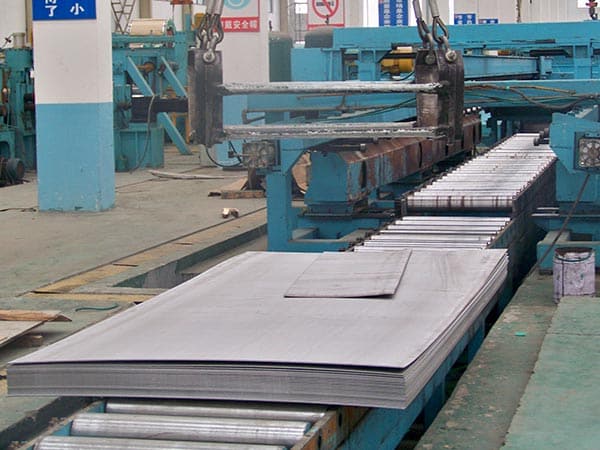
Understanding S960MC: The Engineering Backbone of Modern Machinery
S960MC is a high-strength, thermomechanically rolled structural steel designed specifically for cold forming. Governed by the European standard EN 10149-2, this grade represents a significant leap in metallurgical engineering, offering a minimum yield strength of 960 MPa. Unlike traditional quenched and tempered steels, S960MC achieves its extraordinary strength through a specialized Thermomechanical Controlled Process (TMCP). This process refines the grain structure at a microscopic level, ensuring that the material remains tough and ductile despite its extreme hardness. For manufacturers of construction machinery shapes, S960MC provides the ability to create lighter, more efficient, and highly durable components that can withstand the rigors of heavy-duty operations. The "S" denotes structural steel, "960" indicates the minimum yield strength in megapascals, "M" signifies the thermomechanical rolling delivery condition, and "C" highlights its suitability for cold forming.
Chemical Composition: Precision Micro-alloying for Performance
The superior performance of S960MC is rooted in its precise chemical balance. By keeping carbon content low and utilizing micro-alloying elements like Niobium (Nb), Vanadium (V), and Titanium (Ti), the steel achieves high strength without sacrificing weldability or toughness. These elements form fine precipitates that pin grain boundaries during the rolling process, preventing grain growth and enhancing the overall structural integrity of the steel. The low carbon equivalent (CEV) is particularly beneficial for avoiding cold cracking during fabrication.
| Element | Maximum Content (%) |
|---|---|
| Carbon (C) | 0.20 |
| Manganese (Mn) | 2.20 |
| Silicon (Si) | 0.60 |
| Phosphorus (P) | 0.025 |
| Sulphur (S) | 0.010 |
| Aluminium (Al) | 0.015 |
| Nb + V + Ti | 0.22 |
The inclusion of these micro-alloys allows the steel to maintain a fine-grained ferritic-bainitic structure. This specific microstructure is the secret behind its high yield-to-tensile ratio and its ability to absorb energy under impact, even in cold environments. Reducing impurities like sulfur and phosphorus ensures that the steel has excellent lamellar tearing resistance and internal cleanliness, which is critical for complex machinery shapes.
Mechanical Properties: Powering Heavy-Duty Applications
When designing shapes for construction machinery, the mechanical properties of S960MC are the primary drivers of material selection. The steel offers a remarkable combination of high yield strength and sufficient elongation, allowing for complex geometries that can carry massive loads. The high yield strength directly translates to weight reduction; by using S960MC, engineers can reduce the thickness of structural members while maintaining the same load-bearing capacity as thicker, lower-grade steels.
| Property | Value (Thickness ≤ 16mm) |
|---|---|
| Min. Yield Strength (MPa) | 960 |
| Tensile Strength (MPa) | 980 - 1250 |
| Min. Elongation (A50, %) | 7 |
| Impact Energy (Charpy V, -20°C) | Min. 40J (Optional) |
The high tensile strength ensures that the material can resist permanent deformation under extreme stress. Furthermore, the elongation properties, while lower than those of mild steel, are optimized for cold forming. This means that S960MC can be bent and shaped into telescopic booms, crane arms, and chassis frames without cracking, provided the correct bending radii are respected. The impact toughness is also a vital factor, especially for machinery operating in sub-zero temperatures, ensuring that the structural shapes do not undergo brittle failure.
Advanced Processing: Cold Forming and Bending
One of the standout features of S960MC is its cold forming capability. For construction machinery shapes, this allows for the production of complex profiles through press braking or roll forming. However, due to its high strength, the material exhibits significant springback compared to standard structural steels. Fabricators must account for this by over-bending and using high-tonnage equipment. The bending radius is a critical parameter; using a radius that is too small can lead to micro-cracking on the outer tension surface of the bend.
- Bending Direction: Bending transverse to the rolling direction is generally preferred to minimize the risk of cracking.
- Surface Quality: The edges of the steel should be deburred or ground smooth before bending to remove stress concentrators.
- Minimum Bending Radius: For S960MC, the recommended minimum bending radius is typically 3.0 to 4.0 times the material thickness (t), depending on the specific thickness and bending angle.
By utilizing these cold forming techniques, manufacturers can eliminate the need for excessive welding, which reduces production time and minimizes the risk of heat-affected zone (HAZ) softening. The ability to create seamless, high-strength shapes is a primary reason why S960MC is favored for telescopic boom sections in mobile cranes.
Welding Characteristics and Heat Management
Welding S960MC requires a sophisticated approach to heat management. Because the steel derives its strength from the TMCP process, excessive heat input can lead to grain coarsening in the heat-affected zone (HAZ), resulting in a localized loss of strength and toughness. The goal of welding S960MC is to maintain the cooling time (t8/5) within a specific window to ensure a balanced microstructure in the weld joint. Generally, low heat input and multi-pass welding techniques are recommended.
Preheating is often not required for S960MC due to its low carbon equivalent, which is a major advantage in reducing fabrication costs. However, if the material is thick or the ambient temperature is low, a modest preheat may be used to remove moisture and reduce the cooling rate. Matching or slightly under-matching filler metals are typically used to ensure the weld remains ductile and resistant to cracking. Gas Metal Arc Welding (GMAW) and Laser Hybrid Welding are common choices for this grade, providing high precision and controlled thermal cycles.
Environmental Adaptability and Weight Reduction Strategy
In the modern era of construction machinery, sustainability and fuel efficiency are paramount. S960MC plays a crucial role in weight reduction strategies. By replacing S355 or S700MC with S960MC, the weight of a crane boom or a trailer chassis can be reduced by up to 30-50%. This weight saving has a dual benefit: it increases the payload capacity of the machinery and reduces fuel consumption during transport and operation. This is particularly important for mobile cranes, where axle load limits are strictly regulated.
Furthermore, the high fatigue strength of S960MC ensures that these lighter structures can endure millions of loading cycles. Construction machinery often operates in harsh environments, from dusty construction sites to corrosive coastal areas. S960MC's fine-grained structure provides a solid foundation for advanced protective coatings, ensuring long-term corrosion resistance and structural reliability. The material's ability to maintain its properties at low temperatures also makes it suitable for global deployment, from tropical regions to arctic mining sites.
Strategic Applications in Construction Machinery
The unique properties of S960MC make it the material of choice for components where high strength-to-weight ratios are non-negotiable. Its application spans across various heavy equipment sectors:
- Lifting Equipment: Telescopic booms for all-terrain cranes, lattice boom sections, and outrigger boxes benefit from the extreme yield strength, allowing for higher lifts and longer reaches.
- Transport and Logistics: Heavy-duty trailer frames, semi-trailer chassis, and car transporters utilize S960MC to maximize payload while staying within weight limits.
- Forestry and Agriculture: High-stress components in timber harvesters and large agricultural implements require the durability and impact resistance that S960MC provides.
- Earthmoving Machinery: While not typically used for wear plates, S960MC is used for the structural frames of large dump trucks and excavators to ensure they can handle the dynamic loads of earthmoving.
By integrating S960MC into these shapes, manufacturers can push the boundaries of what is possible in machine design. The transition to 960 MPa steel requires a shift in engineering mindset, moving from simple thickness-based designs to sophisticated stress-optimized geometries. The result is a generation of machinery that is faster, stronger, and more environmentally friendly.
Optimizing the Lifecycle of High-Strength Steel Shapes
The long-term value of using S960MC extends beyond the initial manufacturing phase. Because the steel allows for thinner sections, the overall volume of steel required is lower, which can offset the higher cost per ton of high-strength grades. Additionally, the reduced weight of the finished machinery leads to lower wear and tear on tires, brakes, and engines. When the machinery eventually reaches the end of its service life, S960MC is fully recyclable, contributing to a circular economy in the steel and construction industries. For engineers and fleet owners alike, S960MC represents a high-performance solution that balances technical excellence with economic viability.
Leave a message