
What is the carbon plate S355MC surface test
A comprehensive technical analysis of S355MC carbon plate surface testing, covering visual inspection, NDT methods, mechanical impacts, and industrial standards for high-strength steel.
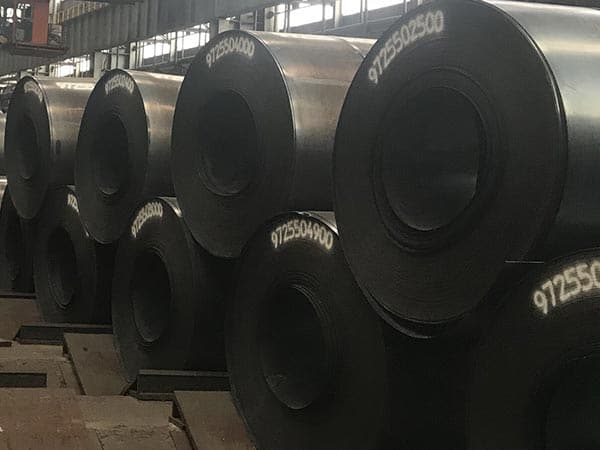
Understanding the Criticality of S355MC Surface Integrity
S355MC is a high-strength, thermomechanically rolled steel specifically engineered for cold forming applications. Defined under the EN 10149-2 standard, the "S" denotes structural steel, "355" represents the minimum yield strength of 355 MPa, "M" indicates its thermomechanical rolling process, and "C" highlights its suitability for cold forming. Because this material is frequently used in high-stress environments like automotive chassis, crane arms, and heavy machinery, the surface quality is not merely an aesthetic concern but a fundamental structural requirement. Surface testing for S355MC is designed to identify imperfections that could lead to crack initiation during bending or fatigue failure during service life. Unlike standard carbon steels, the fine-grained microstructure of S355MC makes it particularly sensitive to surface discontinuities that could compromise its high-strength-to-weight ratio.
Visual Inspection and Surface Classification
The primary and most common surface test for S355MC is visual inspection, governed by standards such as EN 10163-2. This process involves examining the plate for common defects that occur during the rolling or cooling phases. Inspectors look for slivers, which are thin pieces of metal rolled into the surface; scabs, which are shell-like patches; and pits or scale marks. For S355MC, the surface is typically classified into Class A or Class B. Class A allows for small imperfections that do not affect the functionality, provided they are within specified depth limits. Class B is more stringent, often required for components that will undergo significant visible finishing or high-cycle fatigue. Surface defects are categorized based on their depth relative to the nominal thickness of the plate, and any defect exceeding the allowable threshold must be ground out or the plate rejected.
Non-Destructive Testing (NDT) Methodologies
Beyond visual checks, advanced Non-Destructive Testing (NDT) is employed to detect sub-surface or near-surface flaws that are invisible to the naked eye. Ultrasonic Testing (UT) is frequently used to ensure internal soundness, particularly in thicker sections of S355MC. For surface-specific integrity, Magnetic Particle Inspection (MPI) or Eddy Current Testing may be utilized. MPI is highly effective for S355MC because it is a ferromagnetic material; the test reveals surface-breaking cracks by applying a magnetic field and observing the accumulation of iron particles at the site of a flux leakage. This is crucial for parts that will be subjected to 180-degree cold bending, as even a microscopic surface fissure can propagate into a catastrophic fracture under the tension of the forming process.
Surface Roughness and Coating Compatibility
The surface texture, or roughness (measured as Ra or Rz), is another critical test parameter. S355MC is often used in applications requiring subsequent painting, powder coating, or galvanizing. If the surface is too smooth, coating adhesion may be poor; if it is too rough, the protective layer may be uneven, leading to premature corrosion. Testing involves using a profilometer to measure the peak-to-valley heights across the plate. Furthermore, because S355MC is thermomechanically rolled, it possesses a thin, tightly adherent oxide scale. Tests are performed to ensure this scale is uniform and can be easily removed by pickling or shot blasting without leaving deep etch pits that could impair the final finish of the manufactured component.
Chemical Composition and Surface Performance
The chemical makeup of S355MC directly influences its surface performance during and after processing. Low carbon content combined with micro-alloying elements like Niobium (Nb), Vanadium (V), and Titanium (Ti) ensures excellent weldability and surface stability. The following table outlines the typical chemical requirements that impact surface and structural integrity:
| Element | Maximum Content (%) | Impact on Surface Quality |
|---|---|---|
| Carbon (C) | 0.12 | Prevents excessive hardening and surface cracking during welding. |
| Manganese (Mn) | 1.50 | Improves surface toughness and wear resistance. |
| Silicon (Si) | 0.50 | Influences the thickness and adhesion of the oxide scale. |
| Phosphorus (P) | 0.025 | Low levels prevent cold shortness and surface brittleness. |
| Sulfur (S) | 0.020 | Minimizes sulfide inclusions that cause surface slivers. |
| Aluminium (Al) | 0.015 (min) | Acts as a deoxidizer to ensure a clean surface finish. |
Mechanical Testing: Surface-Related Properties
While mechanical tests like tensile and impact tests are standard, the Cold Bending Test is the most surface-sensitive mechanical evaluation for S355MC. In this test, a specimen is bent over a specified mandrel radius. If the surface contains micro-cracks, inclusions, or excessive decarburization, the outer radius of the bend will exhibit "orange peeling" or open cracks. This test validates that the surface can withstand the extreme plastic deformation required in modern manufacturing. Additionally, the yield strength must be strictly maintained at 355 MPa to ensure that the surface does not undergo localized necking or premature failure when under load in structural assemblies.
Environmental Adaptability and Corrosion Testing
S355MC is frequently exposed to harsh environments in the transport and construction sectors. Surface testing often extends to atmospheric corrosion resistance evaluations. Salt spray testing (ASTM B117) may be conducted on coated S355MC samples to determine how well the surface preparation and the steel substrate interact to prevent rust creep. The absence of surface impurities is vital here; any embedded iron particles or scale remnants can act as galvanic cells, accelerating localized pitting corrosion. Ensuring a clean, tested surface allows S355MC to maintain its structural integrity for decades, even in high-humidity or chemically aggressive settings.
Applications Requiring Rigorous Surface Testing
The demand for S355MC surface testing is highest in the automotive industry, particularly for truck frames and chassis components. These parts are subject to constant vibration and cyclic loading. A single surface defect can act as a stress concentrator, leading to fatigue cracks that compromise vehicle safety. Similarly, in the production of cold-pressed profiles and sections, the surface must be free of defects to ensure that the automated pressing tools do not catch on imperfections, which could damage both the workpiece and the expensive tooling. In the logistics sector, S355MC is used for heavy-duty shelving and racking where surface smoothness prevents damage to handled goods and ensures uniform paint coverage for rust prevention.
Quality Assurance and Documentation
Every S355MC plate should be accompanied by a Mill Test Certificate (MTC) according to EN 10204, typically Type 3.1. This document confirms that the surface tests, chemical analysis, and mechanical evaluations have been performed in accordance with the relevant standards. It provides traceability from the raw heat of steel to the final plate. For critical applications, third-party inspection (Type 3.2) may be required to verify surface quality. Manufacturers and fabricators must scrutinize these reports to ensure that the surface class meets the specific needs of their end product, thereby reducing the risk of rework or field failures.
Optimizing S355MC Performance through Surface Care
To maximize the benefits of S355MC, surface care must continue beyond the initial mill test. Proper storage, avoiding metal-to-metal contact during transport, and controlled pickling processes are essential. When the surface is maintained and tested correctly, S355MC offers an unparalleled combination of strength, formability, and weldability. By adhering to rigorous testing protocols—from visual inspection to NDT and bending tests—engineers can confidently utilize this HSLA steel to create lighter, stronger, and more durable structures that meet the evolving demands of modern industrial engineering.
Leave a message