
What is the chemical composition of S315MC yield?
Explore the detailed chemical composition, mechanical properties, and industrial applications of S315MC high-yield steel. Learn how its micro-alloying elements enhance performance.
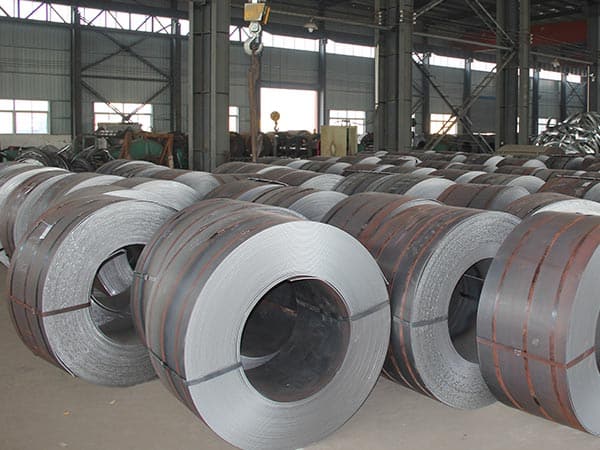
Understanding the Core Chemistry of S315MC High-Yield Steel
When engineers and procurement specialists discuss high-strength low-alloy (HSLA) steels, S315MC often emerges as a primary candidate for structural components requiring a balance of strength and formability. Defined by the European standard EN 10149-2, S315MC is a thermomechanically rolled steel specifically designed for cold forming. The 'S' denotes structural steel, '315' refers to the minimum yield strength in megapascals (MPa), and 'MC' indicates its suitability for cold forming (C) and its thermomechanical rolling (M) delivery condition.
The chemical composition of S315MC is not merely a list of elements; it is a precision-engineered recipe designed to maximize toughness while maintaining excellent weldability. Unlike traditional carbon steels that rely on high carbon content for strength, S315MC utilizes micro-alloying techniques. This approach prevents the brittleness often associated with high-carbon materials, making it a preferred choice for safety-critical automotive and machinery parts.
Detailed Chemical Composition Breakdown
The performance of S315MC is rooted in its low carbon equivalent. By keeping carbon levels low, the steel remains ductile and easy to weld. The strength is instead derived from the addition of micro-alloying elements like Niobium (Nb), Vanadium (V), and Titanium (Ti). These elements facilitate grain refinement during the thermomechanical rolling process.
| Element | Maximum Percentage (%) |
|---|---|
| Carbon (C) | 0.12 |
| Manganese (Mn) | 1.30 |
| Silicon (Si) | 0.50 |
| Phosphorus (P) | 0.025 |
| Sulphur (S) | 0.020 |
| Aluminum (Al) | 0.015 (min) |
| Niobium (Nb) | 0.09 |
| Vanadium (V) | 0.20 |
| Titanium (Ti) | 0.15 |
Carbon (C): Restricted to a maximum of 0.12%, this low level ensures that the steel does not harden excessively during welding, reducing the risk of cold cracking.
Manganese (Mn): At a maximum of 1.30%, manganese acts as a deoxidizer and contributes to the overall tensile strength and hardenability without compromising ductility.
Micro-alloys (Nb, V, Ti): The combined sum of Niobium, Vanadium, and Titanium is strictly controlled. These elements form fine carbides and nitrides that pin grain boundaries, resulting in a very fine-grained microstructure which is the secret behind its high yield strength.
Mechanical Properties and Yield Strength Dynamics
The '315' in S315MC signifies a minimum yield strength of 315 MPa for thicknesses up to 16mm. However, the mechanical profile extends far beyond just the yield point. The thermomechanical rolling process ensures that the material exhibits uniform properties across the entire plate or coil.
- Yield Strength (ReH): Minimum 315 MPa.
- Tensile Strength (Rm): Ranges between 390 and 510 MPa.
- Elongation (A80mm): Typically ≥ 20% (for thicknesses < 3mm) and up to 24% for thicker sections.
- Bending Radius: Excellent cold-bending properties allow for tight radii without surface cracking.
One of the standout features of S315MC is its impact toughness. While EN 10149-2 does not always mandate impact testing for S315MC (unlike the 'L' grades such as S315L), the fine-grained structure inherently provides better low-temperature performance than standard S235JR or s355jr grades. This makes it reliable in environments where vibration and dynamic loading are frequent.
Advanced Processing: Welding and Cold Forming
For manufacturers, the appeal of S315MC lies in its processability. Because of its low carbon content and micro-alloyed nature, it can be welded using all standard methods, including MIG/MAG, TIG, and submerged arc welding. There is generally no need for preheating, which significantly reduces production time and energy costs.
In terms of cold forming, S315MC is exceptionally forgiving. It can be folded, pressed, and drawn into complex shapes. This is particularly useful in the production of longitudinal beams for trucks and chassis components where weight reduction is critical. By using S315MC instead of thicker, lower-grade steels, manufacturers can achieve the same structural integrity with less mass, leading to better fuel efficiency in transport applications.
Environmental Adaptability and Longevity
While S315MC is not a stainless steel, its refined grain structure offers a slight advantage in uniform corrosion resistance compared to coarse-grained structural steels. However, for outdoor or corrosive environments, it is typically paired with protective coatings. Its surface quality, resulting from the controlled rolling process, is ideal for hot-dip galvanizing or high-quality powder coating.
The material's stability under varying temperatures is also noteworthy. It maintains its structural integrity across a broad range of operating temperatures, which is essential for heavy machinery operating in diverse climates, from arctic mining sites to tropical construction zones.
Strategic Industrial Applications
The unique combination of high yield strength and superior formability places S315MC in a specialized category of industrial materials. It is widely utilized where weight saving is a priority without sacrificing safety.
- Automotive Industry: Used for chassis frames, cross members, and structural reinforcements in passenger cars and commercial vehicles.
- Logistics and Warehousing: High-load racking systems and pallet converters benefit from the strength-to-weight ratio.
- Construction Machinery: Components for cranes, excavators, and bulldozers that require bending and welding during fabrication.
- Cold Pressed Parts: Complex brackets and supports in general engineering.
By choosing S315MC, designers can optimize the thickness of steel plates. For instance, replacing a 5mm S235JR plate with a 4mm S315MC plate can often provide equivalent or superior strength while reducing the weight by 20%. This "lightweighting" strategy is a cornerstone of modern sustainable engineering.
Comparative Advantage over Standard Grades
When comparing S315MC to standard S355MC or the basic S235JR, the distinction is clear. S235JR lacks the strength for modern high-load applications, while S355MC might be overkill or slightly less ductile for extremely tight forming requirements. S315MC occupies the "sweet spot" for many structural applications where moderate high strength is required alongside maximum manufacturing flexibility.
Furthermore, the thermomechanical rolling (M) process used for S315MC is more energy-efficient than traditional normalized rolling (N), contributing to a lower carbon footprint for the raw material itself. This aligns with global trends toward greener manufacturing and life-cycle assessment (LCA) improvements in the steel supply chain.
Leave a message