
What is the S500MC inventory price export to Indonesia
Explore the comprehensive guide on S500MC steel inventory prices for the Indonesian market. This article covers technical specifications, mechanical properties, processing advantages, and the economic factors influencing export costs to Southeast Asia.
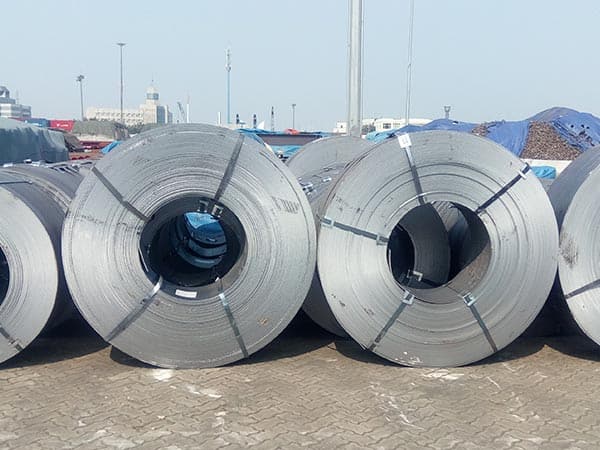
Understanding the S500MC Technical Framework
S500MC is a high-yield strength, thermomechanically rolled steel specifically designed for cold forming. Governed by the EN 10149-2 standard, this material is engineered to offer a unique balance between high strength and excellent ductility. When discussing the inventory price for export to Indonesia, it is crucial to first understand the metallurgical sophistication that justifies its market value. Unlike standard carbon steels, S500MC undergoes a controlled rolling process where the temperature and deformation are precisely managed to refine the grain structure. This results in a material that can withstand significant stress while remaining light enough to improve fuel efficiency in automotive applications.
For Indonesian importers, the technical consistency of S500MC is a primary selling point. The "S" denotes structural steel, "500" represents the minimum yield strength of 500 MPa, and "MC" indicates its thermomechanically rolled condition. This grade is often preferred over traditional hot-rolled plates because it allows for thinner sections without compromising structural integrity, leading to direct savings in raw material weight and transportation costs.
Mechanical Properties and Performance Metrics
The mechanical prowess of S500MC is the foundation of its global demand. In the context of the Indonesian heavy machinery and transport sectors, these properties ensure that components can endure the rigorous tropical environment and heavy load cycles. The yield strength is significantly higher than that of S355 grade, providing engineers with more headroom for design optimization.
| Property | Value (Min/Max) | Testing Standard |
|---|---|---|
| Yield Strength (Reh) | Min 500 MPa | EN ISO 6892-1 |
| Tensile Strength (Rm) | 550 - 700 MPa | EN ISO 6892-1 |
| Elongation (A80mm) | Min 12% (t < 3mm) | EN ISO 6892-1 |
| Elongation (A5) | Min 14% (t ≥ 3mm) | EN ISO 6892-1 |
| Bending Radius (90°) | 0.5t - 1.5t (depending on thickness) | EN ISO 7438 |
The high elongation values for a 500 MPa steel are particularly noteworthy. This allows for complex bending and folding operations without the risk of micro-cracking at the outer radius. S500MC's cold-forming capability is a decisive factor for Indonesian manufacturers producing truck chassis, crane arms, and specialized containers where weight reduction is a priority.
Chemical Composition and Weldability
The weldability of S500MC is superior to many other high-strength steels due to its low carbon equivalent (CEV). In Indonesia's fabrication shops, where manual and semi-automatic welding are common, the ease of joining S500MC without extensive preheating is a major operational advantage. The low alloy content, focusing on micro-alloying elements like Niobium (Nb), Vanadium (V), and Titanium (Ti), ensures that the heat-affected zone (HAZ) retains its toughness.
- Carbon (C): Max 0.12% - Ensures excellent weldability and prevents brittleness.
- Manganese (Mn): Max 1.60% - Enhances strength and hardenability.
- Silicon (Si): Max 0.50% - Acts as a deoxidizer.
- Phosphorus & Sulfur: Kept to extremely low levels (Max 0.025% and 0.015% respectively) to improve internal purity and impact resistance.
This chemical purity also contributes to the material's performance under dynamic loads. For Indonesian infrastructure projects, where seismic activity is a consideration, the fatigue resistance of S500MC components provides an extra layer of safety and longevity.
Factors Influencing S500MC Export Prices to Indonesia
Determining the exact inventory price for S500MC involves several variables beyond the base cost of the steel. As of the current market cycle, prices are influenced by global iron ore fluctuations, energy costs in the manufacturing country, and the specific logistics of the Southeast Asian trade route. When exporting to ports like Tanjung Priok (Jakarta) or Tanjung Perak (Surabaya), several cost layers must be considered.
1. Raw Material and Production Costs: The price of S500MC is intrinsically linked to the cost of high-quality scrap and iron ore. Since it requires thermomechanical processing, the energy intensity of the mill plays a role. Large-scale mills in China or Europe often provide the benchmark prices for Indonesian buyers.
2. Inventory Availability: Spot prices for immediate delivery from inventory are usually higher than mill-order prices. However, for Indonesian projects with tight deadlines, the premium for ready-stock S500MC is often offset by the reduction in lead times. Inventory levels in major export hubs like Shanghai or Tianjin directly impact the daily quotes received by Indonesian traders.
3. Logistics and Freight: Ocean freight rates from East Asia to Indonesia can fluctuate based on fuel surcharges and vessel availability. Containerized shipping is common for thinner sheets, while bulk carriers are used for large coil shipments. CFR (Cost and Freight) or CIF (Cost, Insurance, and Freight) terms are the standard for these transactions.
4. Import Duties and SNI Certification: Indonesia has specific regulations regarding steel imports. The SNI (Standard Nasional Indonesia) certification is mandatory for many steel products. Ensuring that the S500MC inventory meets both EN 10149-2 and the equivalent SNI requirements is essential for a smooth customs clearance process and avoids costly demurrage at the port.
Environmental Adaptability in the Indonesian Climate
Indonesia's tropical climate, characterized by high humidity and salt-laden air in coastal regions, poses a challenge for steel longevity. While S500MC is not a stainless grade, its fine-grained structure provides a slightly better substrate for protective coatings compared to coarser-grained steels. The surface of S500MC is typically clean and free of heavy scale, making it ideal for high-quality painting, galvanizing, or powder coating.
Importers often specify a pickled and oiled (P&O) finish for S500MC to prevent rust during the sea voyage and storage in humid Indonesian warehouses. This surface treatment ensures that the steel can go directly into the laser cutting or stamping machine without the need for additional cleaning, further optimizing the production chain.
Application Expansion in Indonesia's Industrial Growth
The demand for S500MC in Indonesia is being driven by the nation's push for localized manufacturing and infrastructure modernization. The automotive industry, centered around West Java, utilizes S500MC for structural components of commercial vehicles. By switching from S355 to S500MC, manufacturers can reduce the weight of a truck chassis by up to 20%, allowing for higher payloads and lower fuel consumption.
In the mining sector—a cornerstone of the Indonesian economy—S500MC is used in the fabrication of support structures for conveyors and specialized transport trailers. Its ability to withstand impact and vibration at a lower self-weight makes it indispensable for equipment operating in the remote areas of Kalimantan and Papua. Furthermore, the burgeoning renewable energy sector in Indonesia is looking at high-strength steels for wind turbine towers and solar mounting systems, where the strength-to-weight ratio is a critical design parameter.
Sourcing Strategy for Indonesian Importers
To secure the best S500MC inventory price, Indonesian buyers should focus on long-term partnerships with reputable exporters who understand the local regulatory landscape. Monitoring the LME (London Metal Exchange) and regional steel price indices provides a baseline for negotiations. It is also advisable to request Mill Test Certificates (MTC) that clearly state the thermomechanical processing history and the compliance with EN 10149-2 standards.
Combining orders to reach full container loads (FCL) can significantly reduce the per-ton logistics cost. Additionally, staying informed about the Indonesian government's trade policies, such as the LARTAS (Limited and Restricted) list, is vital for managing the total landed cost of S500MC. By focusing on quality, certification, and logistical efficiency, Indonesian enterprises can leverage the high-performance attributes of S500MC to gain a competitive edge in the regional market.
Leave a message