
What's the price of S355MC composition
A comprehensive guide to S355MC steel, exploring how its chemical composition influences market pricing, mechanical properties, and industrial applications.
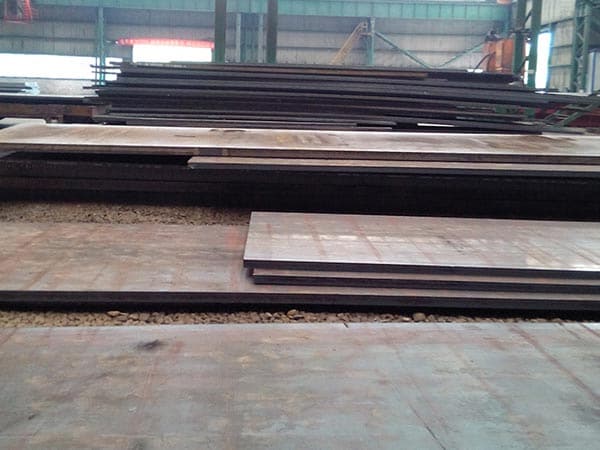
Understanding the Value Proposition of S355MC Steel
When procurement managers and structural engineers ask about the price of S355MC composition, they are rarely looking for a simple number. They are seeking to understand the economic balance between advanced metallurgy and manufacturing efficiency. S355MC, governed by the EN 10149-2 standard, is a hot-rolled, high-yield strength steel designed specifically for cold forming. The "MC" designation is crucial: "M" indicates it is thermomechanically rolled, and "C" signifies its suitability for cold forming. This specific production route creates a material that offers a superior strength-to-weight ratio compared to standard structural steels like S355J2.
The Chemical Blueprint: How Elements Drive Performance and Cost
The price of S355MC is intrinsically linked to its chemical composition. Unlike traditional carbon steels that rely on high carbon levels for strength, S355MC utilizes micro-alloying techniques. By keeping carbon content extremely low, the material achieves exceptional weldability and toughness. The inclusion of elements like Niobium (Nb), Vanadium (V), and Titanium (Ti) allows for grain refinement during the thermomechanical rolling process. This grain refinement is the secret behind achieving a minimum yield strength of 355 MPa without sacrificing ductility.
| Element | Maximum Percentage (%) | Role in Performance |
|---|---|---|
| Carbon (C) | 0.12 | Ensures excellent weldability and prevents brittleness. |
| Manganese (Mn) | 1.50 | Increases strength and improves hardenability. |
| Silicon (Si) | 0.50 | Acts as a deoxidizer and contributes to solution hardening. |
| Phosphorus (P) | 0.025 | Kept low to maintain impact toughness. |
| Sulfur (S) | 0.020 | Minimized to improve surface quality and prevent hot shortness. |
| Aluminium (Al) | 0.015 (min) | Used for grain size control and deoxidation. |
| Nb / V / Ti | Total < 0.22 | Micro-alloying for grain refinement and precipitation hardening. |
The cost of these micro-alloying elements, particularly Niobium and Vanadium, fluctuates based on global mining output. When these ferro-alloy prices rise, the surcharge on S355MC typically follows. However, because the total percentage of these elements is small, the primary price drivers remain iron ore, energy costs, and the complexity of the thermomechanical rolling process itself.
Mechanical Properties and Industrial Utility
The mechanical integrity of S355MC is what justifies its price premium over S235 or S275 grades. For engineers, the primary metric is the yield strength. S355MC provides a minimum yield of 355 MPa for thicknesses up to 16mm. This high strength allows for the design of thinner, lighter components without compromising structural safety. This "lightweighting" effect is a major cost-saver in transportation industries, where reducing vehicle weight directly translates to fuel efficiency and increased payload capacity.
- Yield Strength: Minimum 355 MPa, providing a robust safety margin for dynamic loads.
- Tensile Strength: Ranging from 430 to 550 MPa, ensuring the material can withstand significant stretching before failure.
- Elongation: Typically 19-23% depending on thickness, allowing for complex bends and shapes during cold forming.
- Impact Toughness: Excellent performance even at lower temperatures, making it suitable for outdoor machinery.
Processing Advantages: Saving Money in the Workshop
Beyond the raw material price, S355MC offers significant savings during the fabrication phase. Its low carbon equivalent (CEV) makes it exceptionally easy to weld using standard methods like MIG, TIG, or submerged arc welding. Unlike higher carbon steels, S355MC rarely requires pre-heating, which significantly reduces labor hours and energy consumption in the workshop. Furthermore, its clean surface and fine grain structure make it an ideal candidate for high-precision laser cutting. The absence of internal stresses, a byproduct of the controlled cooling in thermomechanical rolling, ensures that parts remain flat and dimensionally stable after cutting.
Global Market Dynamics and Pricing Factors
The price of S355MC is not static; it is influenced by a complex web of global factors. Currently, the shift toward green steel production is beginning to impact the cost structure. Steel mills utilizing Electric Arc Furnaces (EAF) with renewable energy may charge a premium for "low-carbon" S355MC. Additionally, logistics play a massive role. Because S355MC is often used in large-scale automotive and yellow goods (construction machinery) production, supply chain stability is paramount. Regional availability can cause price variations, with major hubs in Europe and Asia often seeing more competitive pricing due to higher production volumes.
Comparative Analysis: S355MC vs. S355J2
A common question is whether to choose S355MC or S355J2. While both share a similar yield strength, their processing routes are different. S355J2 is a standard structural steel often supplied in a normalized or as-rolled condition. It is generally thicker and used for heavy structural plates. S355MC, conversely, is typically available in thinner sheets and coils (up to 20mm). S355MC offers better cold-forming properties and a tighter tolerance on thickness, making it the preferred choice for automated manufacturing lines where consistency is key to avoiding machine downtime.
Environmental Adaptability and Sustainability
In today's industrial landscape, the environmental footprint of a material is part of its total cost. S355MC contributes to sustainability through material efficiency. By using high-strength steel, manufacturers can use up to 30% less steel by weight compared to S235 to achieve the same structural performance. This reduction in material usage ripples through the entire lifecycle: less iron ore mined, less energy used in smelting, and lower emissions during transport. Furthermore, S355MC is 100% recyclable, fitting perfectly into the circular economy models adopted by modern enterprises.
Optimizing Procurement Strategies for S355MC
To get the best price for S355MC, buyers should focus on volume and specification alignment. Standardizing on common thicknesses (e.g., 3mm, 5mm, 8mm) can lead to better bulk pricing. It is also essential to verify the mill test certificates (MTC) to ensure the composition meets the EN 10149-2 requirements. Working with suppliers who offer value-added services like precision decoiling or protective coating can also reduce the total cost of ownership by streamlining the internal production flow. The price of S355MC is a reflection of its high-tech origin and its ability to solve complex engineering challenges efficiently.
Leave a message