
What is the effect of s460 steel welding surface treatment on its properties
Detailed analysis of how surface treatments impact S460 high-strength steel properties, including fatigue life, corrosion resistance, and structural integrity.
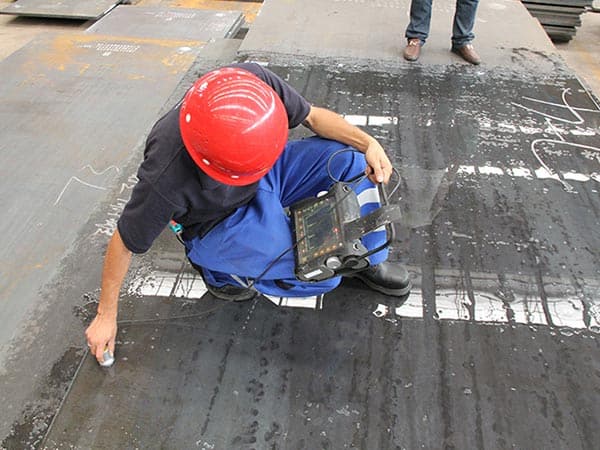
Understanding S460 steel: The High-Strength Structural Powerhouse
S460 steel represents a significant leap in structural engineering materials, categorized under the EN 10025-3 and EN 10025-4 standards. As a high-yield strength structural steel, it offers a minimum yield strength of 460 MPa, making it a preferred choice for offshore structures, bridges, and heavy-duty machinery. However, the performance of S460 is not solely determined by its chemical composition or its initial manufacturing process (such as Thermomechanically Rolled or Normalized conditions). The integrity of an S460 structure heavily relies on the quality of its welded joints, where surface treatment plays a pivotal role. The interaction between the steel surface and the welding process dictates the final mechanical properties, fatigue life, and environmental resilience of the assembly.
The Impact of Pre-Weld Surface Preparation on S460 Integrity
Before the first arc is struck, the condition of the S460 steel surface significantly influences the metallurgical outcome of the weld. High-strength steels are particularly sensitive to contaminants. The presence of mill scale, rust, moisture, or oils can introduce hydrogen into the weld pool, leading to one of the most critical failures in S460 welding: Hydrogen-Induced Cracking (HIC).
- Removal of Oxides and Mill Scale: Mill scale is a brittle layer that can cause lack of fusion or slag inclusions. Mechanical cleaning, such as grit blasting to Sa 2.5 or Sa 3 standards, ensures a clean metallic substrate that promotes optimal wetting of the weld pool.
- Moisture and Hydrogen Control: S460's higher carbon equivalent (CEV) compared to S355 makes it more susceptible to hardening in the Heat Affected Zone (HAZ). Moisture on the surface dissociates into hydrogen during welding. Rigorous surface drying and preheating are essential to maintain a low-hydrogen environment.
- Surface Roughness and Wetting: A controlled surface roughness (Rz value) improves the mechanical interlocking of the weld bead at the fusion line. Excessive roughness, however, can trap contaminants that are difficult to remove.
Thermal Surface Treatments: Preheating and Interpass Temperature
While often categorized as a process parameter, preheating is essentially a thermal surface and through-thickness treatment. For S460 steel, preheating serves to slow down the cooling rate (t8/5 time), preventing the formation of brittle martensite in the HAZ. This is crucial for maintaining fracture toughness at sub-zero temperatures, a common requirement for S460M or S460ML grades used in arctic or offshore environments.
| Property | Without Surface Pre-treatment | With Optimized Pre-treatment |
|---|---|---|
| Yield Strength (MPa) | 460+ | 460+ (Consistent) |
| HAZ Hardness (HV10) | >380 (Risk of cracking) | <350 (Ductile) |
| Diffusible Hydrogen | High (>10ml/100g) | Low (<5ml/100g) |
| Fatigue Life (Cycles) | Standard | 20-30% Improvement |
Post-Weld Surface Mechanical Treatments: Boosting Fatigue Performance
The weld toe is the most vulnerable point in an S460 structure due to stress concentration and the presence of micro-discontinuities. Post-weld surface treatments are designed to modify the stress state and geometry of this region. For high-strength steels like S460, the benefit of these treatments is even more pronounced than in lower-grade steels.
Ultrasonic Impact Treatment (UIT) and Needle Peening: These techniques involve high-frequency impacts on the weld toe. The process accomplishes two goals: it introduces compressive residual stresses and smoothens the weld toe radius. Since S460 is often used in fatigue-critical applications like bridge girders, UIT can increase the fatigue strength category (FAT class) by several levels, effectively doubling or tripling the service life of the component.
Grinding and Polishing: Removing the weld reinforcement or blending the weld toe into the base metal eliminates geometric stress raisers. For S460, precision grinding ensures that the high-strength properties of the base metal are not undermined by the "notch effect" of the weld bead.
Chemical Surface Treatments and Corrosion Resistance
S460 steel is frequently deployed in aggressive environments. The welding process disrupts the original surface protection, making the weld area a focal point for corrosion. Surface treatments such as pickling, passivation, or the application of zinc-rich primers are vital. However, the timing is critical. Applying certain primers before welding can lead to zinc-induced embrittlement or porosity. Therefore, the post-weld surface must be cleaned of all weld spatter and flux residues before the final protective coating is applied. The adhesion of coatings on S460 is superior when the surface has been mechanically prepared to a specific profile, ensuring long-term protection against pitting and stress corrosion cracking.
Microstructural Evolution Near the Surface
The surface treatment also affects the grain structure near the fusion line. Advanced treatments like Laser Surface Melting (LSM) can be used on S460 welds to refine the grain size at the surface, creating a localized "fine-grain" zone that resists crack initiation. This synergy between mechanical strength and surface refinement allows S460 to perform under extreme dynamic loads. The TMCP (Thermomechanically Controlled Processing) nature of S460M steel means that surface heat inputs must be carefully managed to avoid softening the material. Excessive surface heat during grinding or poor welding techniques can lead to a drop in local yield strength, a phenomenon known as HAZ softening.
Engineering Perspectives on S460 Optimization
Maximizing the potential of S460 steel requires a holistic approach where welding is viewed as a surface-to-surface interaction. Modern heavy industry now utilizes automated surface preparation systems that integrate with robotic welding cells. These systems ensure that every square millimeter of the S460 joint is prepared to exact specifications, minimizing human error and maximizing the structural integrity of the final product. In offshore wind energy, where S460 is a staple, the combination of stringent surface cleaning and post-weld peening has become a standard protocol to combat the dual threats of fatigue and seawater corrosion.
Technical Summary of Property Enhancements
The effect of surface treatment on S460 steel is multi-dimensional. Mechanically, it shifts the stress profile from tensile to compressive. Chemically, it provides a barrier against hydrogen and environmental degradation. Metallurgically, it preserves the fine-grain structure essential for toughness. By adhering to strict surface treatment protocols, engineers can fully exploit the weight-saving advantages of S460 without compromising on safety or longevity. The transition from S355 to S460 is not just a change in material grade; it is a transition to a more sophisticated level of surface management and welding precision.
Leave a message