
What is the effect of surface treatment on performance of plate en 10149-2 s460mc
Detailed analysis of how surface treatments like pickling, shot blasting, and coating affect the mechanical properties, weldability, and durability of EN 10149-2 S460MC high-strength steel plates.
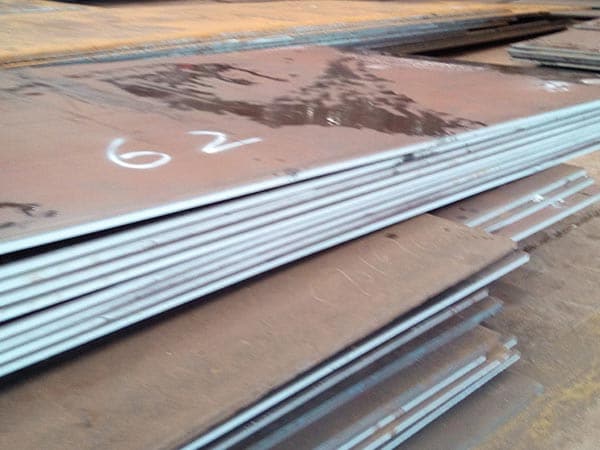
Understanding the Core Characteristics of EN 10149-2 S460MC
EN 10149-2 S460MC represents a pinnacle of thermomechanically rolled high-yield strength steel designed specifically for cold forming. As a low-alloy material, its microstructure is refined through controlled rolling and cooling processes, resulting in a fine-grained ferrite-pearlite matrix. While the chemical composition provides the foundation for its 460 MPa minimum yield strength, the surface condition plays a disproportionate role in how this material performs under stress, during fabrication, and throughout its operational lifespan.
Surface treatment is not merely an aesthetic choice for S460MC; it is a critical engineering step. Because this steel is often used in thicknesses ranging from 1.5mm to 20mm for structural components, the ratio of surface area to volume is high. Consequently, any alteration to the surface layer—whether through chemical pickling, mechanical blasting, or protective coating—directly influences its mechanical integrity and processability.
The Impact of Pickling and Oiling on Dimensional Precision
Pickling is perhaps the most common surface treatment for S460MC plates. By immersion in hydrochloric or sulfuric acid, the mill scale (iron oxides) formed during the thermomechanical rolling process is removed. This reveals the true metallic surface of the steel.
- Improved Cold Formability: Mill scale is inherently brittle. During tight-radius bending, scale can crack and press into the steel substrate, creating stress concentrators. Pickled S460MC offers a smoother surface that reduces friction during forming, leading to more consistent bend angles and less tool wear.
- Enhanced Coating Adhesion: Without the loose oxide layer, subsequent paints or powder coatings can bond directly to the metallic lattice, significantly extending the life of the protective system.
- Hydrogen Considerations: While pickling is efficient, it must be carefully controlled to prevent hydrogen embrittlement. For high-strength steels like S460MC, excessive acid exposure can allow atomic hydrogen to penetrate the grain boundaries, potentially leading to delayed cracking under load.
Shot Blasting and Mechanical Strengthening
Shot blasting involves bombarding the S460MC surface with high-velocity metallic abrasives. This treatment does more than just clean the surface; it induces a state of compressive residual stress in the outer layers of the plate.
Fatigue Life Extension: S460MC is frequently used in dynamic environments, such as truck chassis and crane booms. Fatigue cracks almost always initiate at the surface. The compressive stress layer created by shot blasting acts as a barrier, requiring higher external loads to initiate and propagate cracks. This effectively increases the fatigue limit of the component.
Surface Roughness (Ra): Shot blasting increases the surface roughness. While this provides an excellent "mechanical key" for heavy-duty industrial coatings, it can be detrimental if the roughness is too high, as deep peaks and valleys can act as micro-notches that reduce ductility during extreme cold forming operations.
Surface Treatment and Weldability Performance
The weldability of S460MC is excellent due to its low carbon equivalent (CEV). However, the surface condition can introduce variables that compromise joint integrity. Modern manufacturing demands high-speed welding processes where surface contaminants cannot be tolerated.
| Surface Condition | Welding Impact | Recommended Action |
|---|---|---|
| As-Rolled (Mill Scale) | Increased risk of porosity and arc instability. | Grind edges or use high-penetration flux. |
| Pickled and Oiled | Cleanest surface for robotic MIG/MAG welding. | Remove excessive oil film before welding. |
| Shot Blasted | Good arc stability, but dust can contaminate welds. | Ensure surface is free of residual grit. |
| Zinc Coated | Risk of zinc inclusion and porosity. | Use specialized welding wire or remove zinc at joint. |
Environmental Adaptability and Corrosion Protection
S460MC is not a corrosion-resistant steel by nature. Its performance in outdoor or corrosive environments is entirely dependent on its surface treatment. For infrastructure and heavy transport, the choice between hot-dip galvanizing and high-performance painting is vital.
Hot-Dip Galvanizing (HDG): When S460MC is galvanized, the metallurgical reaction between the steel and molten zinc creates a series of zinc-iron alloy layers. Because S460MC contains specific levels of Silicon and Manganese, the "Sandelin Effect" must be considered. If the silicon content is in a specific range, the zinc coating can become excessively thick and brittle. Proper specification of the S460MC chemistry ensures a stable, ductile zinc layer that provides sacrificial protection for decades.
Powder Coating and Painting: For components where aesthetics and color coding are required, a pickled surface followed by a zinc-phosphate conversion coating provides the best substrate. This multi-layer approach ensures that even if the topcoat is scratched, the S460MC substrate remains protected from localized pitting corrosion.
Impact on Cold Forming and Springback
High-strength steels like S460MC exhibit more springback than conventional mild steels. Surface treatments influence the coefficient of friction between the plate and the forming die. A pickled and oiled surface provides a consistent lubrication boundary, which stabilizes the springback effect across a production run. Conversely, as-rolled plates with varying scale thickness can cause fluctuations in forming pressure, leading to dimensional inaccuracies in complex profiles.
Furthermore, the removal of surface defects through pickling or fine grinding reduces the risk of "orange peel" or surface tearing during tight-radius bending (e.g., a bending radius of 1.0t to 1.5t). This is particularly critical in the manufacturing of telescopic booms for mobile cranes, where the integrity of the outer tension flange is paramount.
Optimizing S460MC for Advanced Industry Applications
The strategic selection of surface treatment allows S460MC to transition across diverse engineering sectors. In the automotive industry, the focus is on pickling for precision stamping of weight-saving structural parts. In the agricultural sector, where equipment faces abrasion and moisture, shot blasting followed by epoxy coating is the standard for longevity.
By understanding that the surface is an extension of the material's mechanical soul, engineers can maximize the 460 MPa yield strength without fear of premature failure. Whether it is through the fatigue-enhancing properties of shot peening or the corrosion-blocking capabilities of advanced galvanizing, the surface treatment is what ultimately allows EN 10149-2 S460MC to fulfill its potential as a high-performance engineering material.
Proper documentation and testing of the surface finish—measuring parameters like Ra, Rz, and coating thickness—should be integrated into the quality control process. This ensures that the S460MC plate delivered to the workshop is perfectly prepared for the specific stresses it will encounter in its final application.
Leave a message