
What is the en 10149-2 s355mc technical data thermo-mechanical condition
A comprehensive technical analysis of EN 10149-2 S355MC steel, focusing on its thermo-mechanical rolling condition, mechanical properties, and industrial applications.
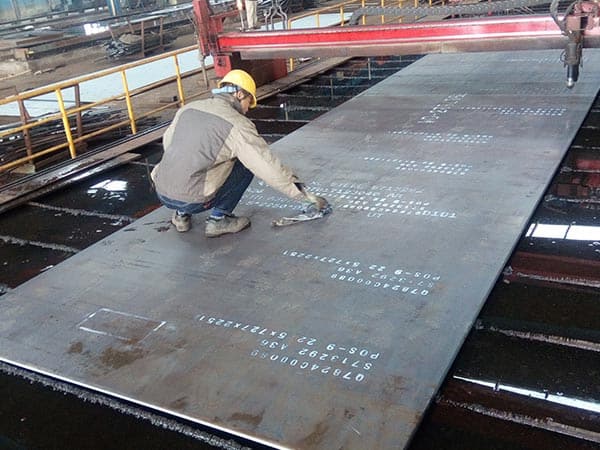
Understanding the EN 10149-2 S355MC Specification
EN 10149-2 is the European standard for hot-rolled flat products made of high-yield-strength steels for cold forming. Within this framework, S355MC stands as one of the most versatile and widely utilized grades. The designation itself provides a roadmap to its properties: 'S' denotes structural steel, '355' indicates a minimum yield strength of 355 MPa, 'M' signifies the thermo-mechanical rolling delivery condition, and 'C' highlights its suitability for cold forming operations. This material is engineered to bridge the gap between traditional structural steels and high-performance alloys, offering a unique combination of strength, ductility, and weldability.
The Essence of Thermo-Mechanical Rolling (MC Condition)
The 'MC' condition is not merely a label but a sophisticated metallurgical process known as Thermo-Mechanical Control Process (TMCP). Unlike traditional normalizing, where the steel is heated and cooled to refine the grain, thermo-mechanical rolling involves precise temperature control during the deformation process itself. The rolling occurs at specific temperatures where the austenite does not fully recrystallize, leading to a highly refined and elongated grain structure. This fine-grained microstructure is the primary reason why S355MC achieves high yield strength without the need for excessive alloying elements.
This process ensures that the material possesses superior toughness and a low carbon equivalent. By controlling the cooling rate after the final rolling pass, manufacturers can dictate the phase transformation, resulting in a ferrite-pearlite or bainitic structure that is exceptionally uniform. This uniformity is critical for downstream processes like laser cutting and precision bending, as it minimizes internal stresses and material springback.
Chemical Composition and Micro-Alloying Strategy
The chemical profile of S355MC is optimized for weldability and formability. The carbon content is strictly limited, usually below 0.12%, which is significantly lower than traditional s355jr structural steels. To compensate for the low carbon while maintaining high strength, micro-alloying elements such as Niobium (Nb), Vanadium (V), and Titanium (Ti) are added. These elements form fine carbides and nitrides that pin grain boundaries, preventing grain growth during processing.
| Element | Maximum Content (%) |
|---|---|
| Carbon (C) | 0.12 |
| Manganese (Mn) | 1.50 |
| Silicon (Si) | 0.50 |
| Phosphorus (P) | 0.025 |
| Sulfur (S) | 0.020 |
| Aluminium (Al) | 0.015 (min) |
| Nb + V + Ti | 0.22 (total) |
The low sulfur and phosphorus levels are particularly important for the 'C' (cold forming) designation. High purity levels reduce the presence of non-metallic inclusions, which can act as crack initiation sites during severe bending or stretching operations.
Mechanical Performance and Yield Strength Characteristics
The primary technical data for S355MC revolves around its mechanical resilience. While the nominal yield strength is 355 MPa, the actual values often exceed this, providing a safety margin for engineering designs. The tensile strength typically ranges between 430 and 550 MPa, ensuring a balanced ratio that facilitates energy absorption in crash-relevant components.
- Minimum Yield Strength: 355 MPa (for thicknesses ≤ 16mm).
- Tensile Strength: 430 - 550 MPa.
- Minimum Elongation (A80mm): Ranges from 19% to 23% depending on thickness.
- Impact Toughness: While EN 10149-2 doesn't always mandate low-temperature impact tests for S355MC (unlike the 'L' grades), the fine-grain structure naturally provides good sub-zero performance compared to standard hot-rolled steels.
Cold Forming and Bending Capabilities
One of the standout features of S355MC is its exceptional cold-forming capability. Engineers specify this grade when complex geometries are required from flat sheets. The material can be bent to tight radii without cracking, which is essential for manufacturing truck chassis, crane booms, and structural sections. The recommended minimum bending radius is typically expressed as a factor of the material thickness (t).
| Nominal Thickness (t) | Min. Bending Radius (90°) |
|---|
These values are significantly better than those of standard structural steels like S355J2, allowing for more compact and lightweight designs. The consistency of the thermo-mechanical rolling ensures that the bending behavior is isotropic, meaning the material performs similarly whether bent longitudinal or transverse to the rolling direction.
Weldability and Fabrication Advantages
S355MC is highly regarded for its excellent weldability. The low Carbon Equivalent (CEV) ensures that the steel can be welded using all standard methods, including MIG/MAG, TIG, and submerged arc welding, without the need for preheating in most thickness ranges. This is a massive operational advantage, reducing labor costs and cycle times in heavy fabrication shops.
Because the strength is derived from grain refinement rather than high carbon or alloy content, the Heat Affected Zone (HAZ) remains relatively stable. However, it is important to control the heat input; excessive heat can lead to grain coarsening in the HAZ, which might locally reduce the yield strength. Following a qualified Welding Procedure Specification (WPS) ensures that the joint maintains the integrity of the base metal.
Environmental Adaptation and Fatigue Life
In dynamic environments, such as the transport and construction sectors, fatigue resistance is paramount. The fine-grained structure of S355MC provides a superior barrier against fatigue crack propagation. Components subjected to cyclic loading, such as vehicle frames or telescopic arms, benefit from the material's ability to redistribute local stresses. Furthermore, the smooth surface finish typical of EN 10149-2 products reduces the number of surface defects that could act as stress concentrators, further enhancing the component's lifespan.
Comparison with Other S355 Variants
It is crucial to distinguish S355MC from S355JR or S355J2 (EN 10025-2). While they share a similar yield strength, their manufacturing routes and intended uses differ. S355JR is a general-purpose structural steel often used in buildings where cold forming is minimal. S355MC, however, is a specialized product for the manufacturing industry where weight reduction and precision forming are required. The TMCP process allows S355MC to be produced in thinner gauges while maintaining the same structural integrity as thicker, traditional steel plates, leading to significant weight savings in mobile equipment.
Strategic Application in Modern Engineering
The technical data of S355MC makes it the material of choice for several high-demand sectors. In the automotive industry, it is used for longitudinal beams, cross members, and chassis components where a high strength-to-weight ratio is vital for fuel efficiency. In the lifting and excavation sector, the high yield strength allows for the design of longer, lighter crane booms that can lift heavier loads without increasing the overall weight of the machine.
The material's compatibility with modern manufacturing techniques, such as high-speed fiber laser cutting and CNC press braking, ensures that it remains a staple in the transition toward Industry 4.0. Its predictable behavior during automated processing reduces scrap rates and improves overall production efficiency.
Final Technical Considerations for Procurement
When specifying S355MC, it is important to ensure that the material is sourced with a 3.1 or 3.2 mill test certificate according to EN 10204. This documentation verifies the chemical composition and mechanical properties, ensuring the material meets the EN 10149-2 standard. Additionally, while S355MC offers excellent atmospheric corrosion resistance comparable to other carbon steels, it is often coated or galvanized for long-term outdoor use. The low silicon content (Si ≤ 0.03% if specified) can be requested to ensure optimal results during the hot-dip galvanizing process, preventing the formation of excessively thick or brittle zinc layers.
Leave a message