
What is the scope of geometric dimension of plate en 10149-2 s460mc
Detailed guide on the geometric dimension scope, mechanical properties, and industrial applications of EN 10149-2 S460MC high-strength steel plates.
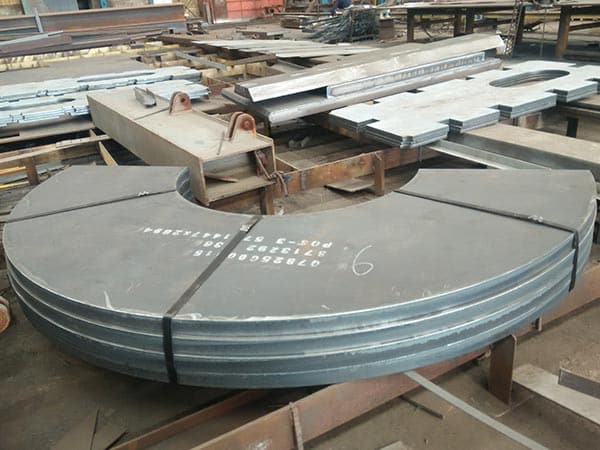
Understanding the Geometric Scope of EN 10149-2 S460MC
EN 10149-2 S460MC represents a high-strength, low-alloy (HSLA) steel grade specifically designed for cold forming. The 'S' denotes structural steel, '460' signifies a minimum yield strength of 460 MPa, and 'MC' indicates that the material is thermomechanically rolled (M) and intended for cold forming (C). When discussing the geometric dimension scope of S460MC plates, we refer to the range of thickness, width, and length available in the market, as well as the strict dimensional tolerances governed by auxiliary standards like EN 10051.
The standard thickness for S460MC typically ranges from 1.5 mm to 20 mm. While some specialized mills can produce sheets as thin as 1.2 mm or as thick as 25 mm, the core demand lies within the 2 mm to 12 mm range. Widths generally span from 900 mm to 1,500 mm for standard coils, but wide-strip mills can extend this to 2,000 mm. Lengths for cut-to-length sheets usually vary between 2,000 mm and 12,000 mm, depending on the logistical constraints and the end-user's fabrication requirements.
Dimensional Tolerances and EN 10051 Compliance
Geometric precision is a hallmark of S460MC. Because this steel is often used in automated laser cutting and robotic welding environments, the consistency of its dimensions is critical. The tolerances for EN 10149-2 products are defined by EN 10051, which covers continuously hot-rolled uncoated plate/sheet and strip.
Thickness Tolerances: For a plate with a nominal thickness of 3 mm and a width between 1,200 mm and 1,500 mm, the standard tolerance is approximately +/- 0.19 mm. For thicker plates, such as 10 mm, the tolerance may increase to +/- 0.26 mm. This level of precision ensures that components fit perfectly during assembly, reducing the need for manual adjustments.
Flatness and Squareness: Flatness is equally vital. EN 10051 specifies flatness tolerances (Class A and Class B). S460MC often adheres to strict flatness requirements to prevent 'oil canning' or warping during laser cutting. For a sheet length of 2,000 mm, the maximum deviation from flatness is typically around 10 mm to 15 mm, though 'extra-flat' processed sheets can achieve even tighter limits.
Chemical Composition and Its Impact on Dimensions
The geometric stability and mechanical integrity of S460MC are rooted in its chemical makeup. By utilizing micro-alloying elements like Niobium (Nb), Vanadium (V), and Titanium (Ti), manufacturers can achieve high strength without the bulk of traditional carbon steels. This allows for 'down-gauging'—using a thinner S460MC plate to replace a thicker S235 or S355 plate without sacrificing structural safety.
| Element | Maximum Content (%) |
|---|---|
| Carbon (C) | 0.12 |
| Manganese (Mn) | 1.60 |
| Silicon (Si) | 0.50 |
| Phosphorus (P) | 0.025 |
| Sulfur (S) | 0.015 |
| Aluminium (Al) | 0.015 |
Low carbon content is essential for maintaining the ductility required for cold forming. The addition of micro-alloys refines the grain structure during the thermomechanical rolling process, which ensures that the geometric dimensions remain stable even after the internal stresses of rolling are released during cutting.
Mechanical Performance Attributes
The mechanical properties of S460MC are what make its geometric efficiency possible. By providing a high yield-to-tensile ratio, engineers can design lighter structures. The thermomechanical rolling process (TMCP) is key here; it involves controlled deformation and cooling rates that result in a fine-grained microstructure.
- Yield Strength (ReH): Minimum 460 MPa for all thicknesses.
- Tensile Strength (Rm): 520 to 670 MPa.
- Elongation (A80mm): Minimum 14% (for thickness < 3mm) and 17% (for thickness >= 3mm).
- Impact Strength: While EN 10149-2 does not always mandate impact testing unless specified, S460MC often exhibits excellent low-temperature toughness due to its fine grain.
Advanced Processing and Cold Forming Capabilities
The 'C' in S460MC stands for cold forming, and this is where the material truly excels. Despite its high strength, the plate can be bent to very tight radii. This is a significant advantage for industries that require complex shapes with minimal weight. The minimum recommended inside bend radius for a 90-degree bend is typically 1.0 to 1.5 times the thickness of the plate.
Welding Performance: S460MC has a low carbon equivalent (CEV), making it exceptionally weldable using standard methods such as MIG, TIG, and submerged arc welding. Because the material is not quenched and tempered, but rather thermomechanically rolled, it is less sensitive to cold cracking in the heat-affected zone (HAZ) compared to traditional high-strength steels. However, excessive heat input should be avoided to prevent grain coarsening, which could reduce the yield strength in the weld area.
Cutting and Machining: The material is highly suitable for laser, plasma, and waterjet cutting. Its consistent thickness and flatness ensure that the focal point of a laser remains constant across the entire surface of the plate, resulting in clean, burr-free edges and high dimensional accuracy of the finished parts.
Environmental Adaptability and Sustainability
S460MC contributes significantly to environmental sustainability through weight reduction. In the transport industry, reducing the weight of a vehicle chassis or a trailer frame directly translates to lower fuel consumption and reduced CO2 emissions. The fine-grained structure also provides a degree of atmospheric corrosion resistance that is slightly superior to standard carbon steels, although it is typically used in applications where it will be painted or galvanized.
Furthermore, the thermomechanical rolling process is more energy-efficient than the traditional quenching and tempering process, as it utilizes the heat from the rolling stage to achieve the desired properties, rather than requiring a separate reheating cycle. This makes S460MC a 'greener' choice for modern engineering projects.
Widespread Industrial Applications
The unique combination of high strength, excellent formability, and precise geometric dimensions makes S460MC a preferred material across various heavy-duty sectors. Its ability to be formed into complex profiles while maintaining structural integrity is unmatched by lower-grade steels.
- Automotive and Transportation: Used for truck chassis, side beams, cross members, and cold-pressed components. The high strength allows for thinner sections, increasing the payload capacity of commercial vehicles.
- Construction Machinery: Found in crane booms, excavator buckets, and agricultural equipment where high load-bearing capacity and wear resistance are required.
- Structural Engineering: Employed in cold-formed sections and profiles for building frames, storage racks, and solar panel mounting systems.
- Energy Sector: Used in the fabrication of wind turbine components and support structures for power transmission lines.
When sourcing S460MC, it is vital to verify the mill test certificate (MTC) to ensure compliance with EN 10149-2. The MTC provides the actual chemical analysis and mechanical test results for the specific heat of steel, ensuring that the geometric and structural properties meet the design specifications. Proper storage is also necessary to prevent surface oxidation, although the tight mill scale on thermomechanically rolled plates offers some protection during transit.
Selecting S460MC involves a balance of geometric requirements and mechanical needs. By understanding the scope of its dimensions and the tolerances allowed by the standard, designers can optimize their manufacturing processes, reduce waste, and create high-performance products that stand the test of time in demanding environments.
Leave a message