
What is the S315MC material impact test
Detailed guide on the S315MC material impact test, covering its mechanical properties, chemical composition, and industrial applications in high-strength environments.
The Fundamentals of S315MC Thermomechanically Rolled Steel
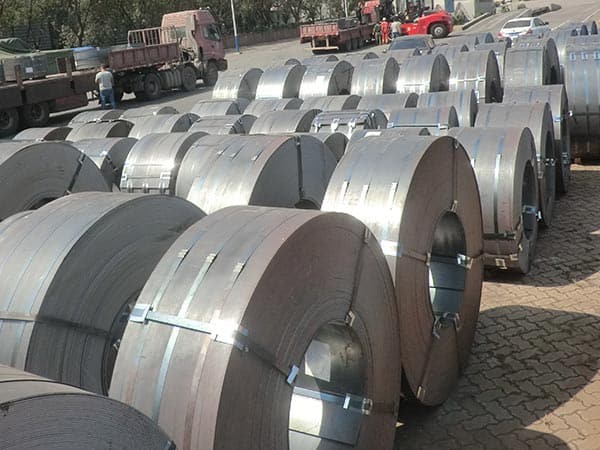
nS315MC is a high-yield-strength steel grade specifically designed for cold-forming applications, governed by the European standard EN 10149-2. The designation "S" indicates structural steel, "315" represents the minimum yield strength of 315 MPa, and "MC" signifies that the material is thermomechanically rolled (M) and intended for cold forming (C). This material is a staple in modern engineering where weight reduction and structural integrity are paramount. Unlike traditional hot-rolled steels, S315MC undergoes a sophisticated rolling process where temperature and deformation are strictly controlled to refine the grain structure, leading to superior mechanical properties without the need for excessive alloying elements.
nWhat is the S315MC Material Impact Test?
nThe impact test, most commonly the Charpy V-notch test, is a critical evaluation used to determine the toughness of S315MC steel. It measures the amount of energy (expressed in Joules) that the material absorbs during a high-rate fracture. For S315MC, the impact test is essential because it reveals the material's ability to resist brittle fracture, especially in environments where sudden loads or low temperatures are prevalent. While the standard EN 10149-2 primarily focuses on yield and tensile strength, the impact energy values are often specified by end-users or in supplemental requirements to ensure safety in dynamic loading conditions.
nThe test involves a pendulum striking a notched specimen of the steel. The energy absorbed is calculated by the difference in the pendulum's height before and after the impact. For S315MC, achieving a high impact value means the material can undergo significant plastic deformation before failing, which is a vital safety characteristic for automotive frames and heavy machinery components. Typically, impact tests for this grade are conducted at 0°C or -20°C to verify its performance in cold climates.
nChemical Composition and Its Influence on Toughness
nThe exceptional performance of S315MC in impact tests is a direct result of its carefully balanced chemical composition. By keeping carbon levels low and utilizing micro-alloying elements, manufacturers can achieve high strength while maintaining excellent ductility. The presence of Niobium (Nb), Vanadium (V), and Titanium (Ti) facilitates grain refinement during the thermomechanical rolling process. Smaller grains act as barriers to crack propagation, which significantly increases the energy required to fracture the material.
n| Element | nMaximum Percentage (%) | n
|---|---|
| Carbon (C) | n0.12 | nManganese (Mn) | n1.30 | nnSilicon (Si) | n0.50 | nnPhosphorus (P) | n0.025 | nnSulfur (S) | n0.020 | nnAluminium (Al) | n0.015 | nnNb + V + Ti | n0.22 | nnn
Low sulfur and phosphorus content are particularly important for the impact test results. These elements can form inclusions that act as stress concentrators, leading to premature brittle failure. By minimizing these impurities, S315MC ensures a clean microstructure that performs consistently under stress.
nMechanical Properties and Performance Metrics
nBeyond the impact test, S315MC must meet rigorous mechanical standards to be certified for industrial use. The thermomechanical rolling process ensures that the strength is uniform across the entire plate or coil. This uniformity is crucial for automated manufacturing processes like laser cutting and robotic welding.
n- n
- Yield Strength: Minimum 315 MPa. This is the point where the material begins to deform plastically. n
- Tensile Strength: Ranges between 390 and 510 MPa, representing the maximum stress the material can withstand before breaking. n
- Elongation: Typically 20-24% (depending on thickness), indicating high ductility which complements the impact toughness. n
- Bending Radius: Excellent cold-formability allows for tight bending radii without cracking, a direct benefit of high impact energy absorption. n
Process Performance: Welding and Forming
nThe low carbon equivalent (CEV) of S315MC makes it exceptionally weldable. Standard welding techniques such as MAG, TIG, and submerged arc welding can be used without the risk of cold cracking in the heat-affected zone (HAZ). Because the material derives its strength from grain refinement rather than high carbon content, the HAZ retains much of the original impact toughness, provided that heat input is controlled. This is a significant advantage over traditional high-strength steels which often become brittle near the weld seam.
nIn terms of forming, the "C" in S315MC stands for Cold forming. The material is designed to be bent, pressed, and folded into complex shapes. The high impact toughness ensures that during these intense forming operations, the steel does not develop micro-cracks that could lead to catastrophic failure during the service life of the component. Manufacturers of truck chassis and crane arms rely on this property to create lightweight yet incredibly strong structures.
nEnvironmental Adaptability and Fatigue Resistance
nS315MC is often used in outdoor environments where it is exposed to fluctuating temperatures and corrosive elements. While it is not a dedicated weathering steel, its fine-grained structure provides a slightly better resistance to atmospheric corrosion compared to coarse-grained mild steels. More importantly, its performance in low-temperature impact tests makes it suitable for equipment operating in northern latitudes or high-altitude regions where brittle fracture is a constant threat.
nFatigue resistance is another area where S315MC excels. In applications like automotive suspension parts or cross-members, the material is subjected to millions of cycles of stress. The high energy absorption capacity identified in the impact test correlates with better fatigue life, as the material can better manage the localized stresses that lead to fatigue crack initiation.
nStrategic Applications in Modern Industry
nThe unique combination of high yield strength, superior impact toughness, and excellent formability makes S315MC a preferred choice across various demanding sectors. Its role in weight reduction is particularly notable in the transportation industry.
n- n
- Automotive Manufacturing: Used for chassis frames, cross-members, and reinforcement parts where high strength-to-weight ratios are required to improve fuel efficiency without sacrificing safety. n
- Heavy Machinery: Essential for the construction of crane booms, excavator arms, and agricultural equipment that must withstand high impact loads and dynamic stresses. n
- Storage and Logistics: Employed in the production of high-load racking systems and container frames where structural stability is critical. n
- Infrastructure: Used in cold-formed profiles for building structures and bridge components that require reliable performance under varying environmental conditions. n
By understanding the nuances of the S315MC material impact test, engineers can better specify materials that ensure the longevity and safety of their designs. The test is not merely a technical requirement but a validation of the steel's internal integrity and its readiness for the most challenging mechanical environments.
"}}
Leave a message