
What grade is equal to the S355MC steel supplier
Comprehensive guide to S355MC steel grade equivalents, mechanical properties, and industrial applications. Learn how to identify the right substitute and supplier for high-yield cold-forming steel.
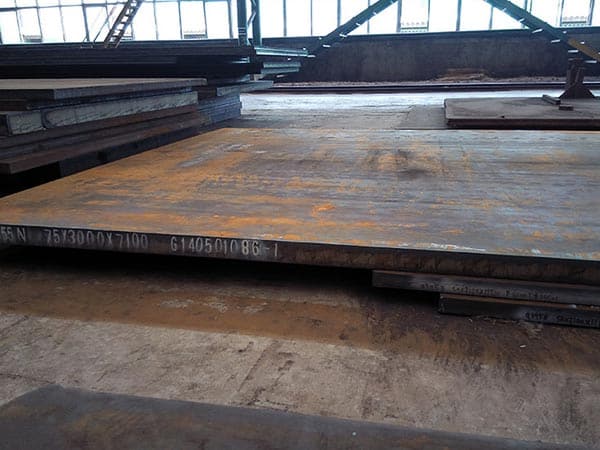
Understanding S355MC: The High-Yield Strength Standard
S355MC is a high-yield strength steel specifically designed for cold forming. It is governed by the EN 10149-2 standard, which covers hot-rolled flat products made of high yield strength steels for cold forming. The 'S' denotes structural steel, '355' represents the minimum yield strength in megapascals (MPa), and 'MC' indicates that the steel is thermomechanically rolled (M) and intended for cold forming (C).
Engineers and procurement specialists often seek equivalents when local stock for S355MC is unavailable or when working with international designs. Identifying the correct equivalent requires a deep dive into chemical composition, mechanical properties, and the specific manufacturing process used to achieve its high strength-to-weight ratio.
Global Equivalents to S355MC Steel
When searching for a grade equal to S355MC, it is vital to look at the standards used in different regions. While no two standards are identical in every parameter, several grades offer comparable performance in structural and cold-forming applications.
| Standard | Equivalent Grade | Comparison Notes |
|---|---|---|
| ASTM (USA) | ASTM A1011 HSLAS-F Grade 50 | Similar yield strength; focus on high-strength low-alloy characteristics. |
| JIS (Japan) | SPFH 540 | Automotive structural steel with excellent formability. |
| GB (China) | Q355MC / Q345B | Q355MC is the direct equivalent under GB/T 1591. |
| ISO | ISO 4952 E355DD | International standard for high yield strength steels. |
The ASTM A1011 HSLAS-F Grade 50 is perhaps the most common substitute in North American markets. It provides the necessary ductility for complex bending while maintaining a yield strength that matches the 355 MPa threshold. However, users must verify the impact toughness requirements, as S355MC often specifies testing at lower temperatures.
Chemical Composition and Alloying Elements
The performance of S355MC is rooted in its low carbon content and the addition of micro-alloying elements like Niobium (Nb), Vanadium (V), and Titanium (Ti). These elements facilitate grain refinement during the thermomechanical rolling process.
- Carbon (C): Max 0.12% – Low carbon ensures excellent weldability and prevents brittleness.
- Manganese (Mn): Max 1.50% – Enhances strength and hardness.
- Silicon (Si): Max 0.50% – Acts as a deoxidizer and contributes to strength.
- Phosphorus (P) & Sulfur (S): Kept at very low levels (Max 0.025% and 0.020%) to ensure purity and prevent cracking during forming.
- Alloying Elements (Nb, V, Ti): These are critical for achieving the high yield strength without sacrificing elongation.
Compared to standard structural steels like S355J2, S355MC has a much lower Carbon Equivalent Value (CEV). This makes it significantly easier to weld without the need for extensive preheating, a major advantage in high-volume manufacturing environments.
Mechanical Properties and Structural Integrity
The defining characteristic of S355MC is its balance between strength and ductility. For a steel with a yield strength of 355 MPa, it exhibits remarkable elongation properties, which is why it is favored for components that require intricate shaping.
| Property | Value (Thickness ≤ 16mm) |
|---|---|
| Yield Strength (ReH) | Min 355 MPa |
| Tensile Strength (Rm) | 430 - 550 MPa |
| Elongation (A5) | Min 19% - 23% (depending on thickness) |
| Bending Radius (180°) | 0.5t to 1.5t (highly formable) |
The high elongation allows the material to be bent to tight radii without surface cracking. This is particularly useful in the production of chassis frames and cross members for the automotive industry, where weight reduction is achieved by using thinner, higher-strength materials.
Processing Performance: Welding and Cutting
S355MC is optimized for modern fabrication techniques. Its thermomechanical processing results in a fine-grained microstructure that responds well to various industrial processes.
Welding: Due to its low alloy content, S355MC can be welded using all standard methods, including MIG/MAG, TIG, and submerged arc welding. The heat-affected zone (HAZ) remains relatively stable, though excessive heat input should be avoided to prevent grain growth which could reduce local toughness.
Laser and Plasma Cutting: The clean chemical composition and low silicon content make S355MC an ideal candidate for precision laser cutting. It produces a clean edge with minimal dross, reducing the need for secondary grinding operations. This efficiency is a key reason why S355MC steel suppliers are frequently sought by heavy machinery manufacturers.
Environmental Adaptability and Durability
While S355MC is not a dedicated weathering steel (like Corten), its fine-grained structure provides a degree of atmospheric corrosion resistance superior to basic carbon steels. In many applications, it is used in conjunction with protective coatings like galvanizing or powder coating.
The material's performance at low temperatures is another critical factor. While S355MC does not always require a Charpy V-notch impact test by default (unless specified as S355MC-L), its thermomechanical origin generally ensures better low-temperature ductility than traditionally hot-rolled structural steels. This makes it suitable for equipment operating in temperate and cold climates, such as agricultural machinery and transport trailers.
Application Industries for S355MC
The versatility of S355MC has led to its adoption across a wide range of sectors where weight saving and structural reliability are paramount.
- Automotive Industry: Used for truck chassis, side rails, and structural reinforcements where high strength allows for thinner gauges and lower vehicle weight.
- Heavy Machinery: Crane arms, excavator buckets, and lifting equipment benefit from the high yield strength and ease of welding.
- Storage Systems: High-density racking and shelving systems utilize S355MC for its ability to support heavy loads with minimal material volume.
- Renewable Energy: Support structures for solar panels and wind turbine internal components often specify S355MC for its balance of cost and performance.
Selecting the Right S355MC Steel Supplier
Choosing a supplier involves more than just comparing prices. Because S355MC relies on precise thermomechanical rolling, the quality of the mill is paramount. A reputable supplier should provide full Mill Test Certificates (MTC) according to EN 10204 3.1, detailing the actual chemical analysis and mechanical test results for each heat.
Furthermore, look for suppliers who offer value-added services such as decoiling, precision slitting, and custom blanking. Since S355MC is often used in automated production lines, tight tolerances on thickness and flatness are essential to prevent machine downtime and ensure consistent part quality.
When discussing equivalents with a supplier, always clarify the end-use. For example, if the part requires severe 90-degree bending, the supplier must ensure the material's grain direction is considered during the cutting process, as S355MC properties can vary slightly between longitudinal and transverse directions.
Strategic Procurement of High-Yield Steels
To optimize the supply chain, many companies are moving toward global standardization. By understanding that S355MC can be substituted by Q355MC or ASTM A1011 Grade 50 under specific conditions, procurement teams can mitigate risks associated with regional shortages. However, any substitution must be validated by engineering teams to ensure that the fatigue life and impact resistance meet the original design intent.
The trend toward "lightweighting" in transport and construction continues to drive demand for S355MC. Its ability to provide structural integrity while reducing the carbon footprint of the final product—through less material usage and better fuel efficiency in transport—makes it a cornerstone of modern industrial design.
Leave a message