
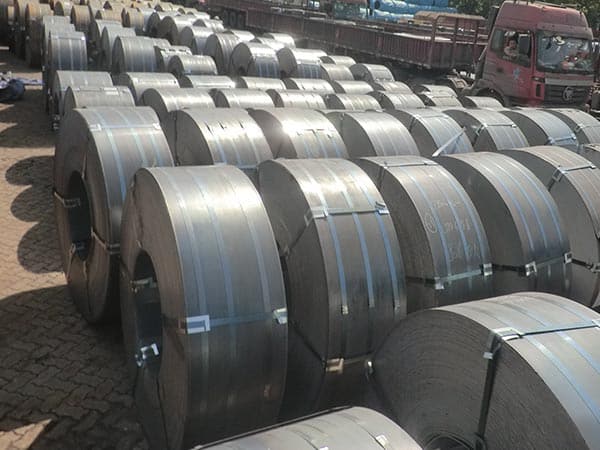
Alloy steel S500MC inventory 10mm thick size
Explore the comprehensive technical properties, processing advantages, and inventory availability of 10mm thick S500MC alloy steel for heavy-duty industrial applications.
The Significance of S500MC in Modern Structural Engineering
The demand for high-strength, low-alloy (HSLA) steels has surged as industries prioritize weight reduction without compromising structural integrity. S500MC, a grade defined under the European standard EN 10149-2, represents a pinnacle of thermomechanically rolled steel technology. When specifically examining the 10mm thick size, we find a versatile material that bridges the gap between lightweight automotive components and heavy-duty structural engineering. This thickness is particularly critical for load-bearing members that require a balance of rigidity and formability.
S500MC is characterized by its minimum yield strength of 500 MPa. The "MC" suffix denotes that the steel is thermomechanically rolled (M) and designed for cold forming (C). Unlike traditional hot-rolled structural steels, S500MC achieves its superior mechanical properties through a precisely controlled rolling process at specific temperatures, followed by rapid cooling. This results in a fine-grained microstructure that offers exceptional toughness and weldability, even at a 10mm gauge which is often considered the upper limit for high-precision cold forming.
Chemical Composition and Microstructural Integrity
The performance of 10mm S500MC is rooted in its chemical makeup. To maintain high strength while ensuring excellent weldability, the carbon content is kept remarkably low. The strengthening is achieved through micro-alloying elements such as Niobium (Nb), Vanadium (V), and Titanium (Ti). These elements form fine carbides and nitrides that pin grain boundaries during the rolling process, preventing grain growth and enhancing the yield strength.
| Element | Maximum Content (%) |
|---|---|
| Carbon (C) | 0.12 |
| Manganese (Mn) | 1.60 |
| Silicon (Si) | 0.50 |
| Phosphorus (P) | 0.025 |
| Sulphur (S) | 0.015 |
| Aluminium (Al) | 0.015 |
| Niobium (Nb) | 0.09 |
| Vanadium (V) | 0.20 |
| Titanium (Ti) | 0.15 |
The low carbon equivalent (CEV) is a standout feature for the 10mm thickness. For engineers, this means the steel can be welded using standard methods without the risk of cold cracking, a common issue in thicker, higher-carbon structural steels. The inclusion of Manganese provides solid solution strengthening, while Silicon acts as a deoxidizer, ensuring the internal purity of the 10mm plate.
Mechanical Performance and Yield Dynamics
When sourcing S500MC inventory in 10mm thickness, understanding the mechanical limits is vital for design safety factors. The 10mm gauge provides a high moment of inertia for structural beams while remaining light enough to improve the fuel efficiency of transport vehicles. The mechanical properties are tested both longitudinal and transverse to the rolling direction to ensure isotropic reliability.
| Property | Value (for thickness ≤ 16mm) |
|---|---|
| Yield Strength (ReH) | Min 500 MPa |
| Tensile Strength (Rm) | 550 - 700 MPa |
| Elongation (A80mm) | Min 12% |
| Elongation (A5) | Min 14% |
| Bending Radius (180°) | 1.0 x Thickness |
The high yield-to-tensile ratio of S500MC allows for significant weight savings. By replacing standard s355jr steel with S500MC, designers can often reduce the thickness of a component from 12mm or 14mm down to 10mm without losing load-bearing capacity. This "lightweighting" effect is a primary driver for the popularity of this grade in the trailer and crane industries.
Cold Forming and Fabrication Excellence
One of the most impressive attributes of 10mm S500MC is its cold forming capability. Despite its high strength, the material behaves predictably during bending and folding operations. For a 10mm plate, the recommended minimum bending radius is typically 1.0 to 1.5 times the thickness, depending on the orientation of the bend relative to the rolling direction. This allows for the creation of complex, high-strength profiles that would be impossible with lower-grade steels of the same thickness.
During the bending process, the fine-grained structure prevents the formation of "orange peel" surface defects or micro-cracks at the outer radius. However, fabricators must account for springback. Because S500MC has a higher yield strength than mild steel, it stores more elastic energy during deformation. Advanced CNC press brakes with angle sensors are ideal for processing 10mm S500MC to ensure dimensional accuracy in large-scale production runs.
Weldability and Thermal Cutting
Welding 10mm S500MC is straightforward due to its lean alloy design. It is compatible with MAG (Metal Active Gas), MIG (Metal Inert Gas), and Laser welding. Because the steel relies on a thermomechanical process rather than heat treatment for its strength, excessive heat input during welding should be avoided to prevent softening of the heat-affected zone (HAZ). Using low-heat input parameters and high-quality filler metals ensures that the welded joint maintains a strength level comparable to the base metal.
Regarding thermal cutting, 10mm S500MC is an excellent candidate for fiber laser cutting. The clean chemical composition and absence of heavy scale result in high-speed cutting with minimal dross. Plasma cutting is also effective, though laser cutting provides the tight tolerances required for interlocking structural components. The edge quality remains superior, often eliminating the need for secondary grinding before welding or painting.
Environmental Adaptability and Durability
While S500MC is not a weathering steel, its fine microstructure provides a consistent surface for protective coatings. In 10mm thickness, it is frequently used in chassis frames and heavy machinery that operate in harsh outdoor environments. Hot-dip galvanizing is a common choice for corrosion protection. The low Silicon and Phosphorus content in S500MC helps in achieving a uniform zinc coating thickness, avoiding the brittle, overly thick coatings sometimes found on reactive steels.
Furthermore, the fatigue resistance of S500MC is noteworthy. In the 10mm gauge, the material exhibits excellent cyclic loading performance, making it suitable for dynamic structures like crane booms and excavator arms. The absence of large inclusions and the refined grain size significantly slow down the initiation and propagation of fatigue cracks, extending the service life of the equipment.
Expanding Applications: Where 10mm S500MC Excels
The inventory of 10mm S500MC is primarily utilized in sectors where the strength-to-weight ratio is the most critical KPI. In the transportation industry, it is used for long-member chassis rails in heavy-duty trailers. By using 10mm S500MC, manufacturers can increase the payload capacity of the vehicle while reducing the tare weight, leading to lower carbon emissions per ton-mile.
In the lifting and mobile equipment sector, 10mm plates are fabricated into telescopic boom sections. The high yield strength allows for longer reaches and higher lift capacities. Similarly, in agricultural machinery, S500MC is used for plow frames and large harvester components that must withstand high impact and abrasive forces while remaining light enough to minimize soil compaction.
- Automotive: Truck frames, cross members, and reinforced brackets.
- Construction: High-strength cold-formed sections and support pillars.
- Energy: Support structures for solar arrays and wind turbine internal components.
- Mining: Lightweight conveyor systems and structural frames for mobile crushers.
Inventory Management and Sizing Considerations
Maintaining a robust inventory of 10mm S500MC requires attention to surface quality and flatness. Most 10mm S500MC is supplied as cut-to-length sheets from wide coils or as discrete plates. Standard widths typically range from 1250mm to 1500mm, with lengths up to 12000mm available for large-scale structural projects. For specialized applications, decoiling lines can provide custom lengths to minimize scrap loss during fabrication.
When checking inventory, it is essential to verify the Mill Test Certificate (MTC) to ensure compliance with EN 10149-2. The MTC provides the actual yield and tensile values for that specific heat, which is crucial for precision engineering. Additionally, buyers should look for "laser-flat" options if the material is intended for high-speed automated laser cutting, as internal stresses in the plate can cause bowing after cutting if not properly leveled at the mill.
The versatility of the 10mm thickness makes it a staple in steel service centers. It offers enough substance for heavy welding and structural bolting while retaining the agility of a cold-forming grade. As industrial designs move toward more sustainable and efficient models, the role of S500MC in this specific gauge will only continue to grow, providing a reliable foundation for the next generation of high-performance machinery and infrastructure.
Leave a message