
What is the hardness of s315mc hot rolled pickled and oiled steel coil?
Explore the comprehensive guide on S315MC hot rolled pickled and oiled steel coil hardness, mechanical properties, chemical composition, and industrial applications.
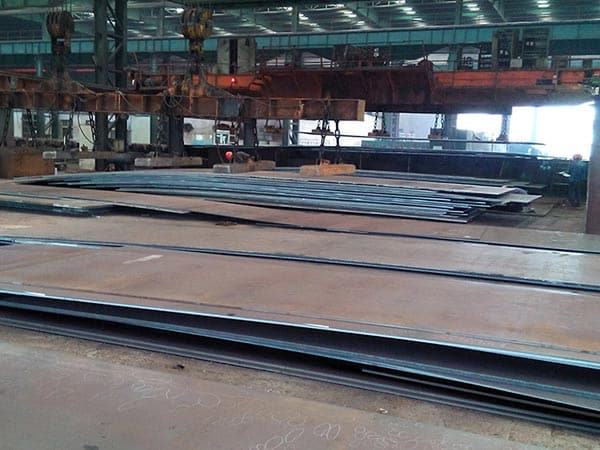
Defining S315MC Steel and Its Hardness Characteristics
S315MC is a high-yield-strength steel specifically engineered for cold forming processes, classified under the European standard EN 10149-2. When discussing the hardness of S315MC hot rolled pickled and oiled (P&O) steel coil, it is essential to understand that international standards like EN 10149-2 primarily define this material by its yield strength and tensile strength rather than a specific hardness range. However, for engineers and manufacturers involved in stamping, bending, and deep drawing, hardness is a critical proxy for formability and tool wear.
Typically, the hardness of S315MC steel falls within the range of 110 to 150 HV (Vickers Hardness) or approximately 60 to 80 HRB (Rockwell B Hardness). This moderate hardness level ensures that the material retains excellent ductility while providing the structural integrity required for load-bearing components. The "M" in S315MC indicates that the steel has undergone thermomechanically rolled processing, which refines the grain structure, leading to a more uniform hardness distribution across the coil compared to traditional hot-rolled grades.
Mechanical Properties and Strength Profile
The performance of S315MC is anchored by its mechanical specifications. As a high-strength low-alloy (HSLA) steel, it offers a superior strength-to-weight ratio, allowing for the reduction of component thickness without sacrificing safety. The following table outlines the standard mechanical requirements for S315MC:
| Property | Value (Metric) |
|---|---|
| Minimum Yield Strength (ReH) | 315 MPa |
| Tensile Strength (Rm) | 390 - 510 MPa |
| Minimum Elongation (A80mm, t < 3mm) | 20% |
| Minimum Elongation (A5, t ≥ 3mm) | 24% |
| Typical Hardness (Informational) | 110 - 150 HV |
The controlled hardness of S315MC is a direct result of its precise chemical composition and the thermomechanical rolling process. By maintaining a relatively low carbon content and utilizing micro-alloying elements, the steel achieves a fine-grained ferrite-pearlite structure. This microstructure is the key to balancing the 315 MPa yield strength with the flexibility needed for complex cold-forming operations.
Chemical Composition and Micro-Alloying Influence
The hardness and mechanical behavior of S315MC are dictated by its chemistry. Unlike simple carbon steels, S315MC utilizes micro-alloying elements such as Niobium (Nb), Vanadium (V), and Titanium (Ti) to achieve grain refinement and precipitation hardening.
- Carbon (C): Kept below 0.12% to ensure excellent weldability and prevent excessive hardness that could lead to brittleness.
- Manganese (Mn): Acts as a solid solution strengthener and improves hardenability, typically capped at 1.30%.
- Silicon (Si): Controlled at 0.50% max to assist in deoxidation without negatively affecting the pickling quality.
- Niobium/Titanium: These elements form fine carbides and nitrides that pin grain boundaries during the rolling process, preventing grain growth and ensuring a tough, fine-grained matrix.
The strict control of Phosphorus (P) and Sulfur (S) levels (max 0.025% and 0.020% respectively) minimizes non-metallic inclusions, which is vital for maintaining consistent hardness and preventing cracking during tight-radius bending.
The Significance of Pickling and Oiling (P&O)
The "pickled and oiled" designation refers to the surface treatment applied after hot rolling. Hot-rolled steel naturally develops a dark iron oxide scale. For S315MC, removing this scale is crucial for several reasons:
1. Surface Integrity: Pickling involves passing the steel through an acid bath (usually hydrochloric acid) to chemically remove the scale. This reveals a clean, smooth surface that is easier to inspect for defects. For components requiring high-quality paint or powder coating, a pickled surface is mandatory.
2. Tool Protection: Hard iron oxide scale is abrasive. If S315MC is processed in its raw hot-rolled state, the scale can significantly accelerate the wear of stamping dies and cutting tools. Pickled steel extends tool life and ensures cleaner edges during blanking.
3. Lubrication and Corrosion Resistance: After pickling, the steel is highly reactive. An oil film is applied to prevent flash rusting during transport and storage. This oil also acts as a preliminary lubricant for light stamping operations, though additional drawing compounds may be required for complex shapes.
Process Performance: Welding, Forming, and Cutting
S315MC is favored by manufacturers due to its exceptional process adaptability. Its low carbon equivalent (CEV) makes it highly weldable using standard methods such as MIG, TIG, and submerged arc welding. Because the hardness is uniform, the heat-affected zone (HAZ) remains stable, reducing the risk of cold cracking.
In terms of cold forming, S315MC supports a minimum bending radius that is remarkably tight for its strength class. For thicknesses up to 3mm, a 0.5t bending radius is often achievable, provided the bending axis is transverse to the rolling direction. This ductility is a direct benefit of the fine-grained structure achieved through thermomechanical rolling.
Laser cutting performance is also enhanced by the P&O finish. The absence of scale allows for faster cutting speeds and a much smaller heat-affected zone, resulting in precise components that require minimal post-processing. The consistent hardness ensures that the laser beam interacts uniformly with the material, preventing irregularities in the cut edge.
Industrial Applications of S315MC P&O Steel
The unique combination of moderate hardness, high yield strength, and superior surface quality makes S315MC a staple in several demanding industries:
- Automotive Industry: Used for chassis parts, seat frames, and structural reinforcements where weight reduction is critical but formability is required for complex geometries.
- Heavy Machinery: Ideal for crane arms, boom sections, and agricultural equipment components that endure high stress but must be manufactured through cold bending.
- Construction and Infrastructure: Utilized in the production of cold-pressed profiles, racking systems, and structural tubes where a clean surface is needed for subsequent galvanizing or painting.
- Transportation: Common in truck trailer frames and cross members, providing the necessary strength to handle heavy payloads while remaining light enough to improve fuel efficiency.
Environmental Adaptability and Longevity
While S315MC is not a weathering steel like Corten, its chemical purity and the P&O process contribute to its environmental resilience. The removal of scale eliminates sites where localized corrosion (pitting) often begins. When paired with modern coating technologies—such as cathodic dip painting (KTL) or high-performance powder coats—S315MC components exhibit excellent long-term durability in moderately corrosive environments.
Furthermore, the thermomechanical rolling process ensures that the internal stresses within the coil are minimized. This dimensional stability is crucial when parts are exposed to temperature fluctuations, as it prevents warping and maintains the structural integrity of the assembly over its lifecycle.
Technical Comparison: S315MC vs. Alternative Grades
Choosing S315MC over other grades often comes down to the balance of strength and cost. Compared to standard mild steels like DD11 or S235JR, S315MC offers significantly higher strength, allowing for thinner sections. Compared to higher grades like S420MC or S700MC, S315MC is much easier to form and has a lower hardness, making it more forgiving in older stamping presses or when using complex tooling.
The hardness of S315MC (approx. 130 HV) is the "sweet spot" for many manufacturers. It is hard enough to resist deformation under load but soft enough to be shaped without the extreme press forces required for ultra-high-strength steels. This versatility is why S315MC remains one of the most widely specified HSLA grades in the global market.
In summary, while the hardness of S315MC hot rolled pickled and oiled steel coil typically ranges from 110 to 150 HV, its value lies in the synergy between this hardness, its 315 MPa yield strength, and its clean P&O surface. Understanding these attributes allows engineers to optimize their manufacturing processes and produce high-quality, durable components across a vast array of industrial sectors.
Leave a message