
What is the s355mc automotive steel coil properties yield strength
Comprehensive guide to S355MC automotive steel coil properties, focusing on its 355 MPa yield strength, chemical composition, and cold-forming advantages.
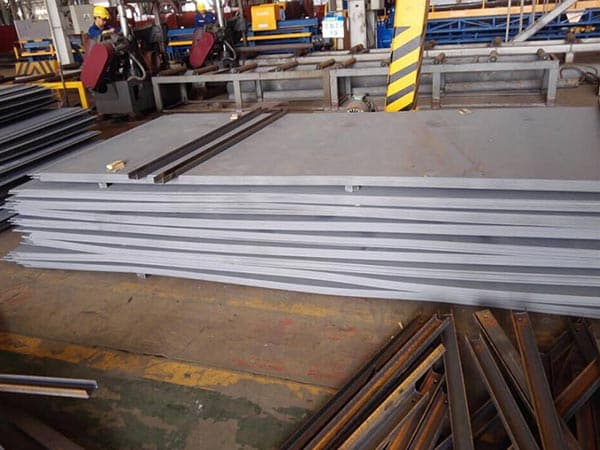
The Core Identity of S355MC Steel in Automotive Engineering
S355MC is a high-strength, low-alloy (HSLA) hot-rolled steel specifically engineered for cold forming. Governed by the European standard EN 10149-2, this grade represents a pinnacle of metallurgical balance, offering a unique combination of high yield strength, excellent ductility, and superior weldability. The 'S' stands for structural steel, '355' denotes the minimum yield strength in Megapascals (MPa), 'M' indicates its thermomechanically rolled condition, and 'C' signifies its suitability for cold forming. This material has become a staple in the automotive sector, where the drive for lightweighting and structural integrity is paramount.
Deciphering the Yield Strength: The 355 MPa Benchmark
The defining characteristic of S355MC is its yield strength. By definition, yield strength is the point at which a material begins to deform plastically. For S355MC, the minimum yield strength is 355 MPa for thicknesses less than or equal to 16mm. This high threshold allows engineers to design components that are thinner and lighter without sacrificing the load-bearing capacity of the vehicle's frame. Unlike standard structural steels like s355jr, the 'MC' variant maintains its strength through a specialized rolling process that refines the grain structure, ensuring consistency across the entire coil length.
When subjected to stress, S355MC exhibits a predictable and stable transition from elastic to plastic deformation. This predictability is vital for crash safety simulations, where automotive designers must calculate exactly how a part will crumple or resist impact. The high yield-to-tensile ratio of S355MC ensures that the material absorbs significant energy before ultimate failure occurs.
Chemical Composition and the Role of Micro-alloying
The exceptional properties of S355MC are not accidental; they are the result of precise chemical engineering. The carbon content is kept remarkably low to enhance weldability and toughness, while micro-alloying elements like Niobium (Nb), Vanadium (V), and Titanium (Ti) are added to refine the grain size and provide precipitation hardening.
| Element | Max % Content |
|---|---|
| Carbon (C) | 0.12 | Manganese (Mn) | 1.50 | Silicon (Si) | 0.50 | Phosphorus (P) | 0.025 | Sulphur (S) | 0.020 | Aluminum (Al) | 0.015 (min) | Niobium (Nb) | 0.09 | Titanium (Ti) | 0.15 |
By keeping the Carbon Equivalent (CEV) low, S355MC avoids the brittleness often associated with high-strength steels. The addition of Titanium and Niobium creates fine carbides that pin grain boundaries during the rolling process, preventing grain growth and resulting in a fine-grained ferritic-pearlitic microstructure. This microscopic architecture is what allows the steel to achieve 355 MPa yield strength without the need for heavy alloying or expensive heat treatments.
Mechanical Performance Beyond Yield Strength
While yield strength is the headline figure, the overall mechanical profile of S355MC is what makes it truly versatile. Tensile strength, elongation, and impact resistance are equally critical for automotive applications.
| Property | Value (for t < 3mm) | Value (for t ≥ 3mm) |
|---|---|---|
| Min Yield Strength (MPa) | 355 | 355 |
| Tensile Strength (MPa) | 430 - 550 | 430 - 550 |
| Min Elongation (A80mm %) | 19 | - |
| Min Elongation (A5.65mm %) | - | 23 |
The high elongation values (up to 23% for thicker sections) indicate that S355MC is highly ductile. This ductility is essential for complex stamping and deep-drawing operations used to create intricate automotive parts. It ensures that the steel can be bent and shaped without cracking, even at tight radii.
Thermomechanical Rolling: The Secret to Performance
The 'M' in S355MC stands for Thermomechanically Rolled. This process involves strict control of the temperature and the deformation rate during the rolling of the steel coil. Unlike traditional hot rolling, thermomechanical rolling takes place at temperatures where the austenite does not fully recrystallize. This results in a highly deformed grain structure that transforms into an extremely fine-grained ferrite upon cooling.
This process is environmentally friendly and cost-effective as it achieves high strength through mechanical work rather than high alloy content or separate quenching and tempering stages. For the end-user, this means a steel that is easier to weld and form, with fewer internal stresses and better surface quality.
Cold Forming and Fabrication Excellence
Automotive manufacturers favor S355MC because of its exceptional fabrication characteristics. When processing this steel, several factors come into play:
- Bending Radius: S355MC allows for very tight bending radii. For thicknesses under 3mm, a bending radius of 0.5 times the thickness (0.5t) is often achievable, making it ideal for compact structural brackets.
- Weldability: Due to its low carbon content, S355MC can be welded using all standard methods (MIG, TIG, Laser, Resistance welding). It does not require pre-heating or post-weld heat treatment in most applications, significantly reducing production cycle times.
- Laser Cutting: The clean chemical composition and uniform microstructure allow for high-speed laser cutting with minimal dross and a narrow heat-affected zone (HAZ).
- Surface Quality: S355MC coils are often supplied in a pickled and oiled condition, providing a clean surface that is ready for painting or galvanizing without extensive preparation.
Automotive Applications and Structural Efficiency
The shift toward electric vehicles (EVs) and fuel-efficient internal combustion engines has placed a premium on weight reduction. S355MC plays a critical role in this transition. By utilizing the 355 MPa yield strength, manufacturers can replace thicker, lower-grade steels (like S235) with thinner S355MC sheets, achieving weight savings of 15-25% in specific components.
Common applications include:
- Chassis Members: Longitudinal and cross members that require high strength to support the vehicle's weight and absorb road vibrations.
- Truck Frames: The high fatigue resistance of S355MC makes it perfect for the heavy-duty frames of commercial vehicles and trailers.
- Seat Frames: Complex, lightweight shapes that must protect passengers during a collision.
- Suspension Components: Control arms and shock tower reinforcements that demand high yield strength and excellent weldability.
- Wheels: Steel wheel rims benefit from the balance of strength and formability provided by this grade.
Environmental Adaptation and Fatigue Resistance
In addition to mechanical strength, S355MC exhibits good atmospheric corrosion resistance, especially when properly coated. Its fine-grained structure also contributes to superior fatigue life. In the automotive world, parts are subjected to millions of stress cycles over their lifespan. S355MC's ability to resist crack initiation and propagation ensures the long-term durability of structural components, even under harsh operating conditions.
Furthermore, S355MC is fully recyclable. As the automotive industry moves toward a circular economy, the ability to reclaim and reprocess HSLA steels without losing their inherent properties is a significant advantage. The low alloy content makes it easier to manage in the scrap stream compared to more heavily alloyed specialty steels.
S355MC vs. Alternative Grades
Choosing between S355MC and other grades like S355JR or S355J2 depends on the specific manufacturing process. S355JR is a general-purpose structural steel that is not optimized for cold forming. It may crack if bent too sharply. In contrast, S355MC is purpose-built for the press shop. While S355JR might be cheaper per ton, the processing advantages, weight savings, and reduced scrap rates of S355MC often lead to a lower total cost of ownership for automotive OEMs.
Compared to higher grades like S420MC or S700MC, S355MC offers a 'sweet spot' of high strength and maximum formability. While S700MC is stronger, it is much harder to form and more sensitive to welding parameters. S355MC remains the workhorse for parts where moderate-to-high strength is needed alongside complex geometry.
Strategic Implementation and Future Outlook
The technical specifications of S355MC automotive steel coil—centered on its 355 MPa yield strength—provide a robust foundation for modern vehicle design. Its micro-alloyed chemistry and thermomechanical processing result in a material that is not only strong but also remarkably easy to work with in a high-volume production environment. As automotive engineering continues to evolve, the demand for reliable, high-performing HSLA steels like S355MC is set to remain strong, driven by the dual needs of safety and efficiency.
Understanding the nuances of its yield behavior, chemical makeup, and forming limits allows manufacturers to push the boundaries of what is possible in structural design. Whether it is for a heavy-duty truck chassis or a lightweight passenger car component, S355MC delivers the consistency and performance required by the most demanding global standards.
Leave a message