
China S900MC automobile frame steel prices continue to decline
Explore the reasons behind the decline of China S900MC automobile frame steel prices and gain deep insights into its mechanical properties, processing advantages, and industrial applications.
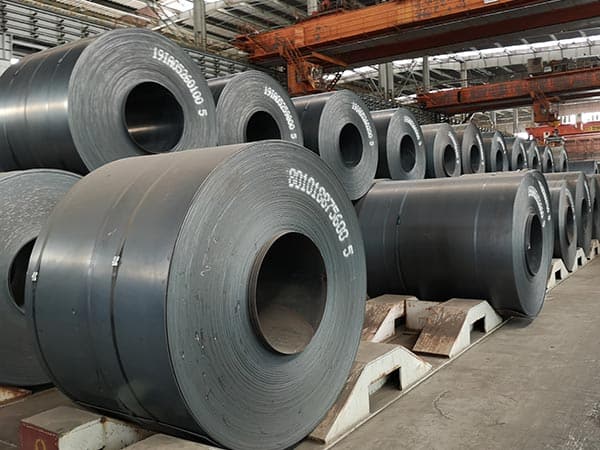
Current Landscape of S900MC Automobile Frame Steel in China
The recent market data indicates that China S900MC automobile frame steel prices continue to decline, a trend that has captured the attention of both domestic and international procurement specialists. This price volatility is not merely a reflection of raw material fluctuations but is deeply intertwined with the shifting dynamics of the high-strength low-alloy (HSLA) steel supply chain. As a thermo-mechanically rolled steel grade, S900MC represents the pinnacle of weight-reduction technology for heavy-duty vehicles and specialized machinery.
The downward pressure on prices stems from a combination of increased production capacity among major Chinese mills like Baosteel, Shougang, and TISCO, coupled with a broader adjustment in the global automotive manufacturing sector. For engineers and purchasers, understanding the intrinsic value of S900MC beyond its current market price is essential for optimizing product design and manufacturing costs.
Mechanical Superiority: The Core of S900MC Performance
S900MC is defined by its exceptional yield strength and tensile properties, governed by standards such as EN 10149-2. Its primary appeal lies in the ability to reduce the thickness of structural components without compromising safety or load-bearing capacity.
| Property Type | Metric Specification | Typical Values |
|---|---|---|
| Minimum Yield Strength (ReH) | MPa | 900 |
| Tensile Strength (Rm) | MPa | 930 - 1200 |
| Minimum Elongation (A80mm) | % | ≥ 8 |
| Impact Energy (KV at -20°C) | Joules | ≥ 27 (Optional) |
The high yield strength of 900 MPa allows for the construction of ultra-lightweight frames. In the context of heavy-duty trucks, switching from S700MC to S900MC can lead to a weight reduction of up to 15-20% in specific chassis components. This translates directly into higher payloads and lower fuel consumption, making it a cornerstone of the modern green logistics movement.
Chemical Composition and Micro-Alloying Precision
The stability of S900MC's performance is a result of meticulous chemical control. Unlike traditional high-strength steels that rely on high carbon content, S900MC utilizes a low-carbon design combined with micro-alloying elements such as Niobium (Nb), Vanadium (V), and Titanium (Ti).
- Carbon (C): Kept below 0.20% to ensure excellent weldability and prevent brittle fracture.
- Manganese (Mn): Enhances hardenability and solid solution strengthening.
- Silicon (Si): Provides additional strength while maintaining ductility.
- Micro-alloys (Nb, V, Ti): These elements refine the grain structure during the thermo-mechanical rolling process, creating a fine-grained ferritic-bainitic microstructure.
This sophisticated metallurgy ensures that even as prices decline, the quality of the material remains consistent across different batches from top-tier Chinese manufacturers. The fine grain structure is particularly beneficial for fatigue resistance, a critical factor for vehicle frames subjected to cyclic loading.
Advanced Processing Performance: Cold Forming and Welding
One of the primary reasons S900MC has gained such widespread adoption in the Chinese automotive industry is its exceptional cold forming capability. Despite its extreme strength, the material exhibits a high degree of ductility, allowing for complex bending and profiling without the risk of cracking.
When processing S900MC, it is vital to consider the minimum bending radius. For plates with a thickness (t) under 6mm, a typical bending radius of 2.5t to 3.0t is recommended. Using precision CNC bending equipment ensures that the springback effect—which is more pronounced in 900 MPa steel compared to lower grades—is accurately compensated for during the manufacturing process.
Welding S900MC requires specific protocols to maintain the integrity of the heat-affected zone (HAZ). Because the strength is derived from thermo-mechanical rolling, excessive heat input can lead to softening in the HAZ. Using low-heat input welding methods such as MAG (Metal Active Gas) with appropriate filler metals (e.g., ER110S or ER120S) is standard practice. The low carbon equivalent (Ceq) of S900MC significantly reduces the risk of cold cracking, often eliminating the need for preheating in thicknesses below 10mm.
Environmental Adaptability and Longevity
Automobile frames are exposed to harsh environmental conditions, including road salts, humidity, and temperature extremes. S900MC exhibits commendable atmospheric corrosion resistance due to its dense microstructure. Furthermore, its surface quality, often provided in the pickled and oiled (PO) condition, provides an excellent substrate for advanced coating systems like KTL (E-coating) or powder coating.
In cold climates, the low-temperature toughness of S900MC ensures that the vehicle frame remains resilient. Many Chinese mills now offer S900MC variants that meet specific impact test requirements at -40°C, catering to the needs of vehicles operating in high-latitude regions or specialized refrigerated transport.
Strategic Market Shifts and Industry Application Extensions
The current price decline of S900MC in China presents a strategic window for industries beyond traditional heavy trucking. While the primary application remains long-haul truck chassis, cross members, and subframes, other sectors are beginning to capitalize on the reduced cost-to-performance ratio.
- Lifting and Construction Machinery: Crane booms and outriggers benefit from the high strength-to-weight ratio, allowing for longer reach and higher lifting capacities.
- Agricultural Equipment: Modern large-scale harvesters and seeders use S900MC to reduce soil compaction by lowering the overall weight of the machinery.
- Renewable Energy: Support structures for solar trackers and components for wind turbine transport trailers are increasingly specifying S900MC.
- Container Manufacturing: Specialized lightweight containers for intermodal transport utilize S900MC to maximize cargo volume.
As the Chinese steel industry continues to optimize its production efficiency, the availability of S900MC in various widths and thicknesses has increased. This availability, combined with the downward price trend, makes it a viable alternative to more expensive quenched and tempered (Q&T) steels for many structural applications.
Procurement Insights in a Declining Price Environment
For global buyers, the decline in China's S900MC prices offers an opportunity to upgrade material specifications without increasing the total budget. However, procurement should not focus solely on the lowest price. It is imperative to verify the mill test certificates (MTC) and ensure compliance with international standards like EN 10149. Factors such as thickness tolerance (often requiring EN 10051 compliance) and flatness are just as critical as the chemical composition.
Furthermore, the logistics of transporting high-strength steel coils or plates require careful handling to prevent mechanical damage or moisture exposure. Working with suppliers who provide robust packaging and reliable shipping schedules is essential to maintaining a lean manufacturing timeline.
The current market trajectory suggests that while prices may stabilize in the medium term, the technological barrier for producing S900MC has been lowered by Chinese mills' continuous investment in rolling technology. This democratization of high-strength steel is set to accelerate the lightweighting revolution across the global transportation sector, making S900MC a pivotal material for the next generation of efficient, high-performance vehicles.
Leave a message