
Who sale the S960MC automobile wheels steel
Explore the technical specifications, processing advantages, and procurement channels for S960MC high-strength steel designed for automotive wheels and lightweight structural components.
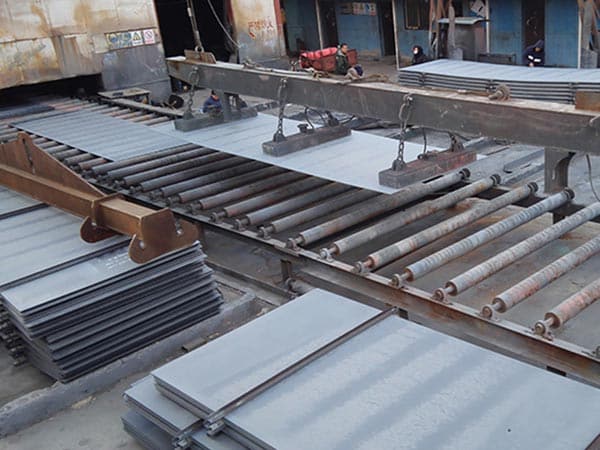
Understanding the Market for S960MC High-Strength Steel
Identifying reliable sources for S960MC automobile wheels steel requires a deep understanding of the material's metallurgical complexity and the specialized manufacturing capabilities needed to produce it. S960MC is a high-strength, thermomechanically rolled steel that belongs to the EN 10149-2 standard. This grade is specifically engineered for cold forming and is widely utilized in sectors where weight reduction and high load-bearing capacity are non-negotiable. For automotive wheel manufacturers, sourcing this material means looking beyond standard steel traders and connecting with specialized service centers or mills that understand the nuances of high-yield structural steels.
The Metallurgical Profile of S960MC
The performance of S960MC is rooted in its precise chemical composition and the thermomechanical rolling process. Unlike traditional quenched and tempered steels, S960MC achieves its 960 MPa minimum yield strength through grain refinement and precipitation hardening. The carbon content is kept extremely low (typically below 0.12%) to ensure excellent weldability and ductility. Elements like niobium, vanadium, and titanium are added in trace amounts to create a fine-grained microstructure that resists crack propagation.
This micro-alloying strategy is what makes S960MC ideal for the automobile wheels industry. Wheels are subject to constant cyclic loading, and the fine grain structure of S960MC provides a superior fatigue limit compared to lower-grade structural steels. When searching for a supplier, it is vital to verify that the material has undergone controlled cooling during the rolling process, as this dictates the final mechanical properties and the consistency of the coil or sheet.
Mechanical Properties and Performance Standards
When evaluating who sells S960MC, procurement teams must analyze the mechanical property certificates (MTC) to ensure they meet the rigorous demands of automotive safety. The following table outlines the core mechanical requirements for S960MC:
| Property | Value (Metric) | Significance for Wheels |
|---|---|---|
| Yield Strength (ReH) | 960 MPa min. | Prevents permanent deformation under heavy loads. |
| Tensile Strength (Rm) | 980 - 1250 MPa | Defines the ultimate breaking point of the wheel structure. |
| Elongation (A5) | 7% - 10% min. | Ensures the material can be formed without cracking. |
| Impact Energy (KV) | 40 J at -20°C (typical) | Crucial for wheel integrity in cold climates. |
The high yield-to-tensile ratio of S960MC allows engineers to use thinner gauges without sacrificing the structural integrity of the wheel disc or rim. This is the cornerstone of automotive lightweighting, enabling a reduction in unsprung mass, which directly improves vehicle handling and fuel efficiency.
Cold Forming and Fabrication Excellence
A primary reason manufacturers seek S960MC is its exceptional cold-forming capability despite its immense strength. However, this material requires specialized equipment. When sourcing S960MC, it is important to consult with suppliers who can provide technical data on the minimum bending radius. Typically, for S960MC, the recommended inner bending radius is approximately 2.5 to 3.0 times the material thickness for a 90-degree bend.
Springback management is another critical factor. Because S960MC has such high elastic energy, it exhibits significant springback after forming. Experienced suppliers often offer "pre-calculated" sheets or work closely with tool designers to compensate for these physical reactions. This ensures that the final wheel components meet the tight tolerances required for high-speed balance and tire fitment.
Welding and Joining Challenges
Who sells S960MC must also provide guidance on welding. The low carbon equivalent (CEV) of S960MC makes it highly weldable using standard methods like MAG (Metal Active Gas) or laser welding. However, the heat-affected zone (HAZ) is a point of concern. Excessive heat input can lead to local softening, where the yield strength drops below the 960 MPa threshold.
- Low Heat Input: Use pulsed arc welding to minimize the thermal cycle.
- Consumables: Select filler metals that match the strength of the base material or are slightly over-alloyed.
- Cooling Rates: Ensure controlled cooling to maintain the fine-grained structure in the weld seam.
Suppliers who specialize in S960MC often provide welding procedure specifications (WPS) to help manufacturers integrate the steel into their production lines without compromising the safety of the wheel assembly.
Environmental Adaptability and Durability
Automobile wheels are exposed to harsh environments, including road salt, moisture, and extreme temperature fluctuations. S960MC, while not a stainless grade, offers good atmospheric corrosion resistance when paired with modern coating technologies like KTL (Cathodic Dip Painting) or powder coating. The surface quality of the steel provided by the supplier is paramount; it must be free of scale and surface defects to ensure maximum adhesion of protective layers.
Furthermore, the fatigue resistance of S960MC is a major selling point. In rotating bending tests, S960MC demonstrates a significantly higher endurance limit than S700MC or S355MC. This allows for the design of wheels that can withstand millions of cycles over the lifespan of a heavy-duty truck or a high-performance passenger vehicle.
Sourcing Strategy: Finding the Right Partner
Finding a vendor for S960MC involves looking for entities that hold IATF 16949 certification, which is the global quality management standard for the automotive industry. Major global steel mills such as SSAB (with their Strenx brand), Thyssenkrupp, and Baosteel are primary producers. However, for many manufacturers, the best route is through specialized steel service centers that can provide precision slitting, decoiling, and custom blanking.
When questioning a potential supplier, ask about their batch consistency. High-strength steel requires very narrow chemistry and processing windows. A supplier that can guarantee minimal variation in yield strength across different heats is invaluable for maintaining stable automated stamping processes. Additionally, consider the logistics of "Just-in-Time" (JIT) delivery, as S960MC is a high-value inventory item that requires careful storage to prevent edge damage or oxidation.
The Future of S960MC in the Automotive Sector
As the industry moves toward electrification, the demand for S960MC is expected to surge. Electric vehicles (EVs) carry heavy battery packs, necessitating stronger chassis and wheel components to manage the increased weight while simultaneously demanding weight savings elsewhere to extend range. S960MC fits this paradox perfectly. It provides the "muscle" needed for heavy loads while being light enough to offset battery weight.
Beyond wheels, S960MC is expanding into crane booms, trailer chassis, and safety cages. Its versatility makes it a strategic material for any engineer looking to push the boundaries of what is possible with steel. By choosing a supplier who understands the intersection of metallurgy and automotive engineering, companies can leverage S960MC to create products that are safer, lighter, and more sustainable.
Leave a message