
What is the S700MC steel for cranes structure shapes
Explore the comprehensive properties of S700MC high-strength steel, its mechanical performance, cold forming capabilities, and critical role in crane structural engineering.
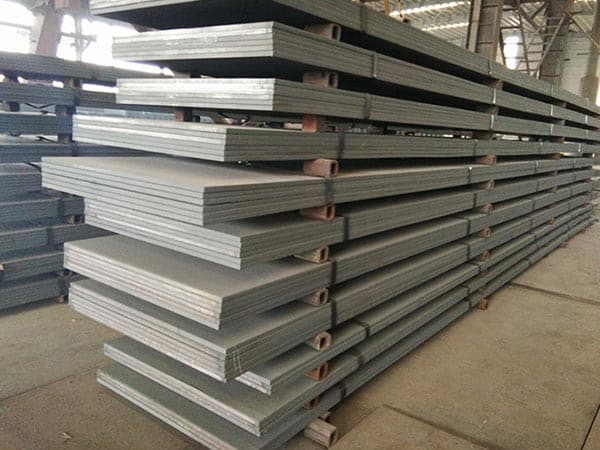
Defining S700MC: The Backbone of Modern Lifting Machinery
S700MC represents a pinnacle in the evolution of high-strength low-alloy (HSLA) steels, specifically engineered for applications where weight reduction and high load-bearing capacity are non-negotiable. The nomenclature itself reveals its core identity: 'S' stands for structural steel, '700' denotes a minimum yield strength of 700 MPa, 'M' indicates the thermo-mechanically rolled delivery condition, and 'C' signifies its suitability for cold forming. This material is governed by the European standard EN 10149-2, which sets rigorous benchmarks for its chemical and physical properties.
In the context of crane structures, S700MC is not merely a material choice; it is a strategic engineering decision. By utilizing a steel with nearly double the yield strength of traditional S355 grades, designers can significantly reduce the thickness of structural components. This reduction in dead weight directly translates to higher lifting capacities, longer boom reaches, and improved fuel efficiency for mobile lifting equipment. The integration of S700MC into crane booms, chassis, and support outriggers has revolutionized the mobile crane and heavy transport industries.
The Chemistry of Strength: Micro-Alloying and Grain Refinement
The exceptional performance of S700MC is rooted in its precise chemical composition. Unlike traditional steels that rely on high carbon content for strength—which often compromises weldability—S700MC utilizes micro-alloying elements such as Niobium (Nb), Vanadium (V), and Titanium (Ti). These elements, combined with a very low carbon content (typically below 0.12%), facilitate grain refinement during the thermo-mechanical rolling process.
| Element | Max Content (%) | Role in S700MC |
|---|---|---|
| Carbon (C) | 0.12 | Ensures excellent weldability and prevents brittleness. |
| Manganese (Mn) | 2.10 | Increases hardness and tensile strength. |
| Silicon (Si) | 0.60 | Acts as a deoxidizer and strengthens the ferrite. |
| Niobium (Nb) | 0.09 | Primary grain refiner for high yield strength. |
| Titanium (Ti) | 0.22 | Prevents grain growth during welding heat cycles. |
The low carbon equivalent (CEV) of S700MC is a critical attribute. It ensures that the steel remains ductile and resistant to cold cracking during welding operations, a common challenge when dealing with high-strength materials. The thermo-mechanical rolling process (the 'M' in S700MC) involves controlled deformation at specific temperature ranges, creating a fine-grained microstructure that is far superior to normalized steels in terms of both strength and toughness.
Mechanical Performance and Structural Integrity
The primary draw of S700MC for crane manufacturers is its mechanical profile. When designing telescopic booms or lattice structures, the material must withstand immense compressive and tensile stresses. S700MC provides a reliable safety margin while allowing for sleek, aerodynamic shapes that reduce wind resistance during operation.
| Property | Value (Thickness ≤ 3mm) | Value (Thickness > 3mm) |
|---|---|---|
| Min. Yield Strength (MPa) | 700 | 700 |
| Tensile Strength (MPa) | 750 - 950 | 750 - 950 |
| Min. Elongation (%) | 10 | 12 |
Beyond the static yield strength, the impact toughness of S700MC is vital for cranes operating in harsh environments, such as arctic construction sites or offshore platforms. While EN 10149-2 focuses on longitudinal properties, many high-end S700MC variants are tested for V-notch impact energy at -20°C or even -40°C. This ensures the structure does not undergo catastrophic brittle failure under sudden dynamic loads or extreme cold.
Processing Advantages: Cold Forming and Welding
The 'C' designation in S700MC highlights its exceptional cold forming capabilities. For crane structures, this means that complex shapes like U-shaped boom sections or hexagonal boom profiles can be formed from flat plates without the risk of cracking. This is achieved through the steel's high cleanliness and fine grain structure, which allow for tight bending radii.
- Bending Radius: S700MC typically allows for a minimum bending radius of 1.5 to 2.0 times the plate thickness, depending on the orientation (transverse vs. longitudinal).
- Springback Control: Due to its high yield strength, S700MC exhibits more springback than S355. Advanced CNC press brakes with angle sensors are usually employed to achieve the precision required for telescopic boom segments.
- Welding Efficiency: S700MC is compatible with all standard welding processes, including MAG (Metal Active Gas), submerged arc welding (SAW), and laser-hybrid welding. The low alloy content means preheating is often unnecessary for thinner sections, reducing production time.
However, processing S700MC requires strict adherence to heat input limits. Excessive heat during welding can cause grain growth in the Heat Affected Zone (HAZ), leading to a localized drop in strength. Skilled fabricators use low-heat input techniques and specific filler metals that match the strength and toughness of the base material to maintain the integrity of the crane's structure.
Environmental Adaptability and Industry Evolution
Modern crane engineering is increasingly focused on sustainability and life-cycle costs. S700MC contributes to these goals through lightweighting. A lighter crane requires less energy to move, allows for smaller engines, and reduces CO2 emissions during the vehicle's operational life. Furthermore, the high durability of S700MC extends the service life of the equipment, reducing the frequency of replacement and the associated environmental footprint of steel production.
The application of S700MC has expanded beyond just the main boom. It is now the standard for:
As the industry moves toward even higher grades like S960MC or S1100, S700MC remains the "sweet spot" for many manufacturers. It offers a perfect balance between high strength, ease of fabrication, and cost-effectiveness. Its ability to be laser-cut with precision and welded with high efficiency makes it the workhorse of the high-strength structural steel world, ensuring that the cranes of today can lift the world of tomorrow safely and efficiently.
Leave a message