
Is BS700MC automotive steel tensile test hot or cold rolled?
Detailed analysis of BS700MC automotive steel, exploring its hot-rolled manufacturing process, tensile testing standards, mechanical properties, and industrial applications.
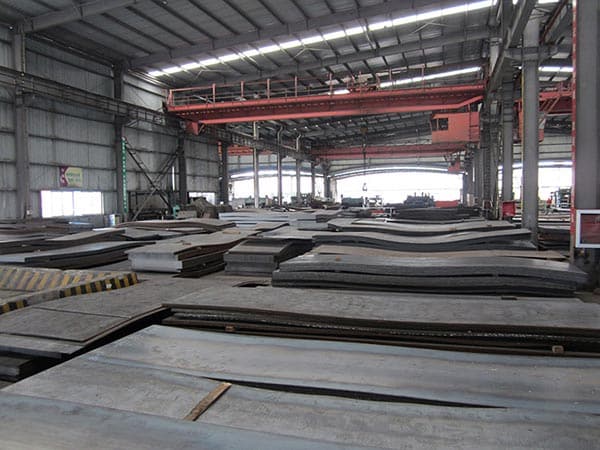
Understanding the Rolling State of BS700MC Automotive Steel
When engineers and procurement specialists discuss high-strength structural steels for the automotive industry, BS700MC frequently emerges as a primary choice. A common point of technical inquiry is whether this material is hot rolled or cold rolled, particularly concerning its performance during a tensile test. To be precise, BS700MC is a hot-rolled high-yield strength steel designed specifically for cold forming. The 'MC' designation refers to the thermomechanically rolled (M) condition and its suitability for cold (C) forming processes. Unlike traditional hot-rolled steels, BS700MC undergoes a sophisticated Thermomechanical Control Process (TMCP), which refines the grain structure to achieve a superior balance of strength and ductility without the need for subsequent cold reduction.
The Significance of Tensile Testing in BS700MC Quality Control
Tensile testing serves as the benchmark for validating the structural integrity of BS700MC. During this procedure, a specimen is subjected to controlled tension until failure. For a hot-rolled product like BS700MC, the tensile test reveals critical data points: the yield strength (ReH), tensile strength (Rm), and elongation (A80 or A5). Because this steel is produced via TMCP, it exhibits a characteristic stress-strain curve that differs from annealed cold-rolled variants. The absence of a distinct yield point is often compensated by measuring the 0.2% proof stress, ensuring the material meets the minimum 700 MPa requirement. This high yield-to-tensile ratio is a direct result of the precision-controlled hot rolling temperature and cooling rates, which lock in the micro-alloying elements like Niobium, Vanadium, and Titanium.
Chemical Composition and Metallurgical Design
The performance of BS700MC during tensile deformation is rooted in its chemical architecture. By keeping the carbon content low, manufacturers ensure excellent weldability, while micro-alloying elements provide the necessary grain refinement. Below is a typical chemical composition profile for BS700MC:
| Element | Max Content (%) |
|---|---|
| Carbon (C) | 0.12 |
| Manganese (Mn) | 2.10 |
| Silicon (Si) | 0.60 |
| Phosphorus (P) | 0.025 |
| Sulfur (S) | 0.015 |
| Aluminium (Al) | 0.015 |
| Nb + V + Ti | 0.22 |
This lean alloy design is what allows the hot-rolled BS700MC to compete with heavier, more expensive materials. The synergy between Manganese for solid solution strengthening and the micro-alloys for precipitation hardening ensures that even in its hot-rolled state, the steel maintains a fine-grained ferritic-bainitic microstructure.
Mechanical Property Benchmarks
The primary reason for selecting BS700MC is its exceptional strength-to-weight ratio. For automotive manufacturers, this translates to lighter chassis and improved fuel efficiency. The tensile test results must strictly adhere to the following mechanical parameters:
| Property | Value Range |
|---|---|
| Yield Strength (MPa) | Min. 700 |
| Tensile Strength (MPa) | 750 - 950 |
| Elongation A80 (%) | Min. 10 (Thickness < 3mm) |
| Elongation A5 (%) | Min. 12 (Thickness ≥ 3mm) |
| Bending Radius (180°) | 2.0t (Thickness dependent) |
It is important to note that while BS700MC is hot rolled, its surface quality and dimensional tolerances are often superior to standard hot-rolled coils, bridging the gap toward cold-rolled aesthetics while retaining the cost-effectiveness of the hot rolling process.
Processing Performance: Weldability and Formability
Despite its high strength, BS700MC offers remarkable cold-forming capabilities. The 'C' in its name highlights its aptitude for being bent, pressed, and flanged. During the manufacturing of truck frames or crane booms, the material must withstand significant plastic deformation without cracking. The low carbon equivalent (CEV) ensures that BS700MC can be welded using standard methods like MAG or laser welding without the risk of cold cracking in the heat-affected zone (HAZ). Unlike some cold-rolled high-strength steels that may suffer from significant springback, the hot-rolled BS700MC provides a more predictable recovery, making it easier for tool designers to calculate die geometries.
Environmental Adaptation and Durability
Automotive components are exposed to diverse environmental stressors, from road salts to extreme temperature fluctuations. BS700MC's fine-grained structure provides a natural resistance to fatigue and impact, even at sub-zero temperatures. This is a critical factor for heavy-duty vehicles operating in arctic or high-altitude environments. While it is not a dedicated weathering steel, its dense surface scale (if not pickled) or its compatibility with modern E-coating and galvanizing processes ensures long-term corrosion protection. The thermomechanical rolling process minimizes internal stresses, which reduces the likelihood of stress corrosion cracking compared to highly cold-worked steels.
Expanding Industry Applications
The versatility of BS700MC extends far beyond basic automotive brackets. It is a cornerstone material for:
- Heavy Truck Chassis: Reducing dead weight to increase payload capacity.
- Construction Machinery: Telescopic booms for cranes where high yield strength is non-negotiable.
- Agricultural Equipment: High-stress components in harvesters and plows.
- Safety Components: Bumper beams and cross-members that require high energy absorption during impact.
Technical Comparison: Hot Rolled vs. Cold Rolled High Strength Steel
A frequent point of confusion is the comparison between BS700MC and cold-rolled grades like HC700/980DP. While both might share a similar yield strength, the production path dictates their final use. Cold-rolled grades are typically available in much thinner gauges (often below 2.0mm) and offer a smoother surface finish for exterior body panels. Hot-rolled BS700MC, conversely, is usually available in thicknesses ranging from 2.0mm to 12.0mm, making it the workhorse for structural skeletons. The tensile test for the hot-rolled variant typically shows higher uniform elongation, which is beneficial for complex structural stampings that require deep draws or tight bends.
Critical Factors in Tensile Specimen Preparation
To ensure accurate results when testing BS700MC, the orientation of the specimen is vital. Standard practice involves taking samples transverse to the rolling direction, as this typically represents the most conservative strength values. The surface condition of the hot-rolled strip—whether it is 'black' (as rolled) or 'pickled and oiled' (P&O)—can also influence the initial grip during the tensile test. For BS700MC, using P&O material is often preferred in automated production lines to prevent scale from damaging the stamping dies and to ensure a consistent friction coefficient during the forming process.
The Future of High-Yield Hot Rolled Steels
As the industry moves toward even higher strengths, such as 900MPa and 1100MPa, the lessons learned from BS700MC remain foundational. The ability to achieve 700MPa yield strength directly from the hot strip mill through TMCP technology represents a peak of metallurgical efficiency. This material bypasses the energy-intensive cold rolling and continuous annealing cycles, offering a 'greener' alternative for structural engineering. For any project requiring a balance of extreme toughness, high load-bearing capacity, and excellent fabrication characteristics, the hot-rolled BS700MC stands as a definitive solution.
Leave a message