
What are the uses of S420MC chemical composition
Explore the intricate relationship between S420MC chemical composition and its industrial performance. This guide covers mechanical properties, weldability, and diverse applications in automotive and heavy machinery.
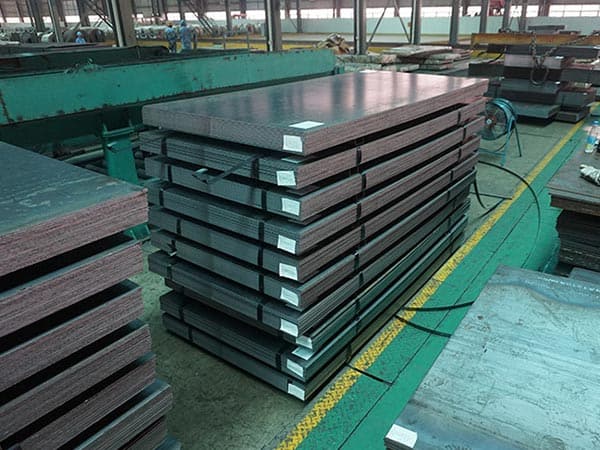
Introduction to S420MC: The Powerhouse of Thermomechanical Rolling
S420MC is a high-yield-strength steel designed for cold forming, governed by the EN 10149-2 European standard. The "S" denotes structural steel, "420" represents the minimum yield strength of 420 MPa, and "MC" indicates that the material is thermomechanically rolled (M) and suitable for cold forming (C). This steel represents a pinnacle in material science where chemistry and processing meet to provide exceptional strength-to-weight ratios.
Engineers and manufacturers favor S420MC because it allows for the reduction of component thickness without compromising structural integrity. This leads to lighter vehicles, lower fuel consumption, and reduced material costs, making it a cornerstone of modern sustainable engineering. Understanding the uses of S420MC chemical composition is essential for optimizing its performance in demanding environments.
The Intricacies of S420MC Chemical Composition
The performance of S420MC is not accidental; it is the result of a meticulously balanced chemical profile. Unlike traditional carbon steels, S420MC relies on micro-alloying to achieve its properties. The low carbon content is critical for weldability, while elements like Niobium, Vanadium, and Titanium provide grain refinement.
| Element | Maximum Content (%) | Primary Function in S420MC |
|---|---|---|
| Carbon (C) | 0.12 | Ensures excellent weldability and prevents brittleness. |
| Manganese (Mn) | 1.60 | Increases strength and improves hardenability. |
| Silicon (Si) | 0.50 | Acts as a deoxidizer and provides solid solution strengthening. |
| Phosphorus (P) | 0.025 | Maintained at low levels to prevent cold shortness. |
| Sulfur (S) | 0.015 | Extremely low levels to improve ductility and toughness. |
| Aluminum (Al) | 0.015 (min) | Used for deoxidation and grain size control. |
| Nb + V + Ti | 0.22 (total) | Micro-alloying elements for grain refinement and precipitation hardening. |
The micro-alloying elements (Nb, V, Ti) are the secret to the "MC" designation. During the thermomechanical rolling process, these elements prevent grain growth, resulting in an ultra-fine grain structure. This fine grain is the only mechanism that simultaneously increases both strength and toughness, a rare feat in metallurgy.
Mechanical Performance: Beyond the 420 MPa Yield Strength
While the name suggests a focus on yield strength, S420MC offers a holistic suite of mechanical properties. Its high tensile strength and impressive elongation make it versatile for complex shaping operations.
- Yield Strength (ReH): Minimum 420 MPa. This high threshold allows for significant load-bearing capabilities.
- Tensile Strength (Rm): 480 to 620 MPa. This range ensures the material can withstand substantial stress before failure.
- Elongation (A80mm): Typically 16% to 19% depending on thickness. This ductility allows for complex bending and deep drawing.
- Impact Toughness: Excellent performance at low temperatures, making it suitable for machinery operating in harsh climates.
These properties are directly linked to the low carbon equivalent (Ceq). A lower Ceq reduces the risk of cold cracking during welding, which is a vital consideration for heavy-duty structural assemblies.
Exceptional Processability: Cold Forming and Bending
S420MC is specifically engineered for cold forming. Its fine-grained structure allows for tight bending radii without the risk of surface cracking or "orange peel" effects. For fabricators, this means more design freedom and fewer rejects during production.
When bending S420MC, it is important to consider the minimum bending radius. Generally, for a thickness (t) of 3mm to 6mm, the minimum bending radius is approximately 1.0t to 1.5t when bending transverse to the rolling direction. This superior formability is why S420MC is the material of choice for complex chassis components and brackets.
Furthermore, the material exhibits predictable springback characteristics. Once the tooling is calibrated for the specific grade, the consistency of the chemical composition ensures that every batch behaves similarly, which is crucial for high-volume automated manufacturing lines.
Weldability: The Advantage of Low Carbon Micro-Alloying
One of the most significant uses of S420MC chemical composition is its contribution to weldability. In traditional structural steels, increasing strength usually requires increasing carbon, which makes the steel harder to weld and prone to the Heat Affected Zone (HAZ) softening. S420MC circumvents this issue.
Because the strength is derived from grain refinement rather than high carbon content, S420MC can be welded using all standard methods, including:
- MAG (Metal Active Gas) welding
- TIG (Tungsten Inert Gas) welding
- Laser beam welding
- Resistance welding
The low levels of Sulfur and Phosphorus minimize the risk of hot cracking, while the controlled Manganese levels ensure a stable arc and good bead appearance. Even in the HAZ, the fine grain structure of S420MC resists excessive grain coarsening, maintaining the mechanical integrity of the joint.
Industrial Applications: Where S420MC Excels
The unique combination of high strength and excellent formability makes S420MC indispensable across various sectors. Its primary use is in the automotive industry, specifically for structural parts where weight reduction is critical.
1. Automotive and Transportation:
Truck chassis, cross members, and longitudinal beams are frequently made from S420MC. It provides the necessary stiffness to carry heavy loads while reducing the overall weight of the vehicle, thereby increasing payload capacity and fuel efficiency.
2. Construction and Lifting Equipment:
Crane arms, boom sections, and support structures benefit from S420MC’s high yield strength. The ability to use thinner plates allows for longer reach and higher lifting capacities without increasing the dead weight of the machine.
3. Agricultural Machinery:
Tractor frames, plow components, and harvester chassis require materials that can withstand high vibration and mechanical stress. S420MC provides the fatigue resistance needed for long-term durability in the field.
4. Renewable Energy:
Solar tracking systems and wind turbine internal components use S420MC for its structural reliability and ease of fabrication in remote locations.
Environmental Adaptability and Longevity
While S420MC is not a "weathering steel" in the same vein as Corten, its chemical purity contributes to its longevity. The low inclusion content prevents localized galvanic corrosion sites, and the smooth surface finish provided by the thermomechanical rolling process makes it an ideal substrate for protective coatings.
Whether it is hot-dip galvanizing, powder coating, or E-coating, S420MC provides excellent adhesion. The low Silicon content (often specified for "controlled silicon" versions) ensures a uniform zinc layer during galvanizing, preventing the thick, brittle coatings associated with the Sandelin effect.
In terms of fatigue life, the fine grain structure is highly effective at arresting micro-cracks. This makes S420MC components exceptionally reliable under cyclic loading conditions, which is common in transport and moving machinery.
Comparing S420MC with Other Grades
To fully appreciate S420MC, one must compare it to its peers. Compared to standard s355jr (hot-rolled structural steel), S420MC offers nearly 20% more strength. This allows for a thickness reduction of roughly 15-20% for the same load-bearing capacity.
Compared to higher grades like S700MC, S420MC offers a better balance of cost and formability. While S700MC is much stronger, it requires more specialized tooling and has a much larger bending radius. For many structural applications, S420MC is the "sweet spot" that maximizes performance without requiring extreme fabrication adjustments.
Optimizing Production with S420MC
For manufacturers looking to transition to S420MC, the chemical composition offers several operational advantages. The consistency of the material reduces setup times on CNC punching and laser cutting machines. The lack of heavy scale (compared to traditional hot-rolled products) extends tool life and improves the quality of the cut edges.
When sourcing S420MC, it is vital to request mill test certificates (MTCs) to verify the chemical composition and mechanical properties. Reputable suppliers will provide data confirming that the Nb, V, and Ti levels are within the narrow tolerances required for the MC designation, ensuring that the material will perform as expected in the workshop and in the field.
Leave a message